World
Syrian monastery blends Orthodox, Sufi traditions, and interfaith dialogue
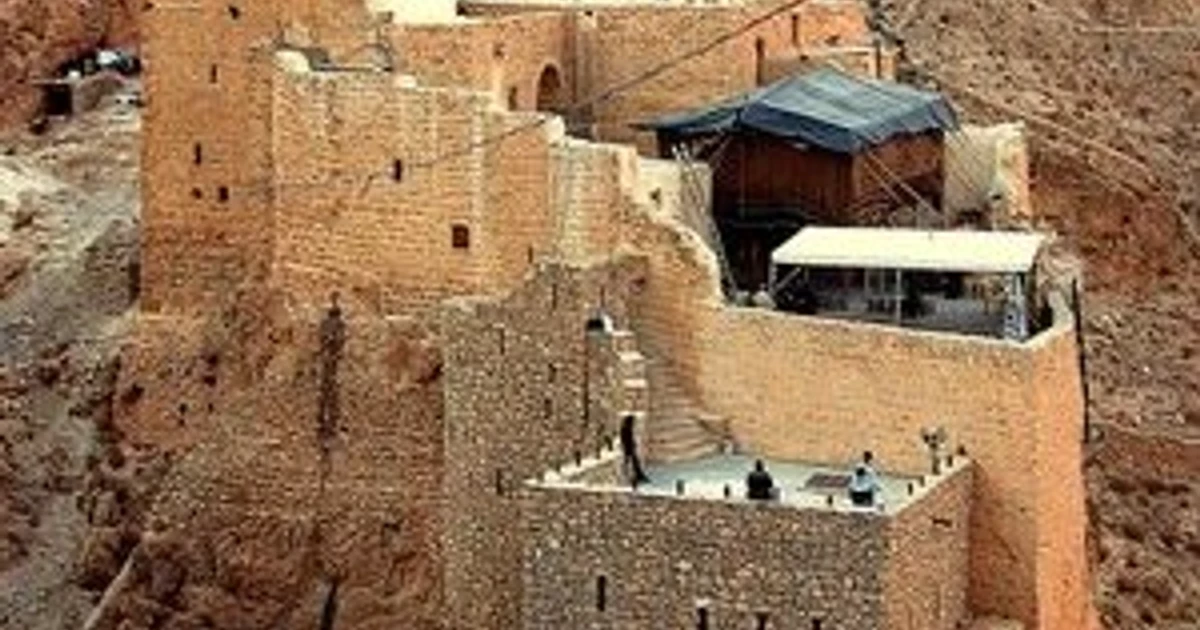
The monastery of Mar Musa rises above the Anti-Lebanon Mountains as a working religious community, not a relic of Syria’s ruptured past. Near Nabk, about 80 kilometers north of Damascus, it combines Syriac Catholic worship with customs that reach into Orthodox Christianity and Sufi practice, making it one of the country’s most unusual places of prayer and encounter.
A monastery built into Syria’s long memory
Deir Mar Musa al-Habashi, the Monastery of Saint Moses the Abyssinian, sits at about 1,320 meters above sea level on the eastern slopes of the Qalamoun, or Anti-Lebanon, range. The site dates to at least the 6th century and stands on the remains of a Roman tower, a detail that gives the place an even older civic and military memory than its Christian identity alone suggests.
A church was built there in 1058 CE, and the monastery preserves frescoes from multiple periods, including the 11th and 13th centuries. Those layers matter because Mar Musa is not a restored theme site or a single-epoch monument; it is a place where Syria’s architectural and devotional history remains visibly stacked in stone, paint, and ritual use.
The monastery was abandoned in 1831, then remained a ruin until restoration work began in 1980 and continued through 1994. The monastic community itself was re-established in 1991, turning a derelict hilltop into an active house of prayer again. That return gave the site a new role in contemporary Syria: a living community with historical depth, rather than a preserved shell.
How the modern community took shape
The modern story of Mar Musa is inseparable from Paolo Dall’Oglio, the Italian Jesuit who first explored the ruins in 1982 and helped drive its restoration. He became widely associated with recasting the monastery as a center of interfaith dialogue, and his absence still marks the institution. After traveling to meet ISIL in Raqqa in 2013, he disappeared and is presumed dead.
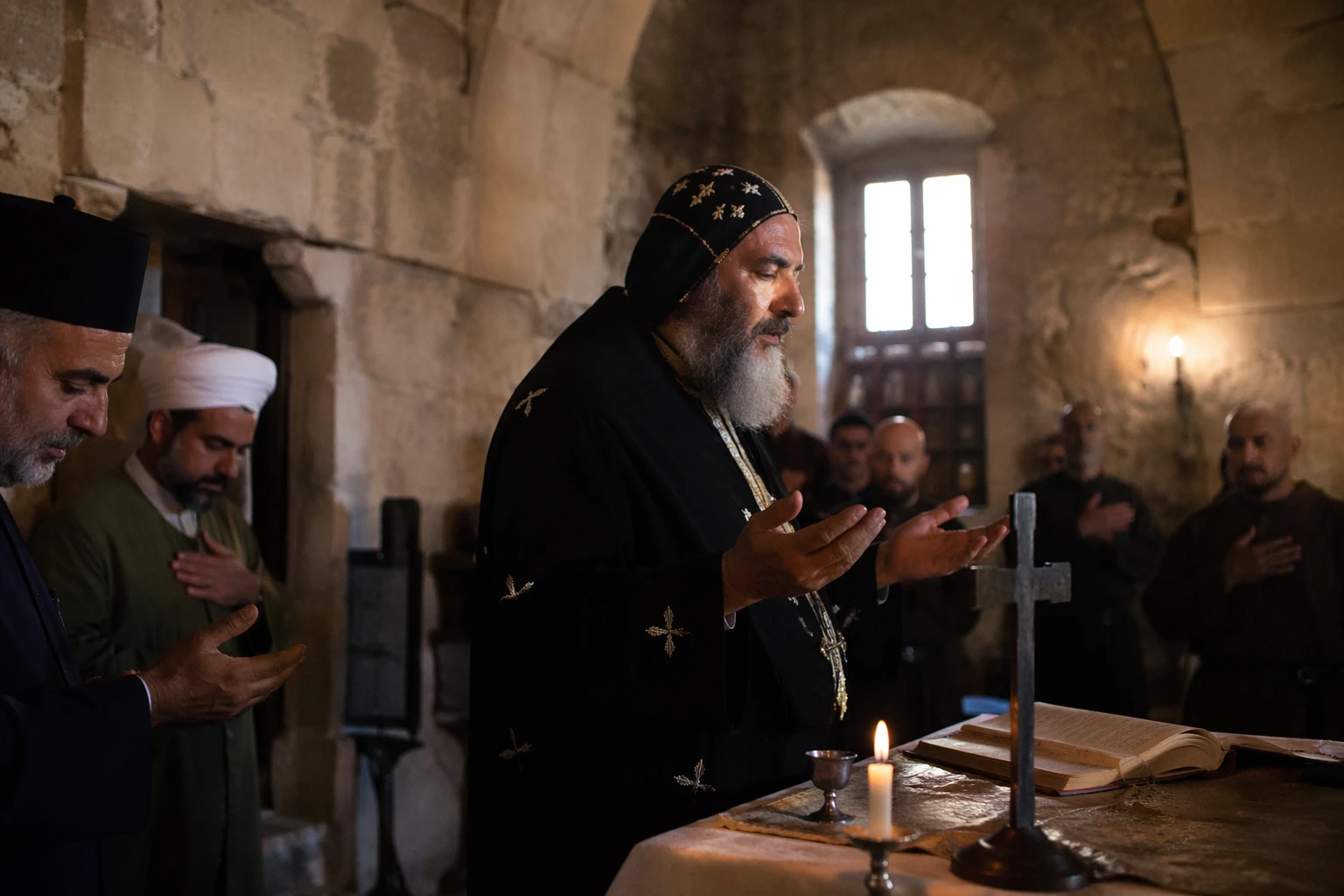
Leadership now rests with Father Jihad Youssef, who became head of the monastic community in 2021. Under his leadership, the monastery continues to present itself not as a museum of reconciliation, but as a place where reconciliation is practiced through daily discipline. The community includes eight monks and sisters, mainly Syriac Catholic, but also some Orthodox and Protestant members, a small but telling sign of how Mar Musa’s identity has widened beyond a single confessional boundary.
That composition matters politically. In a country where identity has often been hardened by war, exile, and militia rule, a monastery with Syriac Catholic roots that also includes Orthodox and Protestant members offers a model of religious membership that is porous without being vague. It shows how institutions can hold doctrine and coexistence at the same time.
Prayer here is designed to cross traditions
Mar Musa’s services draw from biblical scripture alongside Eastern Orthodox Christian and Sufi customs. That blend is not decorative; it shapes how the monastery understands its public role. The rule of the community centers on contemplative life, manual labor, and Abrahamic hospitality, so prayer is linked directly to work, welcome, and disciplined shared life.
The result is a spiritual environment that is intentionally open to Muslim, Christian, Jewish, and other visitors. The monastery has become known for hospitality that is grounded in routine rather than symbolism alone, with prayer, farming, maintenance, and conversation all folded into the same daily rhythm. Its agricultural and ecological activity further reinforces that pattern, linking the religious life of the community to the land around Nabk.
That blend of ritual traditions and shared labor explains why Mar Musa has been treated as more than a monastery. It functions as a civic encounter space, where religious difference is not hidden or flattened, but brought into a structured and respectful setting. In Syria, where public life has often been shaped by suspicion across communal lines, that is a political fact as much as a spiritual one.
What war changed, and what still endures
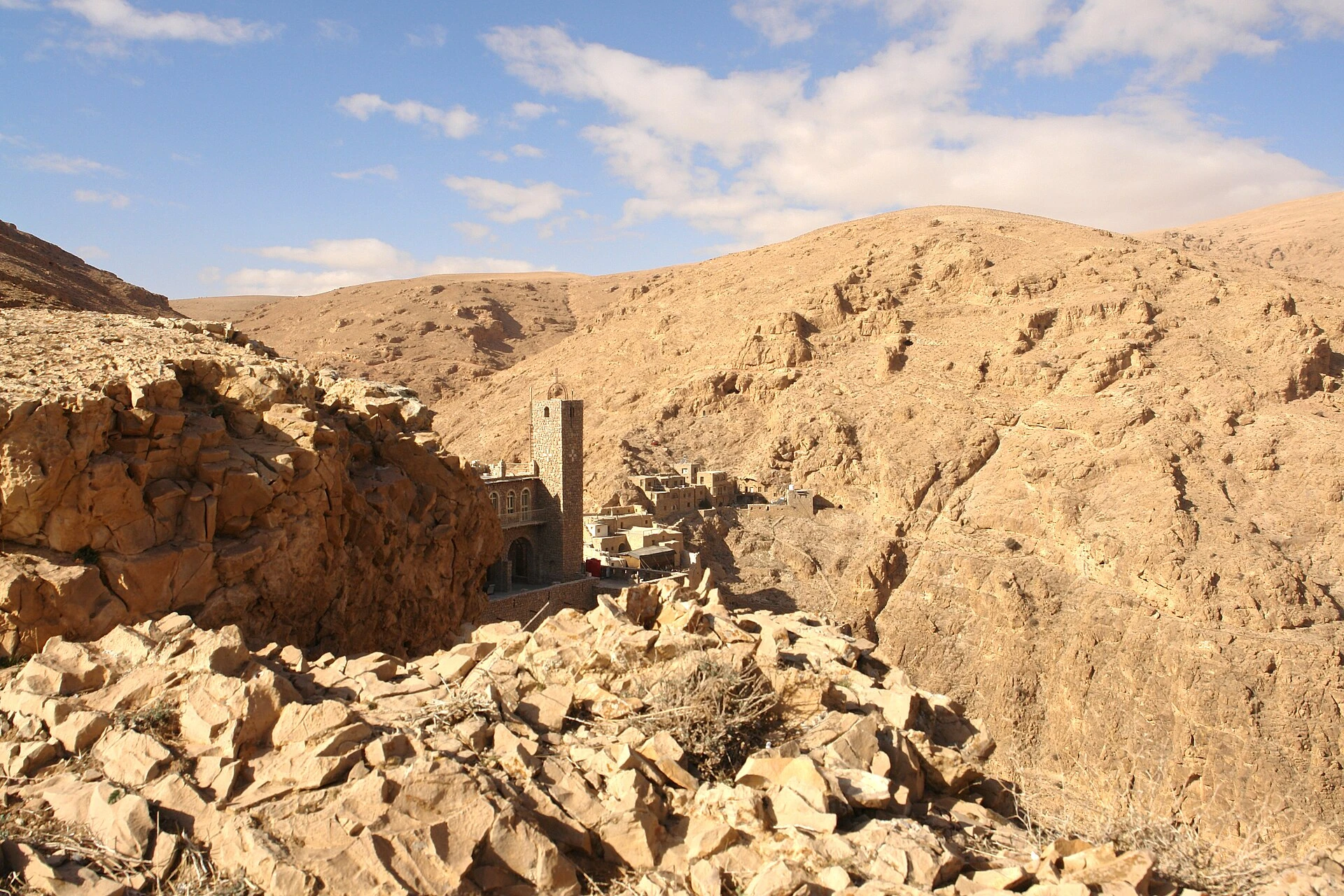
Before Syria’s civil war, Mar Musa received about 30,000 visitors a year. That number captures how far the monastery’s reputation had traveled beyond monastic circles and into the wider public imagination. The war and the instability that followed pushed those numbers down sharply, but the monastery did not stop functioning as a place of prayer, work, and encounter.
By 2025, it was still being described as a beacon of interfaith dialogue. That description matters because it was made while Syria faced renewed intercommunal violence, a reminder that the country’s religious institutions have not escaped the pressures that have fractured social trust elsewhere. Mar Musa stands out precisely because it keeps insisting on a different rhythm: shared ritual, hospitality, and agricultural labor over isolation and grievance.
The meeting held there on July 24, 2025, underscored that continuity. It was the first interfaith meeting at the monastery since the civil war began in 2011, a milestone that shows how rare such encounters have become and how carefully they are being revived. In a political environment where symbolic gestures are often cheap and temporary, the return of mixed religious dialogue to Mar Musa carried weight because it happened inside an institution built around daily practice.
Why Mar Musa matters beyond the monastery walls
Mar Musa endures because it offers a counter-narrative to the version of Syria that is most often told through war, sectarian rupture, and loss. Its value is not only aesthetic, though the hilltop setting, frescoes, and ruined Roman base are striking. Its deeper importance lies in the social architecture it has maintained: a Syriac Catholic community with Orthodox and Protestant members, a rule centered on work and hospitality, and a habit of receiving people across religious lines.
That makes the monastery useful for understanding Syrian politics in miniature. It shows how institutions can preserve pluralism without abandoning religious identity, how ritual can build trust where formal politics has failed, and how a place with 6th-century roots can still shape present-day civic life. Mar Musa is not just surviving the country’s upheaval; it is preserving a public grammar for coexistence that Syria still needs.
Sources
- [1]npr.org
- [2]tspr.org
- [3]ncronline.org
- [4]22-med.com
- [5]syrian-treasures.com
- [6]cnewa.org