Business
Tech selloff deepens as global stocks and chip shares slide

The tech trade came under fresh pressure as Nasdaq futures fell more than 2% and the biggest AI-linked names were hit again in premarket trading. Nvidia and Alphabet were down nearly 3%, while Intel, Marvell Technology and Advanced Micro Devices fell between 6.3% and 8.2% as investors questioned whether debt-fueled spending on AI infrastructure has run ahead of earnings power.
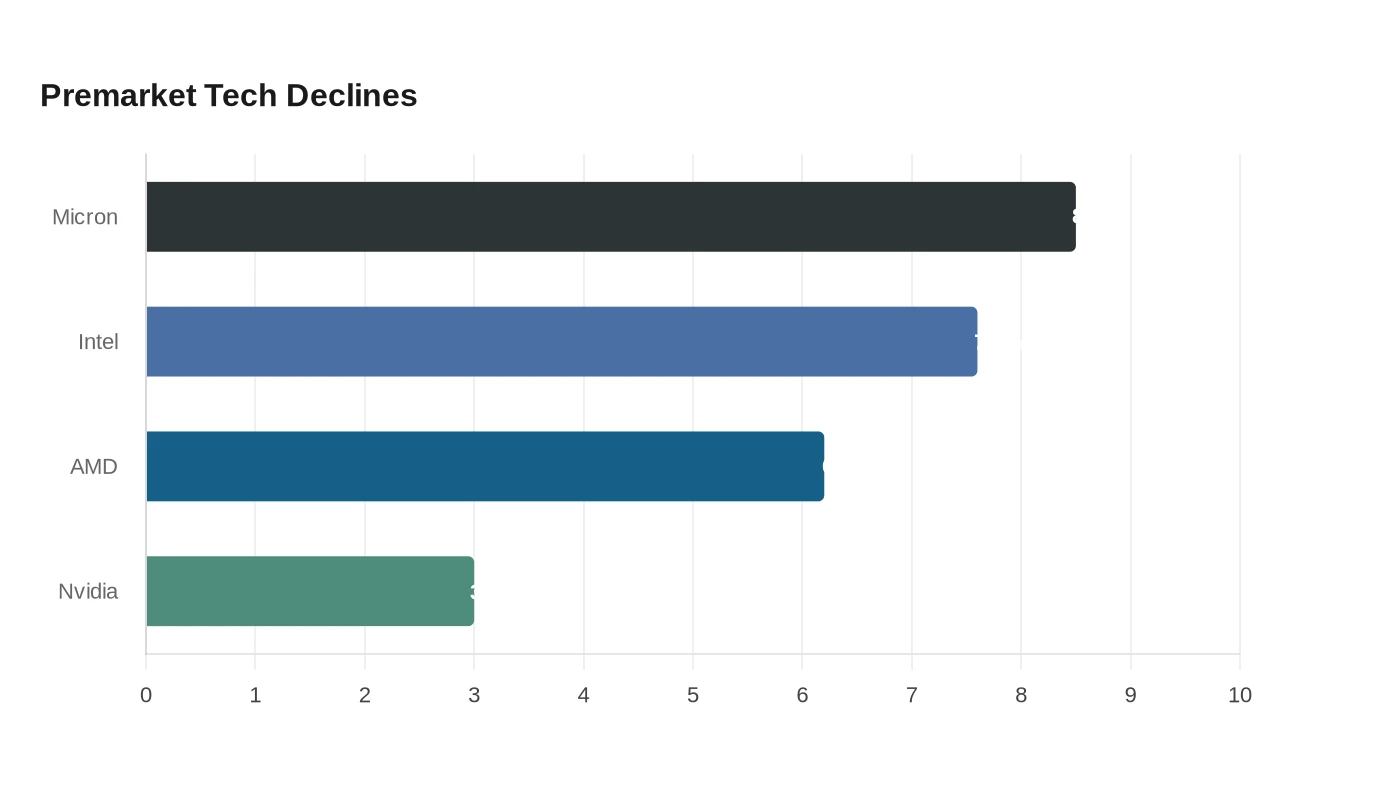
The retreat was not confined to Wall Street. South Korea’s Kospi closed 10% lower, with SK Hynix and Samsung each dropping more than 12% in a session that underlined how deeply chip stocks have become tied to the global risk appetite. Japan’s Nikkei 225 fell 3.55%, and Europe’s Stoxx 600 Technology index slid 3% as the selling spread across regions and semiconductor supply chains. In U.S. premarket trading, Micron Technology sank 8.5%, Intel fell 7.6%, AMD lost 6.2% and Nvidia slipped 3%.

The market message is clear: investors are repricing the tech rally rather than abandoning it outright. The selloff followed a sharp drop in U.S. tech heavyweights in the previous session, and analysts have pointed to stretched valuations in AI-related shares and renewed concern that corporate borrowing for AI buildouts may be amplifying the downside. That puts this move closer to a sentiment-driven correction than a full break in the AI story, but the scale of the decline shows how crowded the trade had become.
Falling oil prices add another layer to the story. Energy weakness usually helps cool inflation and supports household budgets, but it also signals fading growth expectations when it comes alongside a tech-led retreat. That mix matters because only two weeks earlier, markets were doing the opposite: investors were buying the latest dip in tech while oil slipped after Israel and Iran agreed to halt attacks for now.
The next signals will come from Treasury yields and the Federal Reserve path. On June 9, the 10-year Treasury yield was above 4.5%, the 30-year had spent more days above 5% this year than in any year since 2007, and markets were pricing a meaningful chance of a Fed hike as soon as October. If yields stay elevated while oil keeps easing, the pressure shifts from inflation fear toward growth caution. For retirement savers and households, that combination would argue for more volatility in tech-heavy portfolios and a harder test for the broader market’s appetite for risk.
Sources
- [1]news.google.com
- [2]money.usnews.com
- [3]cnbc.com
- [4]reuters.com