Business
Tencent signs multibillion-dollar DRAM supply deal with CXMT
Tencent Holdings has signed a supply deal worth more than 20 billion yuan, or about $2.94 billion, with ChangXin Memory Technologies for server DRAM, a purchase that ties one of China’s largest internet companies to a domestic memory maker for several years. Two people familiar with the transaction said the agreement runs for up to three years, while a third said it could last as long as five.
The contract gives Tencent a way to secure a critical component for cloud computing, databases and AI workloads at a time when memory demand remains tight across the global tech sector. DRAM has become a strategic input for data centers, and long-term supply agreements are increasingly valuable as shortages and price swings push buyers to lock in capacity well ahead of demand.
For CXMT, the deal is another sign that China’s homegrown chip suppliers are gaining commercial traction even as export controls and supply-chain restrictions reshape the semiconductor race. The company, founded in 2016 with government backing and based in Hefei, has built itself into one of China’s leading DRAM players and is trying to turn that position into lasting scale.
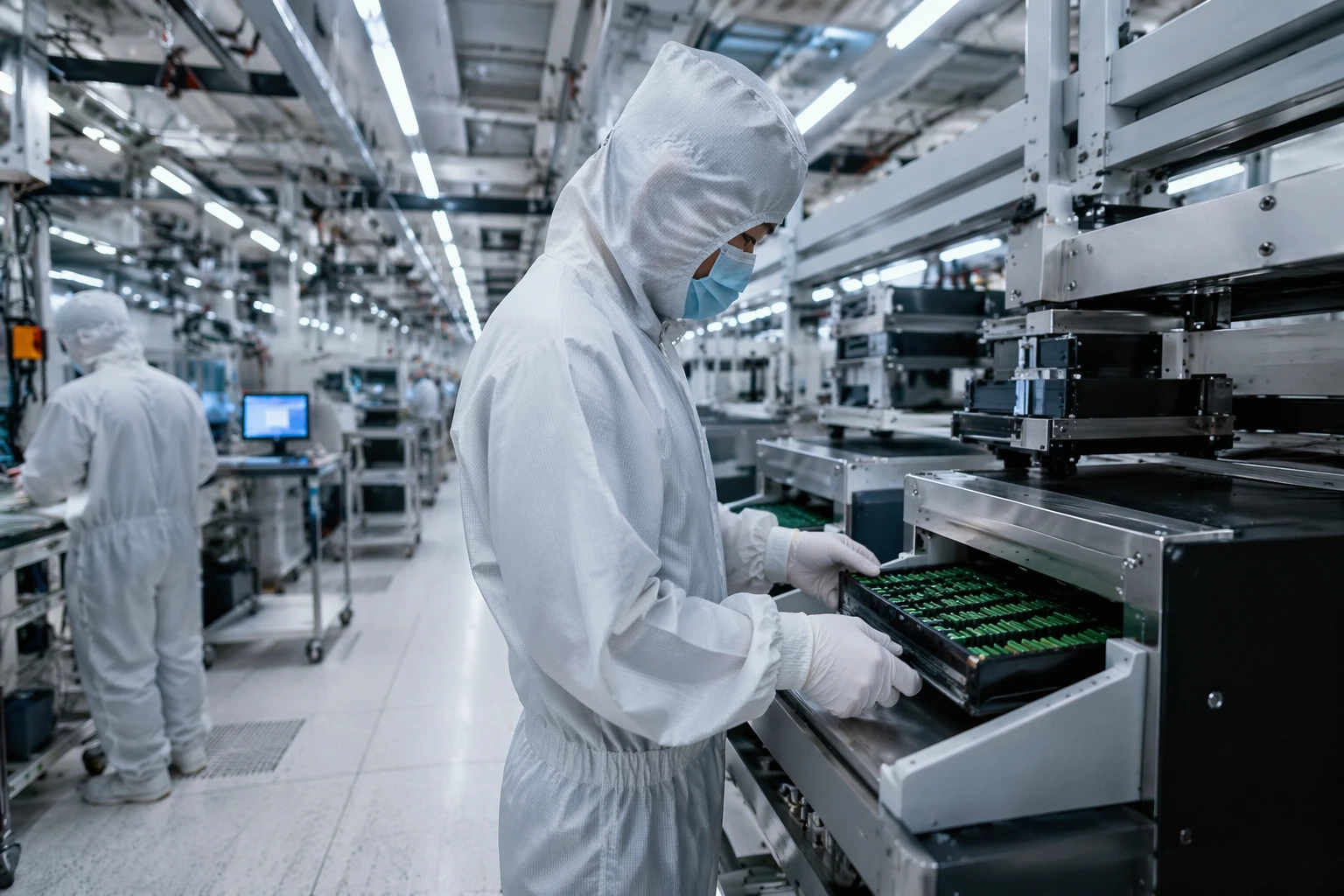
The timing also matters. China’s securities regulator approved CXMT’s IPO registration on June 13, and the company has been cleared for a listing on the Shanghai Stock Exchange’s STAR Market. CXMT plans to raise 29.5 billion yuan, which would make the offering the second-biggest in STAR Market history and the largest A-share IPO of 2026.
That public-market push sits alongside a broader customer base already taking shape. CXMT counts Tencent, Alibaba Cloud, ByteDance, Lenovo and Xiaomi as major customers in its prospectus, and it is in discussions with other major Chinese internet companies on similar collaborations. A strong anchor customer before listing can help reinforce investor confidence in a company still trying to widen its footprint in a market dominated by South Korea’s Samsung Electronics and SK Hynix and by U.S. suppliers.
Pricing trends help explain the rush to secure supply. UBS estimated that DRAM contract prices jumped about 95% quarter-on-quarter in the first quarter of 2026, and forecast the memory upcycle would last until at least late 2027. UBS also said the global memory market could reach $786 billion in 2026 and $1.2 trillion in 2027.
A separate source said CXMT was the world’s fourth-largest DRAM maker and that its global market share reached 3.97% in the second quarter of 2025. That scale is still modest against the industry’s biggest players, but the Tencent deal suggests Chinese buyers are increasingly willing to commit real volume to local suppliers as Beijing presses for greater semiconductor self-reliance.