Sports
Tennessee scientist leads World Cup pitch project across three countries
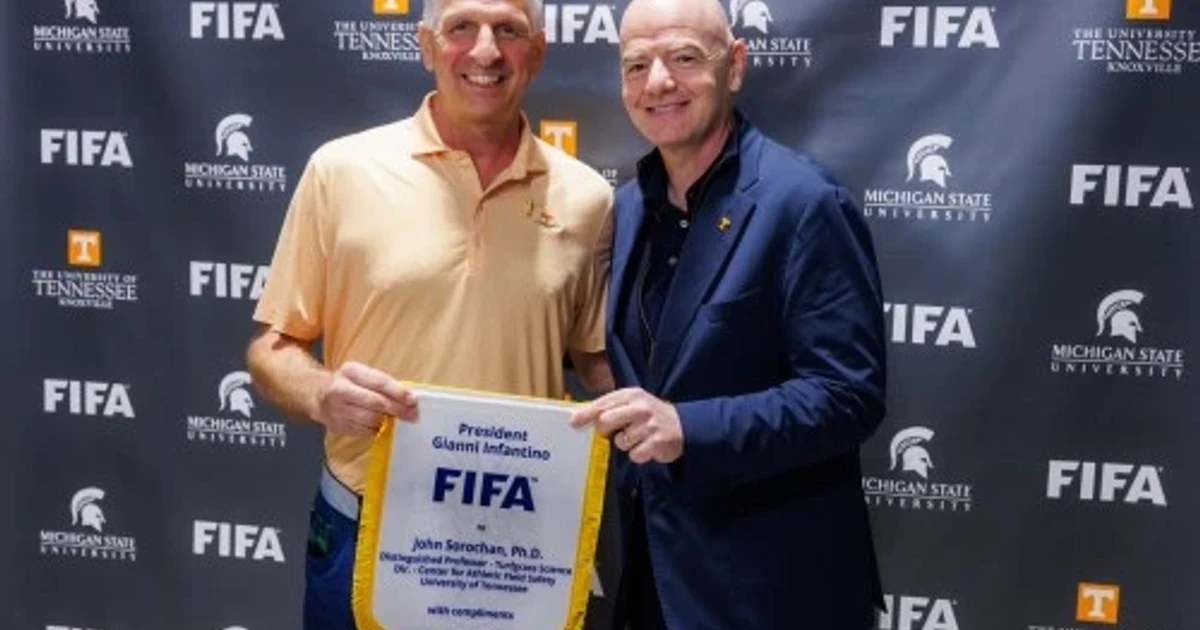
The 2026 World Cup will be played on 16 stadium pitches and dozens of training fields across Canada, Mexico and the United States, and one University of Tennessee scientist has spent nearly five years trying to make them all perform the same. John Sorochan, a turfgrass expert in Knoxville, led a multimillion-dollar FIFA project aimed at giving the tournament consistent natural-grass surfaces no matter the city, climate or stadium design.
FIFA chose the University of Tennessee, in partnership with Michigan State University, for a five-year research and development effort after host cities and venues were announced in June 2022. FIFA says the pitch program is its biggest ever for football, covering 16 stadium pitches and 77 training and practice fields. UT says the broader effort reached nearly 150 practice fields, a scale that reflects how much of a mega-event depends on work that most fans never see.
For Sorochan, the assignment drew on more than 30 years of turfgrass science and a career that stretches back to the 1994 FIFA Men’s World Cup, when he worked on the first natural grass field in a domed stadium while still an undergraduate at Michigan State. Today he serves as Distinguished Professor of Turfgrass Science and Management in UT’s Herbert College of Agriculture and Department of Plant Sciences.

The research has been centered at the East Tennessee AgResearch and Education Center in Knoxville, where UT and FIFA used climate-controlled test fields and a shade house designed to mimic domed-stadium conditions. That mattered because the World Cup will move from open-air venues to enclosed buildings, from humid heat to different soil systems and maintenance regimes, all while asking the same surface to absorb sprints, tackles and repeated matches.
FIFA officials and UT researchers gathered in Knoxville from Feb. 24-26, 2026, for a final Pitch Management Research Field Day before the tournament. The event brought together pitch managers and scientists working on grass selection, reinforced fiber systems, sod production and stadium installation, translating lab work into venue-ready guidance for host sites across three countries.

The work has already gone beyond soccer. UT says the turf research is helping parks, recreation fields, school and university sports fields, golf courses, yards and gardens, while also supporting Tennessee’s turfgrass industry. Keith Carver, a UT leader, said the impact reaches audiences around the world.
The project has drawn attention from The New York Times, NBC’s Today, PBS NewsHour, The Washington Post, The Wall Street Journal, The Associated Press, NPR and ESPN, a sign that the credibility of a World Cup can rest on the science of soil, seed and weather as much as on stars and scores.
Sources
- [1]nytimes.com
- [2]utk.edu
- [3]utianews.tennessee.edu
- [4]usga.org
- [5]news.utk.edu
- [6]landlifeandscience.tennessee.edu
- [7]inside.fifa.com
- [8]fifa.com