Science
Texas Researchers Uncover Massive New Mosasaur Species
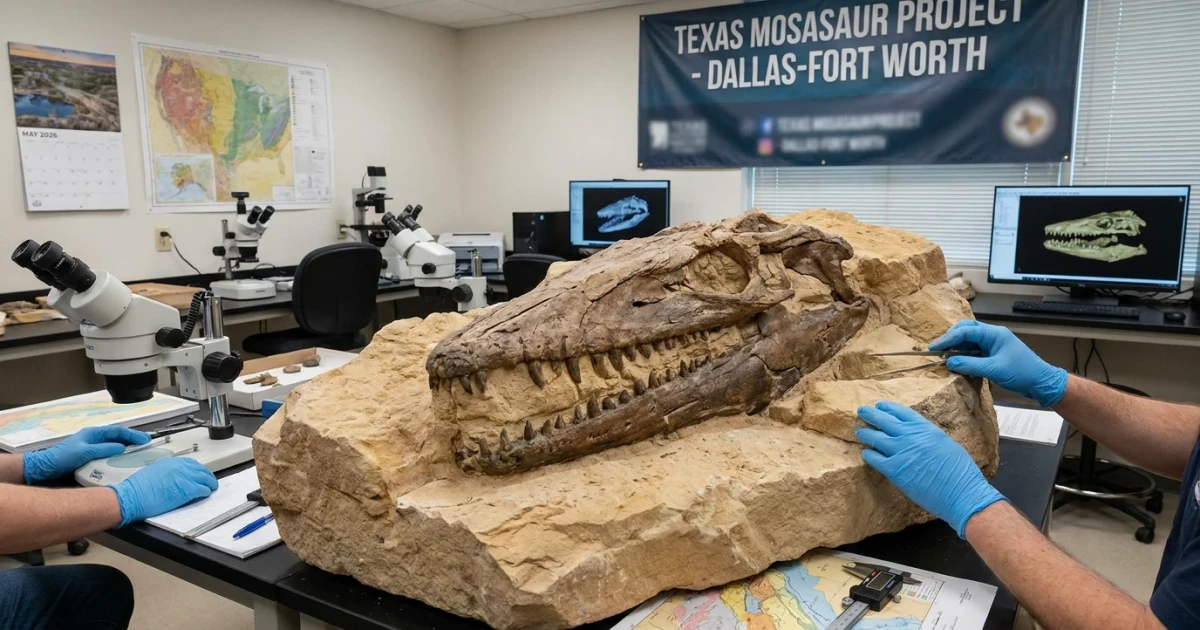
Paleontologists from the Dallas-Fort Worth area have unveiled the discovery of a massive new marine reptile species, described as the ‘T. rex of the sea’. This ancient predator, a mosasaur, once dominated the oceans during the Late Cretaceous period, reshaping scientists’ understanding of Texas’s prehistoric past.
A Prehistoric Predator Unearthed in Texas
The discovery, announced by researchers in North Texas, centers on a nearly complete mosasaur fossil unearthed in the region. Often likened to the Tyrannosaurus rex for its size and top-predator status, this newly identified species adds to the growing roster of formidable marine reptiles that once prowled the Western Interior Seaway, the vast inland sea that submerged much of present-day Texas around 80 million years ago.
Mosasaurs—large, predatory marine reptiles—were apex predators in their ecosystem, boasting powerful jaws and robust bodies. The new species joins the ranks of other significant mosasaur finds documented in the PaleoBioDB: Mosasauridae Taxonomic Data, expanding the known diversity and geographic range of these ancient sea dwellers.
Scientific Significance and Unique Features
- Distinct Skull and Jaw Structure: The newly identified mosasaur features a robust skull and a jaw structure adapted for crushing prey, indicating a specialized feeding strategy.
- Massive Size: Early estimates place the animal’s length at more than 30 feet, making it one of the largest marine reptiles discovered in Texas to date.
- Geologic Context: The fossil was excavated from Cretaceous-era rock layers that have yielded other marine reptile remains, but the new specimen’s features set it apart from previously known species.
According to the Natural History Museum, discoveries like this help researchers reconstruct ancient food webs and marine environments, providing critical clues about how these predators adapted and thrived.
Advancing Mosasaur Research
The Dallas-Fort Worth specimen is now part of a growing body of research on mosasaur diversity, evolution, and paleobiology. Scientific studies, such as those published in Scientific Reports, use detailed morphological analysis and phylogenetic techniques to place new species within the broader mosasaur fossil record. These findings are crucial for understanding how different mosasaur species evolved in response to changing marine ecosystems at the end of the dinosaur era.
For the public, the discovery brings renewed excitement to the region’s paleontology scene. As highlighted by the American Museum of Natural History, mosasaurs are often referred to as the ‘sea dragons’ of the Cretaceous, capturing imaginations with their formidable size and predatory prowess.
Implications for Texas’s Ancient Past
The identification of this new mosasaur species not only underscores the state’s significance as a paleontological hotspot but also opens new lines of inquiry into the diversity of marine reptiles that once inhabited the region. The National Geographic explainer on mosasaurs notes that these animals were among the last great marine reptiles before the mass extinction event that wiped out large dinosaurs and many ocean species.
As researchers continue to study the fossil, they hope to glean further insights into the lifestyle, diet, and evolutionary relationships of this ancient predator, offering a window into the dynamic ecosystems that shaped life in prehistoric Texas.
Looking Ahead
While the discovery is still being examined, it marks a milestone for paleontologists in Texas and beyond, promising to enrich scientific understanding of Cretaceous marine life. The giant ‘T. rex of the sea’ may have vanished millions of years ago, but its fossil legacy is now set to inspire new research and public fascination for years to come.