Technology
Thea Energy wins $20 million to build U.S. fusion magnet line
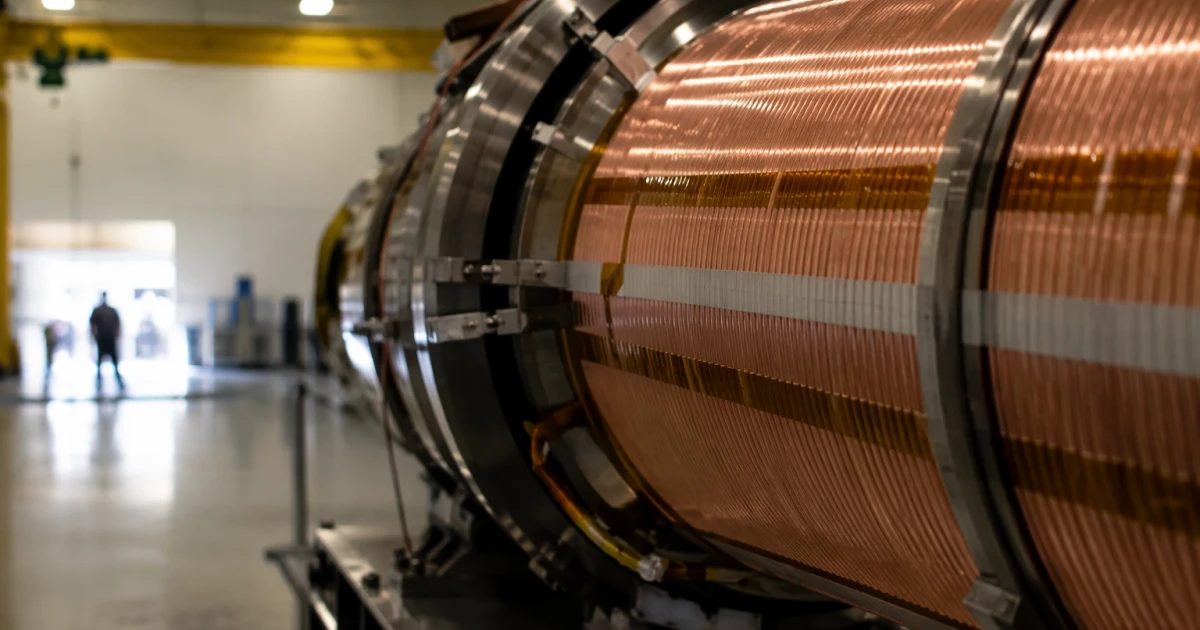
ARPA-E awarded Thea Energy $20 million to scale production of high-temperature superconducting magnets, putting federal money behind one of fusion power’s hardest manufacturing bottlenecks. The agency later said the Kearny, New Jersey company will establish the first domestic production line of modular HTS magnets.
The grant landed through SCALEUP Ready, an ARPA-E program designed to accelerate the commercial scale-up of high-impact energy technologies. In fusion, the bet is not on a reactor connecting to the grid tomorrow, but on building the hardware base that such a reactor would require: magnets that can be manufactured reliably and at scale.
Thea Energy has built its pitch around an economical, scalable fusion system that uses arrays of mass-manufacturable magnets and dynamic software controls. The company’s approach leans on the stellarator concept, which it says was invented in 1951 by Lyman Spitzer at Princeton Plasma Physics Laboratory.
The award was one of three U.S. Department of Energy public-private partnership awards Thea Energy announced on Sept. 11, 2025 through the Innovation Network for Fusion Energy program. The funds were set to support two collaborations with Princeton Plasma Physics Laboratory and one with Columbia University, tying the company’s magnet work to two of the region’s best-known research institutions.
Thea Energy had already been raising capital for the same manufacturing challenge. On Feb. 8, 2024, it announced a $20 million Series A financing to accelerate planar coil magnet array manufacturing and integrated stellarator system modeling. On May 27, 2026, the company said it had raised a $100 million Series B round, signaling that the manufacturing push had moved well beyond an early laboratory stage.
The DOE’s backing also comes after Thea Energy said on Jan. 13, 2026, that the department certified its fusion pilot plant preconceptual design, making it the first awardee in the agency’s Milestone-Based Fusion Development Program to complete that design review. For a field still trying to move from concept to hardware, that sequence matters: design review, magnet manufacturing, and only then a credible path to pilot-scale systems.
ARPA-E has been working this part of the fusion stack for years. The agency ran a fusion-related project called Advanced HTS Conductors Customized for Fusion from March 1, 2021 through Aug. 31, 2024, and on June 18, 2026 it announced $72 million for domestic critical minerals and ultra powerful magnet production. Thea Energy’s New Jersey line fits that same industrial-policy logic, using federal dollars to try to build a domestic supply chain for the magnets fusion reactors cannot function without.
Sources
- [1]techcrunch.com
- [2]thea.energy
- [3]arpa-e.energy.gov