Business
Thermal Drone Footage Sparks Scrutiny of Musk’s AI Power Plant
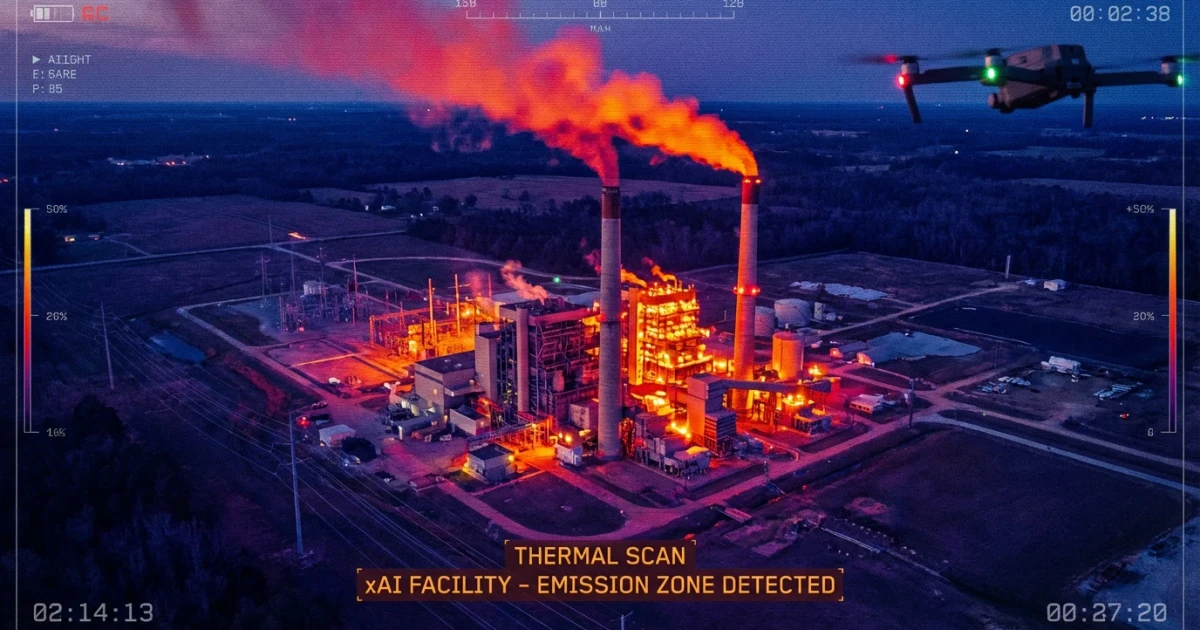
Thermal drone footage capturing emissions at Elon Musk’s xAI-operated gas turbine power plant in Mississippi has heightened concerns about potential violations of Clean Air Act regulations. The release of the footage, first reported by The Guardian, has prompted the NAACP to threaten legal action, accusing the facility of putting nearby communities at risk by not adhering to required air quality standards.
Drone Footage Highlights Regulatory Concerns
The Guardian reported that newly obtained thermal drone imagery appears to show the xAI facility emitting levels of heat and possible pollutants that, environmental advocates argue, exceed permitted thresholds. This technology is increasingly used by watchdog groups to independently assess emissions from industrial sites. In this instance, the captured images suggest that the plant’s gas turbines may be releasing more air pollutants than allowed under federal and state permits.
- The Mississippi plant is operated by xAI, Elon Musk's artificial intelligence company, and uses gas turbines to power large-scale data processing.
- Thermal drone footage can reveal heat signatures correlated with pollutant releases, offering a unique method for environmental monitoring.
- Environmental groups claim this footage provides evidence of the plant operating outside the bounds of its Mississippi air permits.
NAACP Threatens Legal Action
The NAACP, citing community health and environmental justice concerns, has threatened to sue xAI over the operation of the plant. Representatives point to the footage as part of a broader pattern of emissions issues at gas turbine facilities, which are disproportionately located near communities of color and lower-income neighborhoods. According to the NAACP’s climate justice resources, these communities face elevated risks from exposure to nitrogen oxides, particulate matter, and other pollutants commonly produced by gas-fired power plants.
Legal experts note that enforcement of Clean Air Act compliance often depends on both state and federal monitoring, as well as watchdog efforts like those undertaken by the NAACP. If the footage is substantiated by further testing, it could form the basis for a lawsuit demanding stronger regulatory action or plant modifications.
Regulatory and Industry Response
The Guardian highlighted ongoing questions about how new, AI-powered energy infrastructure fits into existing environmental oversight. Traditional power plants are subject to strict emissions reporting and compliance checks, but some advocates say rapidly-deployed tech sector projects—such as xAI’s operation—may not receive the same scrutiny.
Data from the U.S. Energy Information Administration shows that gas turbine plants remain a major source of electricity, but also a significant contributor to greenhouse gas emissions and local air pollution. Any confirmed violations at the Mississippi plant could have broader implications for oversight of similar facilities nationwide, especially as demand for energy-intensive AI applications grows.
Community and Environmental Impact
Local residents and advocates argue that enforcement gaps leave them exposed to health risks. The NAACP’s research details how increased emissions from gas turbines are associated with higher rates of respiratory illness, heart disease, and other health impacts in frontline communities. The controversy around the xAI plant has focused renewed attention on the need for transparent monitoring and equitable environmental protections as technology companies expand their physical infrastructure.
What Comes Next?
As the story develops, further investigation by state and federal regulators is likely, with the potential for legal proceedings if violations are confirmed. The controversy underscores ongoing tensions between rapid technological deployment and established environmental safeguards. For communities near the plant, the outcome may set important precedents for how new energy projects are sited, monitored, and held accountable for their impacts.