World
Thousands march in Budapest Pride after Orbán election defeat
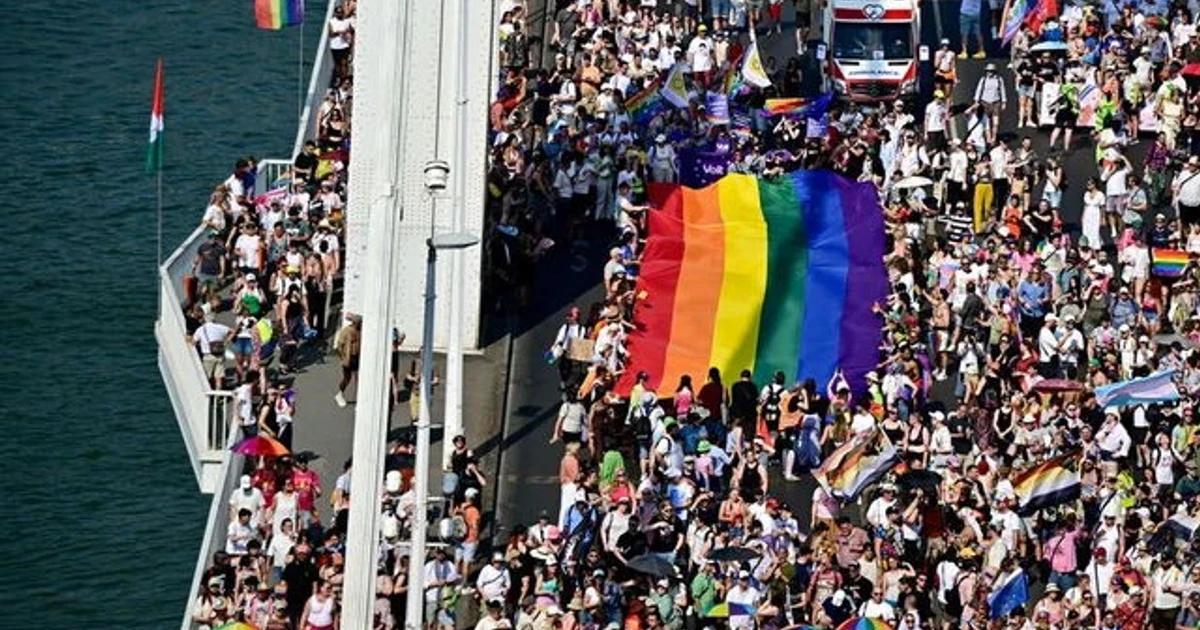
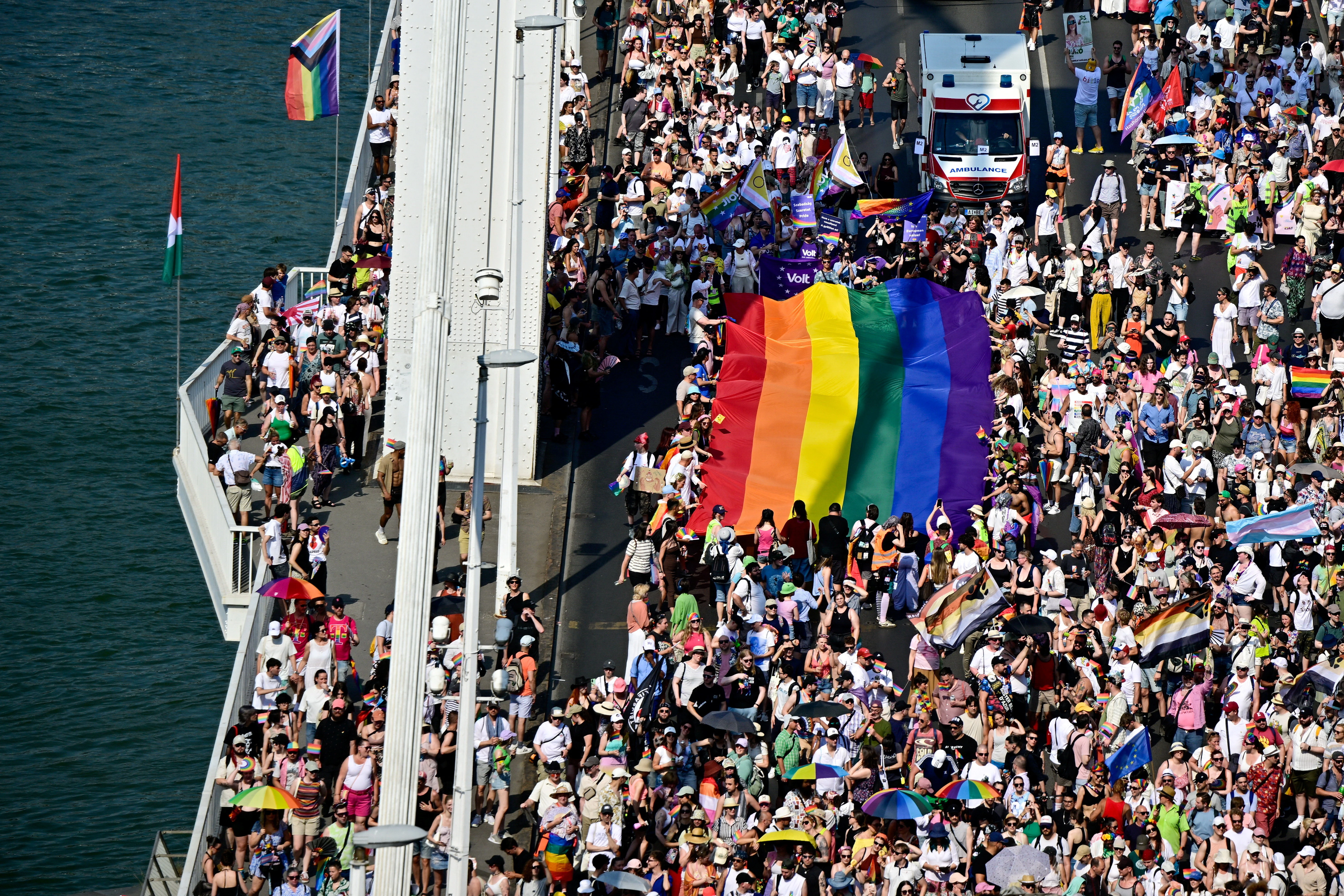
More than 10,000 people marched through Budapest on Saturday for the city’s first annual Pride event since Viktor Orbán’s election defeat in April, turning a once-threatened gathering into a public test of whether political change in Hungary now reaches civic life. In record heat, marchers carried large rainbow and European Union flags through the capital in a scene that was visibly more celebratory than last year’s rally, which Orbán’s government had tried to ban and which became a mass anti-government protest.
Budapest police said in May that, after the organizers’ notification process and an in-person consultation, “no grounds for prohibiting the assembly arose.” Officers also imposed restrictive decisions on three counter-demonstrations to keep them away from the Pride route, a sign that the march proceeded under tighter policing even as the outright ban fell away. The change followed Orbán’s April defeat to Péter Magyar’s center-right Tisza party, which opened the way for the event to go ahead openly rather than under the shadow of a prohibition.
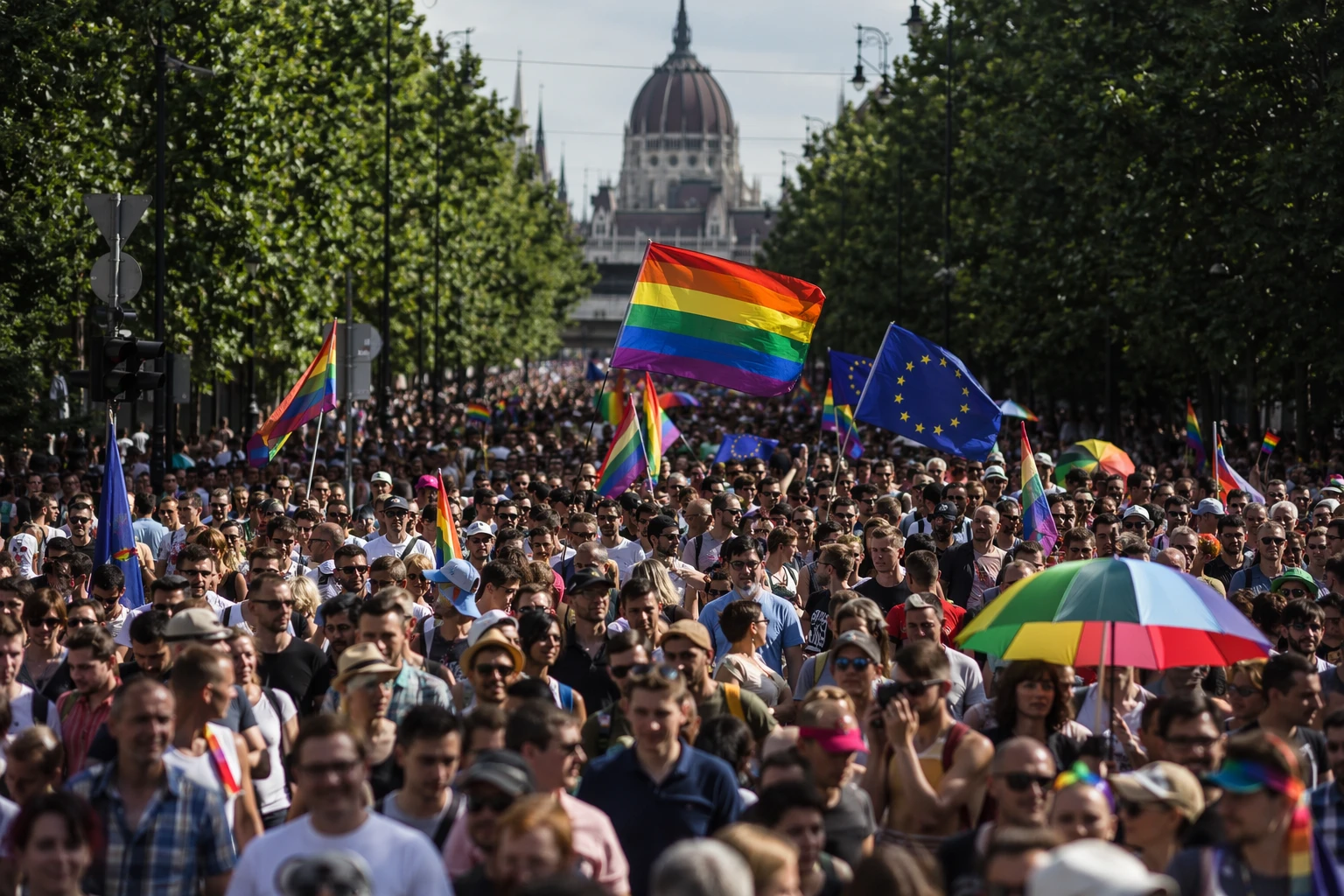
For many marchers, the difference was not only legal but emotional. Fanni Fajth, an 18-year-old student, said everyone seemed much more uplifted than before. Mate Tarnai, a 51-year-old chemist, said the atmosphere in the country felt much more relaxed and that people felt more freedom in daily life. Boglarka Boruzs said LGBTQ people could feel safer and more accepted, and that politicians had the power to help society understand that it is okay to be gay. The symbolism on the streets reflected that mood: rainbow banners mixed with European Union flags, signaling both a local fight for dignity and a broader claim to democratic norms.
The march also laid bare how much of the dispute in Hungary remains tied to the legal architecture Orbán built over 16 years in power. That agenda included limits on changing gender markers in personal documents, restrictions on adoption by same-sex couples, and school materials seen as promoting homosexuality or gender transition. Hungary adopted the underlying anti-LGBTQ law in June 2021, then added a law restricting freedom of assembly on 18 March 2025 and a constitutional amendment on 14 April 2025. On 21 April 2026, the Court of Justice of the European Union ruled in Commission v Hungary that the 2021 law breached EU rules, in a case backed by the European Commission, 15 member states and the European Parliament.
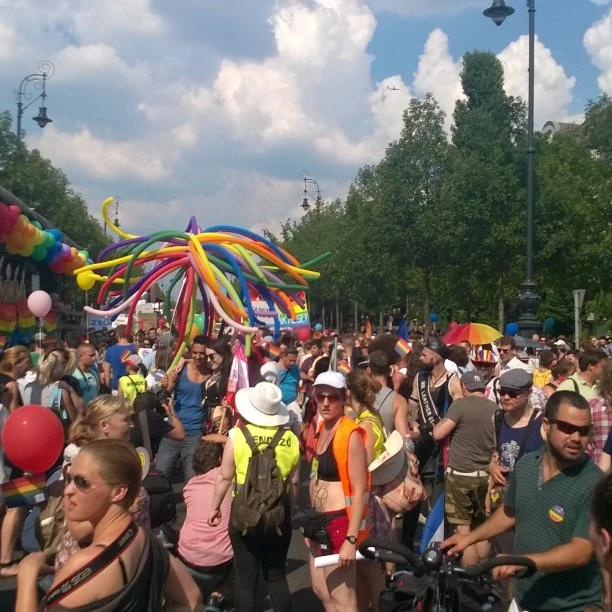
Last year’s Pride drew far larger crowds, with estimates ranging from more than 100,000 to as many as 200,000, showing how quickly the event can become a national barometer. This year’s turnout suggested that Orbán’s defeat changed the tone in Budapest, but the legal and institutional fights over LGBTQ rights are still far from settled.
Sources
- [1]usnews.com
- [2]rfi.fr
- [3]europarl.europa.eu
- [4]curia.europa.eu
- [5]politico.eu
- [6]amnesty.org
- [7]hrw.org
- [8]independent.co.uk