Lifestyle
Thousands of Vespas parade through Rome for 80th anniversary
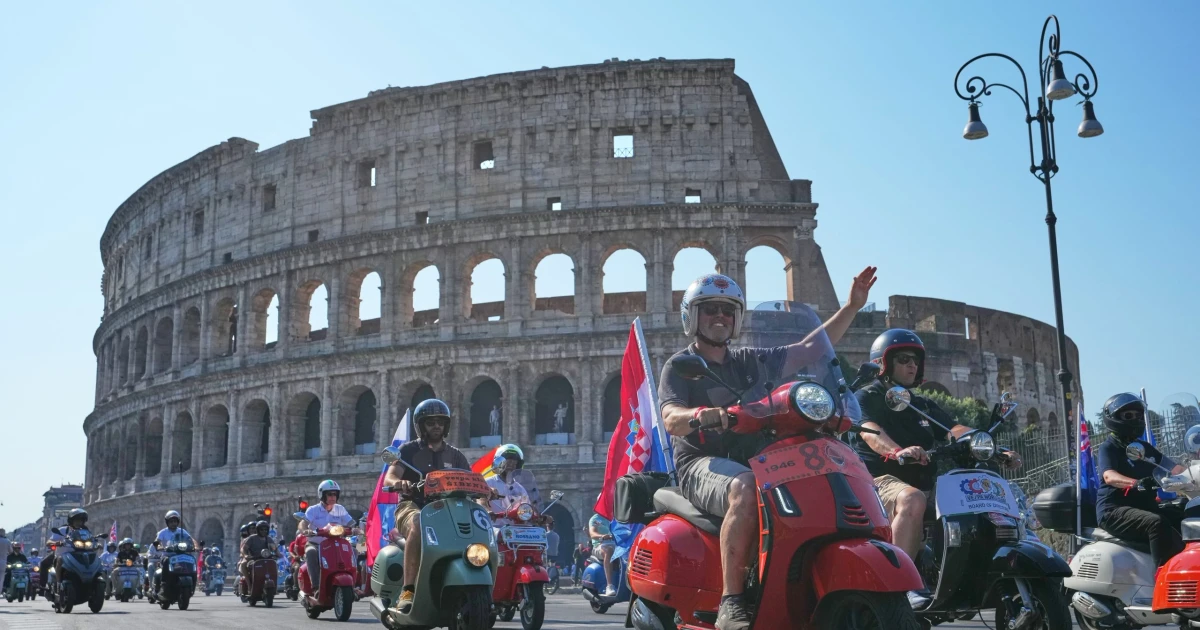
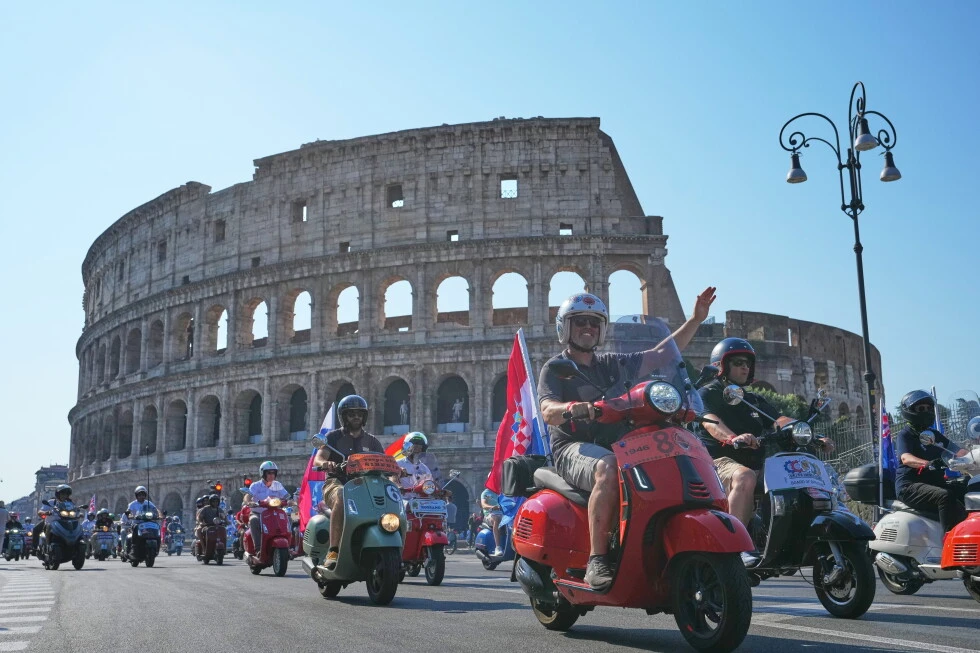
More than 15,000 Vespas buzzed through Rome on Saturday, June 27, as riders traced a route past the Colosseum and the Roman Forum to mark the scooter’s 80th anniversary. The parade drew riders from across continental Europe, northern England, San Francisco, Australia’s Gold Coast, the Philippines and other places, turning the city center into a moving exhibition of chrome, paint and engine noise.
For many of the people in the procession, the Vespa was not being treated as a commuter tool but as a cultural object. Natalie Dunand called it the essence of “Italian style, freedom, the ’60s,” a description that linked the scooter to postwar optimism, midcentury glamour and the long shadow of Italian design. The event also pushed the Vespa into the same national frame usually reserved for Ferrari and Ducati, with the little scooter briefly standing above more powerful machines in the public imagination.
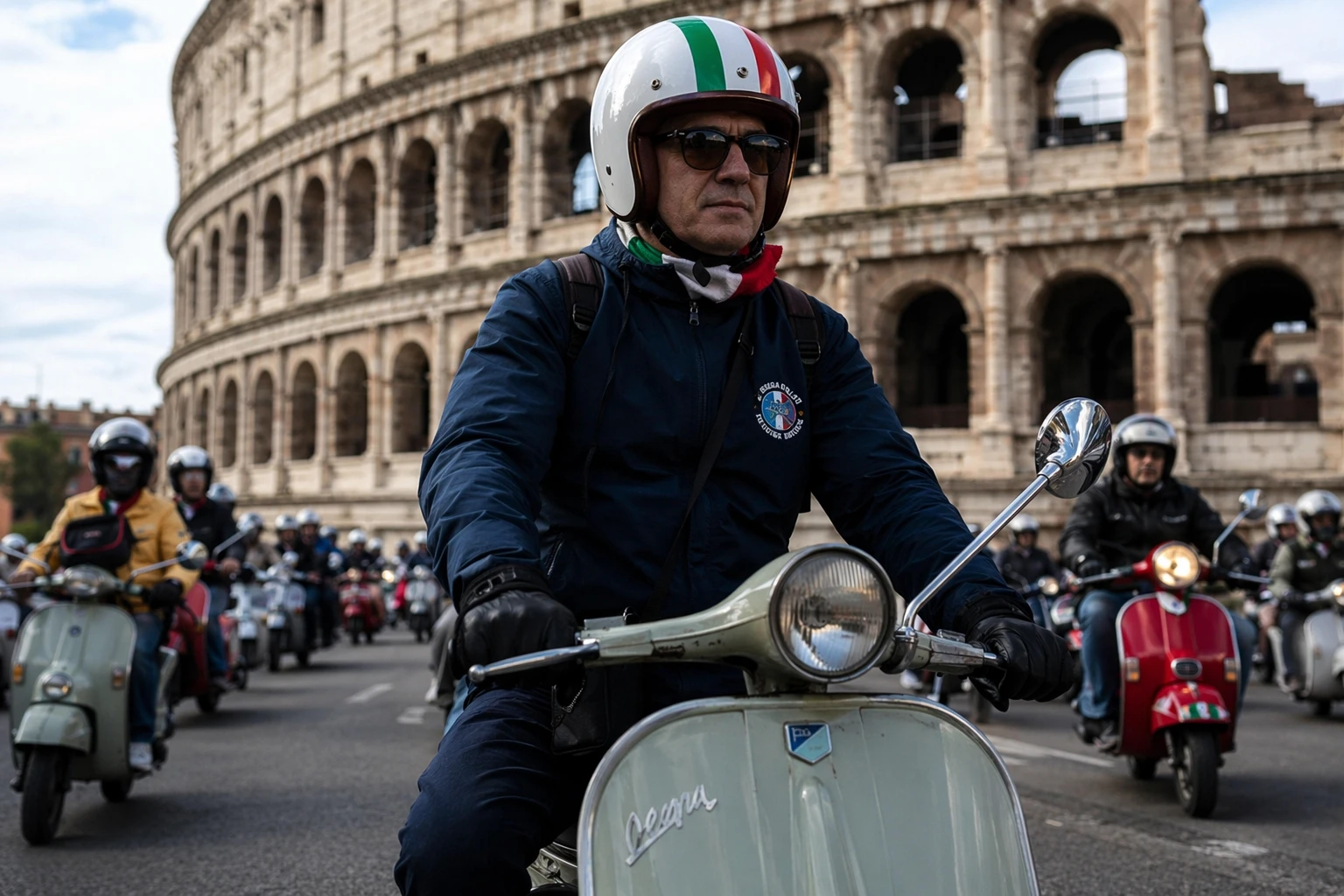
That enduring pull begins with the product’s origin story. Piaggio says the Vespa’s patent was registered on April 23, 1946, after prototype work started in 1945 with the aim of helping motorize postwar Italy through a simple, low-cost vehicle. More than 19 million Vespas have been produced since then, a scale that helps explain why the anniversary drew not only riders but also families, collectors and brand loyalists who see the scooter as part of Italy’s industrial identity as much as its street life.
The official Vespa Roma 2026 program ran from June 25 to June 28 and included a ribbon-cutting ceremony by Rome Mayor Roberto Gualtieri. The celebration centered on a Vespa Village at the Foro Italico and was described by Piaggio and Vespa as the largest celebration in the brand’s history. The program also included a commemorative coin presentation by the Istituto Poligrafico e Zecca dello Stato and a Poste Italiane first-day cancellation ceremony, underscoring how deeply the anniversary was woven into public institutions.
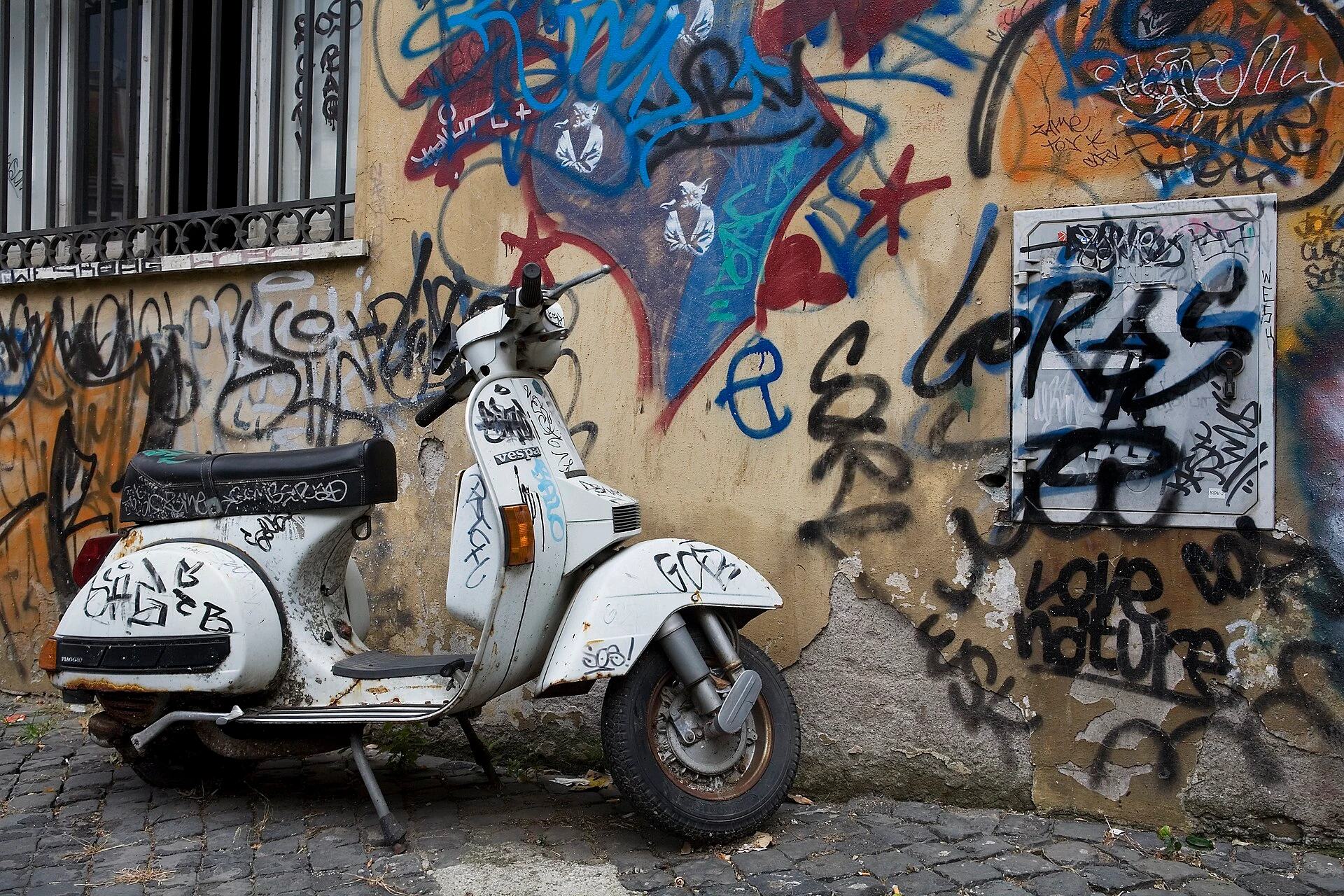
Euronews reported 160 Vespa models on display, charting the brand’s evolution from 1946 to the present. Together with the parade, that display turned Rome into a living archive of a machine that began as a practical answer to a battered country and became a global symbol of style, mobility and memory.
Sources
- [1]thenationalherald.com
- [2]apnews.com
- [3]piaggiogroup.com
- [4]vespa.com
- [5]press.piaggiogroup.com
- [6]euronews.com
- [7]vespaworldclub.org