Politics
Thousands protest as Germany’s AfD opens annual conference in Erfurt

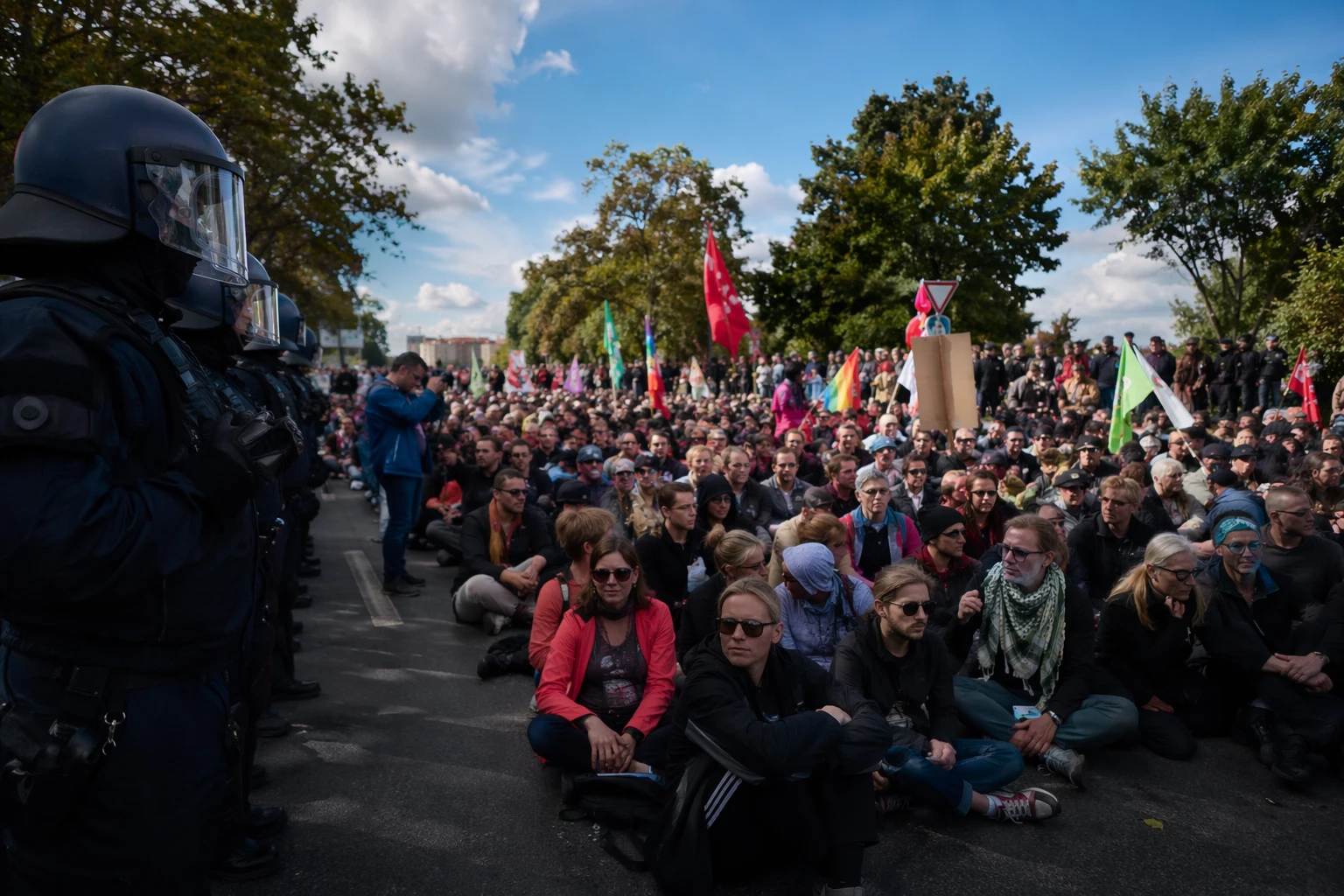
Thousands of AfD opponents blocked roads leading to the Erfurt Convention Center on Saturday as the far-right party opened its annual conference in the eastern German city. Police estimated that about 15,000 people protested in and around Erfurt, with unions, civil society groups and left-wing parties joining a scene that required a large deployment of riot police.
The conference ran July 4-5 in Thuringia, and police brought reinforcements from across Germany while setting up broad road closures around the venue. Internal security assessments had warned that more than 50,000 demonstrators could descend on the city, underscoring how the gathering became as much a security operation as a political event.
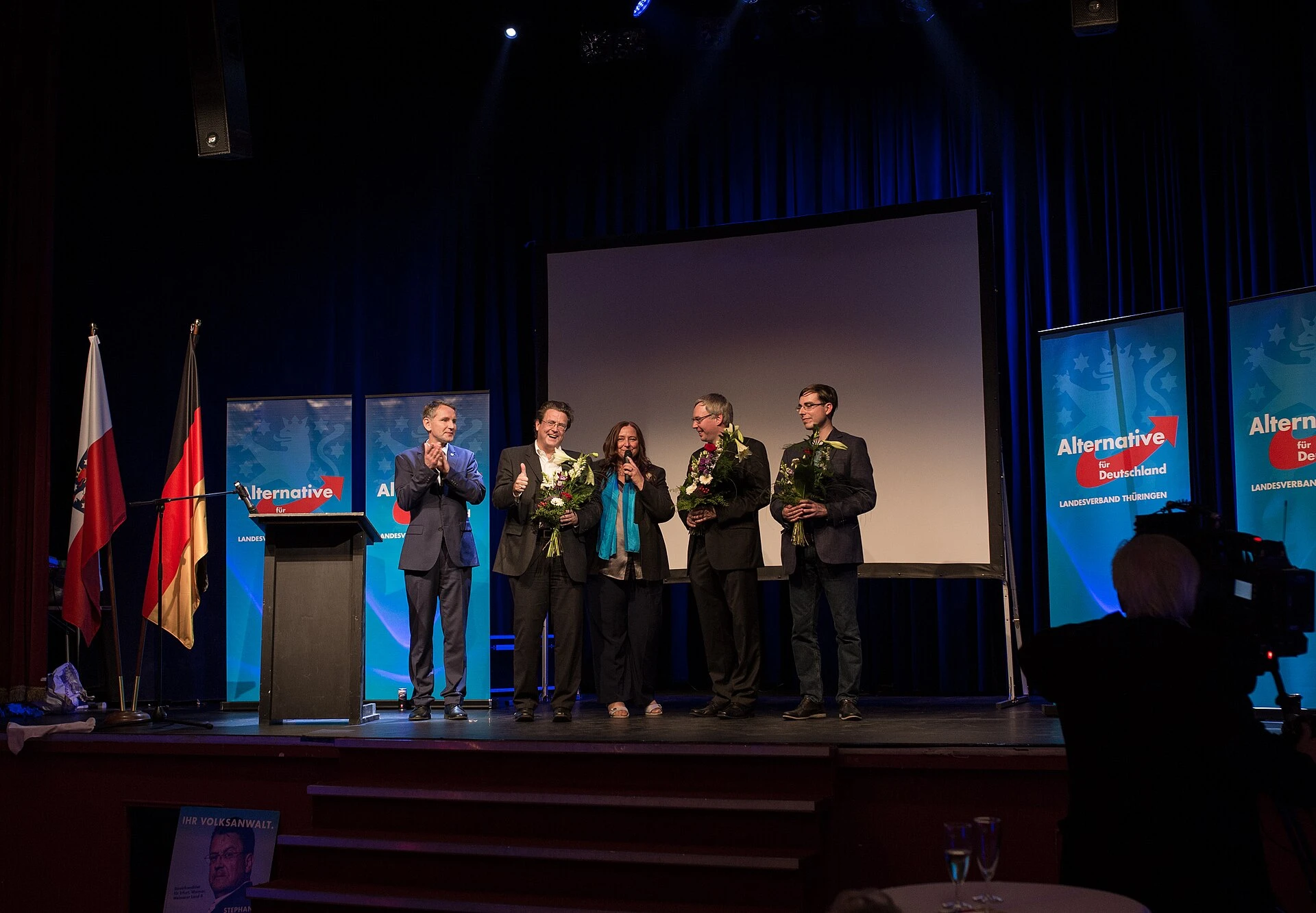
Inside the hall, the AfD re-elected Alice Weidel and Tino Chrupalla as co-leaders, keeping the same leadership pair in place as the party continues to surge in national opinion polls ahead of Chancellor Friedrich Merz’s conservatives. Weidel used her opening remarks to sharpen the party’s confrontational tone, saying, “For this remains our last chance to save our country.” She added that more and more people wanted to support the AfD in what she described as a fight against Germany’s decline and in defense of fatherland and identity.
The party’s messaging outside the formal speeches was just as explicit. A song titled Send them back played on the AfD’s social media stream before the conference opened, and vintage-style cards sold inside the hall carried slogans including “YOU will be deported.” Immigration remained central to the party’s identity and its effort to keep mobilizing supporters around cultural grievance and border politics.
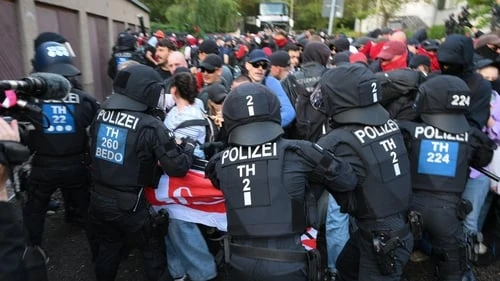
The protests were organized under the banner of Widersetzen, or Resist, an anti-AfD umbrella group. Georg Becker, a Widersetzen spokesperson, said organizers wanted to show they would not tolerate what they described as rising fascism in Germany. The confrontation in Erfurt also landed in the middle of a crucial electoral calendar: Saxony-Anhalt is due to vote on September 6, and Mecklenburg-Vorpommern is expected to hold its election on September 20.
Those votes matter because the AfD is no longer only a protest movement in the east. Its advance has put it within striking distance of state-level power, and its leaders are treating those regional contests as a route to greater national influence. The crowd in Erfurt showed the scale of opposition, but the ballot boxes in September will show whether that opposition can still slow the party’s rise.
Sources
- [1]aol.com
- [2]usnews.com
- [3]politico.eu
- [4]bundeswahlleiterin.de
- [5]aljazeera.com
- [6]straitstimes.com