Science
Thwaites Glacier Melting Raises Concerns Over Antarctic Ice Loss
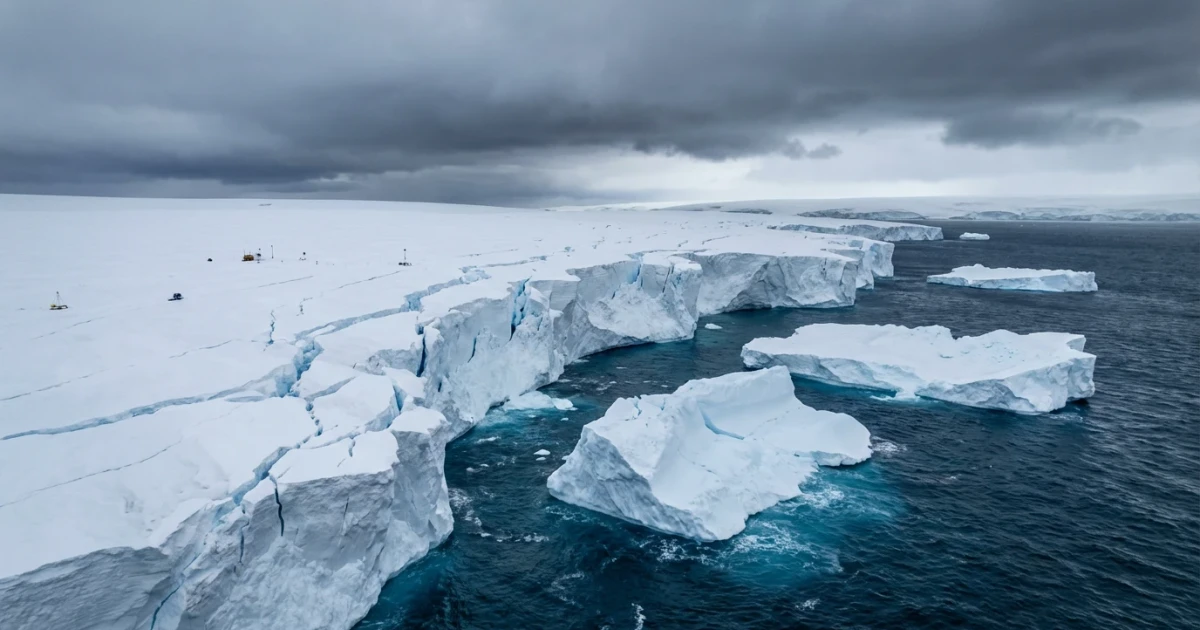
New climate models have raised serious concerns about the future of the Thwaites Glacier, a massive ice formation in West Antarctica often dubbed the "Doomsday Glacier." Recent projections indicate that Thwaites could lose as much ice by 2067 as the entire Antarctic continent has lost up to now, intensifying fears about potential global sea level rise and the stability of the region.
Thwaites Glacier: A Critical Tipping Point
Located in West Antarctica, the Thwaites Glacier spans roughly 120 kilometers and is considered one of the world's largest and most unstable glaciers. Its sheer size and position mean its fate is closely linked to the stability of the entire West Antarctic Ice Sheet. According to a recent Nature study, Thwaites has undergone significant retreat over the past few centuries, but new modeling suggests the pace of ice loss could accelerate dramatically in the coming decades.
Latest Model Projections Warn of Accelerated Retreat
Phys.org reported that advanced climate models now show Thwaites could lose as much ice by 2067 as the Antarctic continent has lost to date. This assessment is based on updated projections developed by leading glaciologists and climate scientists, who incorporated recent field data, satellite observations, and ice sheet dynamics into their simulations. The NSIDC's Antarctic ice shelf change dataset provides context for these alarming numbers, documenting how ice area and thickness have changed over time.
- Thwaites Glacier alone accounts for roughly 4% of global sea level rise annually, according to NASA data.
- The glacier is losing ice at a rate of over 50 billion tons per year, and this rate is projected to increase as warming ocean water erodes its base.
- Current models suggest that if Thwaites collapses, it could ultimately contribute up to 65 centimeters to global sea level rise.
Why Thwaites Matters for Global Sea Levels
The significance of Thwaites stems from its role as a "buttress" for neighboring glaciers. If Thwaites destabilizes, it could trigger a chain reaction leading to the collapse of other parts of the West Antarctic Ice Sheet. The Bedmap2 dataset shows how the glacier's unique topography makes it vulnerable to rapid retreat, especially as warm ocean currents reach its grounding line.
Research published in Nature Climate Change highlights the mechanisms driving this retreat, especially the "marine ice sheet instability" process, where melting at the base leads to a runaway collapse as the glacier sits below sea level on a sloping bedrock.
International Efforts to Monitor and Model Change
Given the risks, the International Thwaites Glacier Collaboration unites scientists from the US, UK, and other nations to collect field data and refine model projections. The US Antarctic Program's science planning outlines the deployment of autonomous vehicles, ocean sensors, and ice-penetrating radar to better understand how quickly changes are happening.
The AntClimNow data repository provides climate and glacier datasets that help researchers track ongoing ice loss and refine predictions for the coming decades.
Uncertain Future, Urgent Questions
While the models reported by Phys.org do not guarantee that Thwaites will match the entire Antarctic ice loss by 2067, the possibility highlights just how quickly Earth's polar regions are changing. Scientists emphasize that the rate and scale of future melt depends on both natural feedbacks and human-driven emissions, but the window for limiting catastrophic ice sheet loss is narrowing.
As research continues, Thwaites remains a focal point for understanding the risks of rapid ice sheet collapse and the profound implications for coastal communities worldwide. For those tracking the glacier's fate, open access to ice loss data and ongoing international collaboration will be key to informing policy—and preparing for a future shaped by a changing Antarctic landscape.