Politics
Tom Steyer’s $215 million California governor bid falls short

Tom Steyer’s more than $215 million bid for California governor ended the same way his presidential run did: with vast spending, high visibility and no victory. NBC News projected on June 9, 2026, that the billionaire climate activist was out of contention after finishing outside the top two in California’s all-party primary.
Steyer’s campaign leaned heavily on advertising, with about $209 million spent on ads, according to AdImpact. The pitch tried to turn his fortune into a political asset, casting him as a billionaire willing to fight corporate power. He embraced language that framed him as a “class traitor,” promised to raise taxes on corporations and the rich, and argued that his own money made him independent from Sacramento power brokers. That argument did not fully connect with Democratic primary voters in a race that also featured Xavier Becerra, Katie Porter, Antonio Villaraigosa and Betty Yee, alongside Republicans Steve Hilton and Chad Bianco.
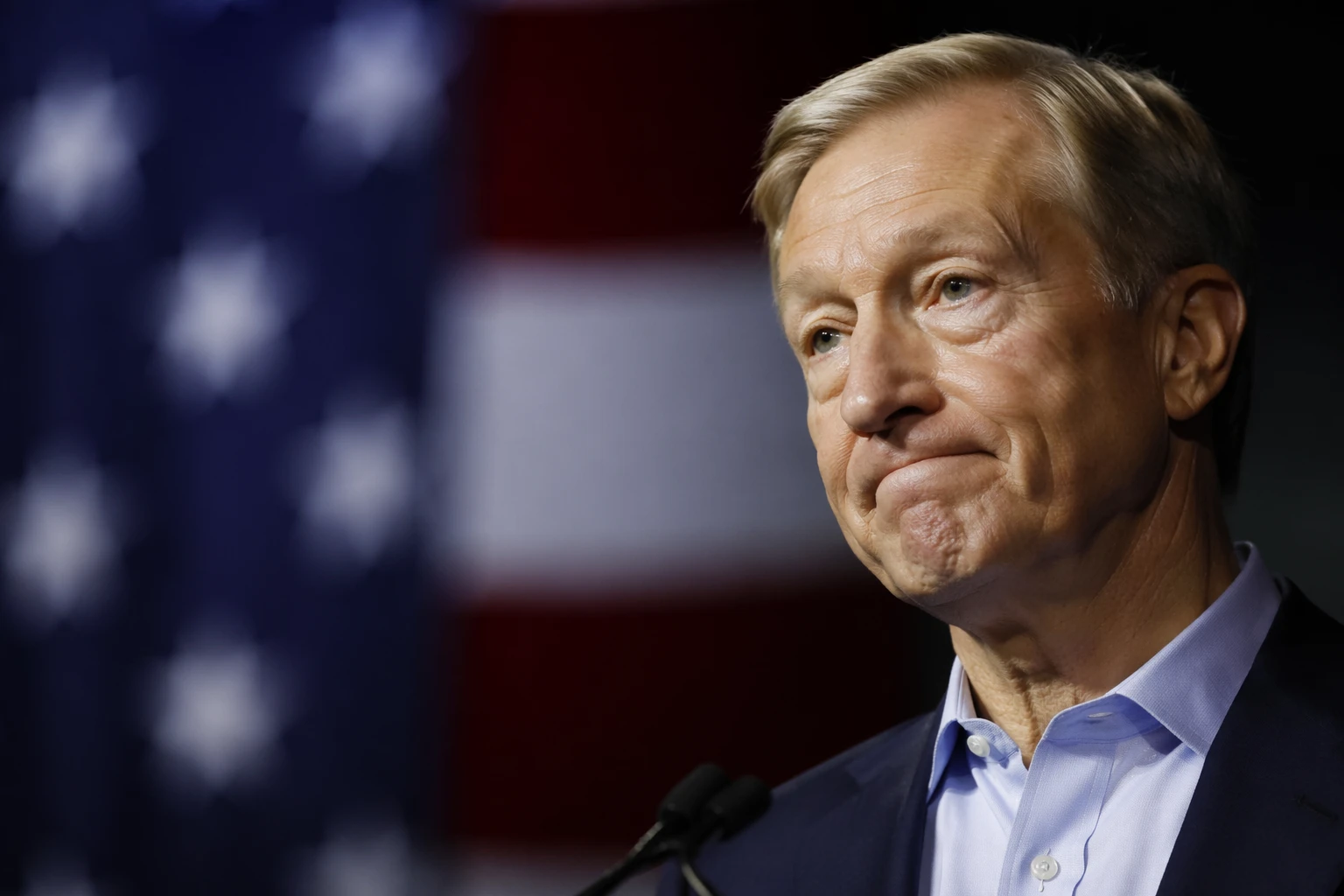
The California defeat extends a long record of expensive campaigns that failed to turn Steyer’s wealth into elective office. In 2020, he spent more than $300 million in contributions and another $24 million in loans on his presidential bid, then withdrew before Super Tuesday without winning pledged delegates. He never won elected office. Beyond his own campaigns, NBC News said Steyer seeded NextGen Climate Action Committee with $277 million between 2013 and 2020, spent more than $27 million on Need to Impeach and put $14 million into television ads backing California’s successful congressional redistricting ballot measure.
The California race also revived a familiar comparison. Meg Whitman’s 2010 gubernatorial campaign remains the state’s clearest precedent for a self-funded mega-campaign that fell short. Whitman spent $140 million of her own money at the time, later described as $144 million from her personal fortune and $178.5 million in total campaign spending, before losing to Jerry Brown.
Steyer, 68, entered the race with name recognition built over years as a climate activist and donor, including the founding of NextGen America in 2013. Yet a UC Berkeley poll reported by KQED in November 2025 showed him at just 1% support, with more than a third of voters undecided, underscoring how little of that profile translated into voter backing. His campaign became a case study in what money can do in modern politics: buy attention, saturate the airwaves and force a candidate into the conversation. It also showed the limit that matters most, the one voters still control at the ballot box.
Sources
- [1]nbcnews.com
- [2]politico.com
- [3]kqed.org
- [4]fec.gov
- [5]cbsnews.com
- [6]calmatters.org
- [7]apnews.com