Science
Tonga Eruption Left Lasting Mark on Earth's Stratosphere
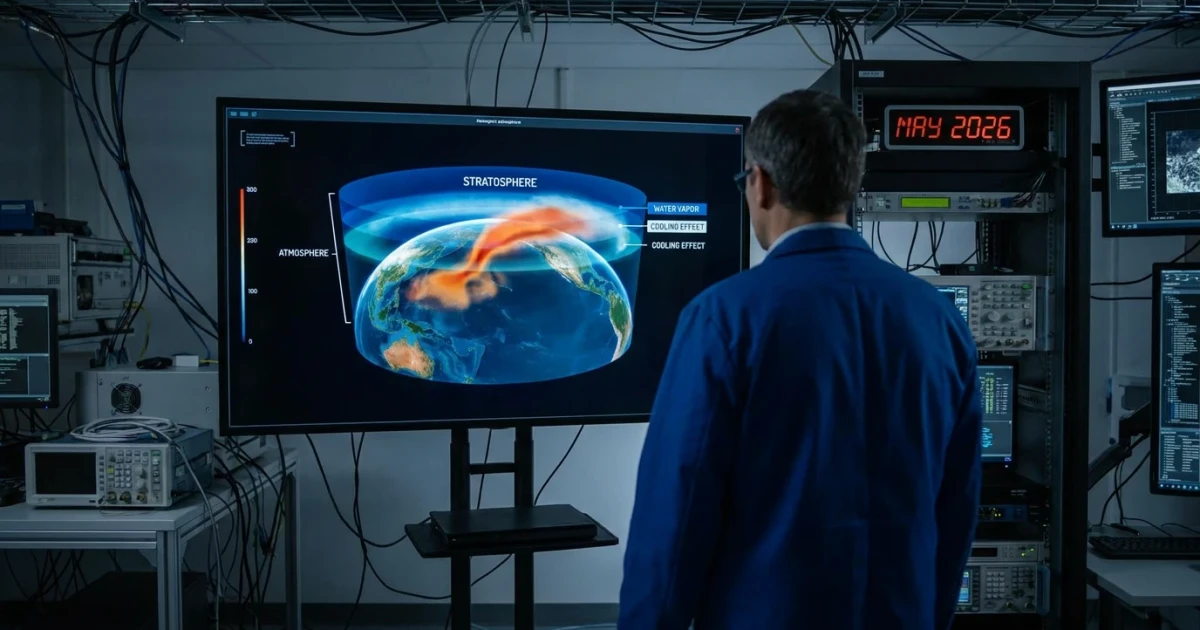
The 2022 Hunga Tonga-Hunga Ha'apai volcanic eruption stands out not only for its sheer explosive force but also for the unprecedented and lingering impact it has had on the Earth's stratosphere. More than two years later, scientists report that the stratosphere—a layer of the atmosphere critical for climate regulation—has not returned to its pre-eruption state, with significant cooling and water vapor changes still being observed.
Unprecedented Force and Atmospheric Penetration
The eruption on January 15, 2022, sent ash, gas, and an extraordinary amount of water vapor punching through the stratosphere and into the mesosphere, reaching altitudes rarely seen in the satellite era. According to data from NASA and NOAA, the plume soared over 58 kilometers (36 miles) above Earth's surface, brushing the edge of space and shattering records for volcanic plume height.
- NASA satellites measured the highest volcanic plume ever recorded in the satellite era, surpassing previous eruptions by a wide margin.
- Unlike other major eruptions, the Tonga event injected more water vapor than ash or sulfate aerosols into the atmosphere, distinguishing its impact from eruptions like Mount Pinatubo in 1991.
Stratospheric Cooling and Water Vapor Injection
One of the most surprising outcomes of the Tonga eruption was the massive injection of water vapor into the stratosphere. Peer-reviewed research in Nature estimates the eruption delivered around 146 teragrams (146 million metric tons) of water vapor—about 10% of the total water vapor already present in the stratosphere.
This surge in water vapor has had complex effects. While water vapor is typically a greenhouse gas that traps heat, in the stratosphere it can also enhance cooling by encouraging the formation of high-altitude clouds that reflect sunlight. Satellite data and climate models indicate the stratosphere has cooled by up to 2 degrees Celsius in affected regions, an anomaly that persists today. Interactive tables on NASA's Ozone Watch show ongoing deviations in stratospheric temperatures since 2022.
- NOAA's stratospheric water vapor and temperature figures confirm persistent anomalies in the two years since the eruption.
- NASA Earth Observatory highlights maps of stratospheric temperature anomalies after the eruption, confirming a cooling trend not yet reversed.
Implications for Ozone and Climate
The sudden and massive increase in stratospheric moisture has also raised concerns for the health of the ozone layer. Increased water vapor can enhance chemical reactions that deplete ozone, especially in polar regions. While no immediate dramatic ozone loss has been observed, scientists remain vigilant, noting that the stratosphere's chemical balance has been altered in ways that may persist for years.
Unlike previous major eruptions, which typically cool the surface by blocking sunlight with sulfate aerosols, the Tonga event's unique chemistry has led to more complicated effects, including a temporary warming in some lower atmospheric layers and a cooling above.
Scientific Community's Response and Ongoing Research
Researchers worldwide continue to monitor the stratosphere, analyzing satellite and balloon data to better understand the ongoing consequences. The event has spurred new studies into how volcanic eruptions can affect not just short-term weather, but long-term climate patterns and atmospheric chemistry. The eruption is now seen as a crucial case study for climate science, with many teams drawing on data from NASA, NOAA, and independent research published in peer-reviewed journals.
Looking Ahead
With the stratosphere still not fully recovered, the Tonga eruption serves as a stark reminder of the atmosphere's sensitivity to rare but powerful natural events. Continued monitoring and research are critical to understanding the full implications for climate and ozone stability. The scientific community anticipates new insights as more data emerges—offering lessons not only for volcanic hazards, but for the planet's climate resilience as a whole.