World
Trade wars escalate as WTO dispute system weakens
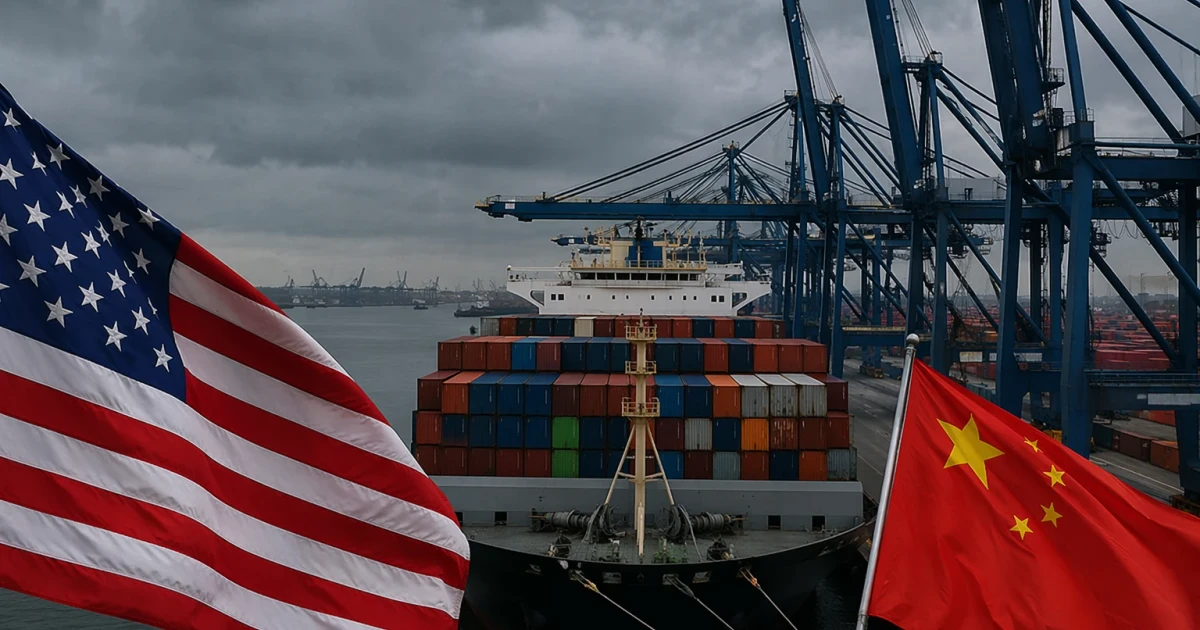
The World Trade Organization was designed to keep trade quarrels inside rules and out of retaliation spirals. That restraint has frayed since 2018, when the WTO’s dispute-settlement system began breaking down just as the United States and China escalated into tariffs that spread through supply chains, lifted costs, and made every round of leverage harder to reverse.
The pressure valve that stopped working
For more than 20 years, the WTO’s dispute-settlement system gave governments an orderly way to air grievances, test claims, and absorb conflict without letting it spill straight into retaliation. The Peterson Institute for International Economics describes that system as a mechanism that preserved cooperation by channeling disputes through procedure instead of force.
By 2018, that architecture was already weakening. The result was not just a legal problem in Geneva; it became a practical problem in Washington, D.C., Beijing, and in the factories, farms, and ports that sit between them. Once the rules-based backstop stopped functioning reliably, tariffs became easier to use and harder to contain.
How the tariff cycle began
The first big break came in June 2018, when the Office of the United States Trade Representative issued tariffs covering 1,102 separate tariff lines worth about $50 billion in 2018 trade values. China answered with retaliatory tariffs on $3.0 billion in U.S. imports, applying additional duties of 15 to 25 percent effective April 2, 2018.
That exchange did more than raise the price of a few products. It marked the point at which tariff policy stopped looking like a limited bargaining tool and started functioning like a broad economic weapon. Once one side moved, the other side had an incentive to answer, and the next round widened the fight.
The pattern matters because the dispute was never confined to one sector. It touched industrial inputs, consumer goods, and farm products, creating pressure on companies that had built cross-border production around the assumption that trade rules would remain predictable.
What the tariffs did to prices and growth
The Peterson Institute now estimates average U.S. tariffs on Chinese exports at 47.5 percent, while China’s average tariffs on U.S. exports stand at 31.9 percent. Those tariffs now cover 100 percent of bilateral goods trade, a sign of how a targeted confrontation became a blanket system of penalties.
PIIE’s assessment is blunt about the costs: tariffs raise consumer prices, promote inefficiency, spur retaliation, reduce global economic growth, and disrupt supply chains. The institute has also pointed to especially heavy effects on U.S. agriculture and durable manufacturing, where import costs, export losses, and uncertainty compound quickly.
Those warnings line up with broader macroeconomic assessments. The OECD says substantial increases in barriers to trade, if they persist, weigh on growth. The International Monetary Fund has made the same basic point in different language: higher barriers and policy uncertainty drag on activity because firms delay investment, rework sourcing plans, and absorb higher costs before they ever reach the checkout counter.
Why this conflict is different from older trade wars
The modern comparison most often invoked is Smoot-Hawley, but the current fight is structurally different. Researchers have noted that the 1930-era tariff shock worked through direct imports in a far less integrated economy, while today’s tariffs move through global value chains that connect suppliers across multiple countries.
That difference makes the damage less visible but more pervasive. A tariff on one country’s exports can hit intermediate parts made elsewhere, alter routing decisions in third markets, and force firms to redesign production networks that took years to build. The names attached to that body of work, including Chad P. Bown, Alan Wm. Wolff, Amit Khandelwal, Caroline Freund, Aaditya Mattoo, Alen Mulabdic, and Michele Ruta, track the same core reality: trade policy now travels through supply chains, not just border posts.
Trade was rerouted, not erased
The tariff war did not simply shrink commerce. World Bank research found that the 2018 U.S. and Chinese tariffs did not reduce trade overall; instead, trade was reallocated to other countries. IMF research reached a related conclusion, showing that while U.S.-China trade fell in affected products, trade in those products grew among the rest of the world.
That shift matters because it shows how trade wars can rearrange supply networks without ending them. Companies and countries respond by sourcing elsewhere, which preserves some commerce but leaves the original dispute unresolved and often less predictable. The World Bank’s work on supply chains also found that overall U.S. openness to the world did not decline despite the 2018-19 tariffs, underscoring how trade can be redirected even as bilateral friction intensifies.
The policy test now facing governments
The central question is no longer whether tariffs can create leverage. They can. The harder question is whether governments can rebuild a system that keeps disputes inside rules-based institutions before retaliation spills outward into broader economic and security risk.
That means restoring confidence in the WTO’s ability to defuse conflict, not merely documenting the damage after the fact. When the dispute-settlement system weakens, tariffs stop being exceptional tools and start becoming the default language of bargaining. For ordinary countries, businesses, and consumers, that shift turns trade from a source of coordination into another front of instability.
Sources
- [1]nytimes.com
- [2]piie.com
- [3]ustr.gov
- [4]imf.org
- [5]oecd.org
- [6]documents1.worldbank.org
- [7]uschina.org