Technology
Travel writer’s summer packing list favors comfort and fully charged devices

More than 20 years of work trips and family getaways have turned one traveler’s packing routine into something closer to a field-tested system than a spur-of-the-moment scramble. The summer bag is built for hiking, sightseeing, and long hours outside, but it is not a digital detox. Instead, it reflects a modern travel truth for knowledge workers: convenience, comfort, and a full battery each morning matter as much as the destination itself.
A packing list shaped by work travel
The biggest change in this traveler’s approach is not what gets added, but what gets left behind. Years of carrying random gadgets and accessories have given way to a careful checklist built through trial and error, and that shift mirrors how many digital professionals now travel. The goal is no longer to bring every possible tool, but to choose the few that actually reduce friction, keep work moving, and avoid last-minute stops for forgotten electronics or other essentials.
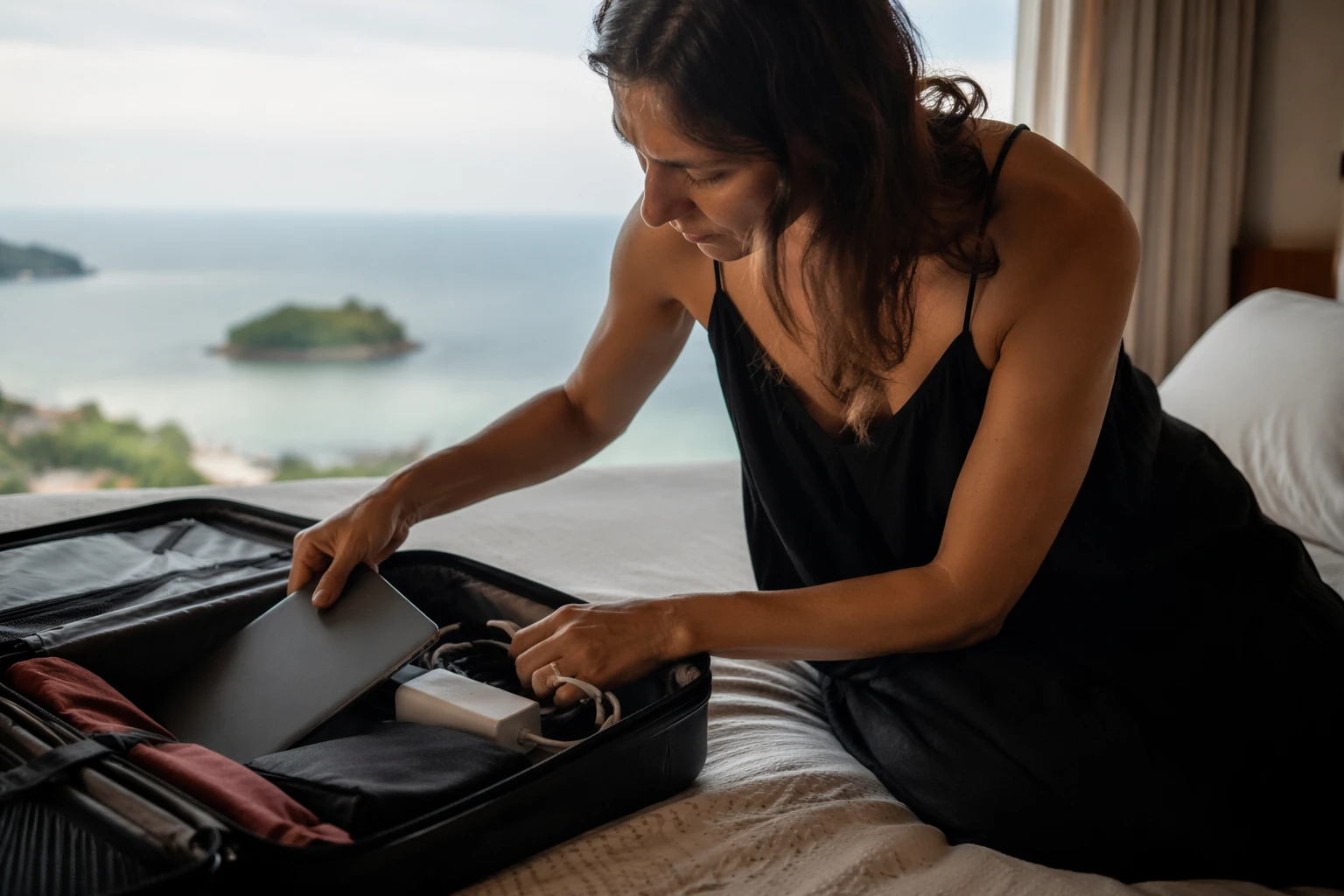
That logic also explains why the bag looks different depending on the trip. A MacBook Air still comes along for work travel, but it no longer makes the cut for vacation. After iPadOS 26 was released, the laptop stayed home on leisure trips and an older iPad Pro took its place, paired with an Apple Smart Keyboard Folio and a compact Logitech wireless mouse. The result is a lighter setup that still supports email, planning, and light work without turning a family trip into a full-time office relocation.
Why the laptop stays home on vacation
The move away from a laptop on vacation reflects a broader rethinking of work-life boundaries among frequent travelers. For people who spend much of the year in airports, hotel rooms, and conference centers, a vacation bag that resembles a work bag can feel like a burden rather than a benefit. Swapping a laptop for an iPad Pro changes the texture of the trip: the device is still useful, but it is less likely to dominate the suitcase or the day.
That matters on a family summer vacation centered on hiking, sightseeing, and outdoor time. A lighter, more compact kit makes it easier to move between trails, meals, and scenic stops without worrying about fragile gear or unnecessary weight. The choice also signals a cultural shift in travel tech: many seasoned travelers now favor tools that support flexibility and mobility over the kind of all-purpose hardware that once felt mandatory.
The headphones that still earn a spot
Some gear survives because it solves a problem so well that newer habits do not replace it. Sony’s WH-1000XM4 noise-canceling headphones are one of those items, especially for flights longer than an hour. Sony announced the model on August 6, 2020, as the fourth generation in its 1000X line, and Sony describes it as offering up to 30 hours of battery life.
That combination of noise reduction and endurance fits the logic of the whole packing list. For travelers trying to rest, work briefly, or simply lower the strain of transit, headphones are not a luxury item but a form of travel infrastructure. Their usefulness also underscores a broader point about modern mobility: when travel itself is noisy, crowded, and unpredictable, comfort often comes from devices that reduce sensory overload.
Battery life has become a travel priority
The decision to upgrade to an iPhone 16 Pro in late 2024 followed a simple but increasingly common problem: the battery life on an aging iPhone 12 Pro was no longer holding up. That swap is more than a personal preference. It reflects how central phones have become to travel, from maps and photography to boarding passes, messaging, and emergency use, and how quickly a weakening battery can turn convenience into anxiety.
Battery dependence now shapes packing decisions for many digital professionals, who expect their devices to last through a full day of movement, pictures, and navigation. The writer’s emphasis on keeping devices powered up each morning captures that reality plainly. A good travel setup is no longer just about what fits in the bag, but about whether every device can survive the day once it leaves the charger.
Small accessories, large payoff
The accessories in this bag are the kind that often look minor until they save a trip. MagSafe remains useful, especially for gear that adds functionality without adding clutter, and the PopSockets Kick-Out Grip doubles as a camera stand for family photos. That is a small detail, but it reflects a larger trend in travel gear: the most valued items are often the ones that do more than one job well.
For travelers balancing work habits with family time, multifunction accessories help preserve both convenience and presence. A compact stand can improve photos without requiring a separate tripod. A magnetic accessory system can keep a phone easier to hold, prop up, or recharge. The appeal is not novelty. It is efficiency, especially when packing space is limited and each item has to justify itself.
Peace of mind is part of the itinerary
The most important travel feature in this kit may be the one meant for emergencies. Apple’s Emergency SOS via satellite is treated here as a safety measure for places beyond regular cellphone coverage, and that framing speaks directly to how modern travelers think about risk. Apple announced the feature in September 2022 and made it available on iPhone 14 models in the United States and Canada on November 15, 2022.
That kind of backup matters on trips that move from cities into trails, remote roads, or other low-signal areas. Apple also backed the feature with a $450 million investment, a reminder that safety functions are no longer peripheral extras but major parts of the mobile ecosystem. For travelers who spend time outdoors, that can translate into real peace of mind, especially when the trip is meant to be relaxing rather than adventurous in the survivalist sense.
What this packing list says about work travel now
Taken together, the bag tells a bigger story about how work travel has changed for digital professionals. The old model prized carrying everything, just in case. The newer model is more selective: lighter devices, longer battery life, fewer redundancies, and a stronger expectation that work and leisure will overlap without completely blending together.
That is why this summer packing list feels so revealing. It is not about minimalism for its own sake. It is about building a mobile setup that supports family time, protects against dead batteries and dead zones, and keeps the traveler comfortable enough to enjoy the trip. In an era when many people live between screens and airports, the best travel gear is the gear that helps the whole trip feel easier, safer, and more human.
Sources
- [1]theverge.com
- [2]internewscast.com
- [3]apple.com
- [4]sony.mediaroom.com
- [5]electronics.sony.com