US News
Trump Accounts aim to boost savings for American children

Treasury and the Internal Revenue Service opened Trump Accounts for contributions on July 4, 2026, launching a new traditional IRA for children under the 2025 reconciliation law. The White House has framed the accounts as a $1,000 starter deposit for eligible children, but the program’s impact will depend on whether families, employers and donors keep money flowing into them.
The IRS said parents, guardians and other authorized individuals can establish the account for a child who has not turned 18 before the end of the calendar year in which the election is made and who has a valid Social Security number. Parents may contribute up to $5,000 a year, employers may add up to $2,500 a year without affecting employee taxable income, and unqualified withdrawals face an additional 10% penalty. Treasury and IRS issued guidance on Dec. 2, 2025, then proposed regulations on March 6, 2026 for a contribution pilot program.
That structure makes participation the central test. Brookings said the Council of Economic Advisers estimates a balance of about $303,000 by age 18 if maximum contributions are made under medium returns, but only about $5,800 if a child receives just the initial $1,000 deposit. The spread underscores how much the account depends on regular deposits rather than the federal seed money alone.

Urban Institute researchers warned that awareness may determine who benefits first. Their analysis found that 60% of U.S. adults report awareness of Trump Accounts, but awareness is lowest among lower-income households, the same families most likely to gain from the government deposit. Urban also pointed to child-savings programs in Maine, Pennsylvania and California as useful precedents because centralized account structures there helped reduce fees and administrative burdens.
Support from business leaders has been strong. Brookings noted that CEOs from Dell, Uber and Goldman Sachs voiced support for the accounts, and in December 2025 Michael and Susan Dell announced a $6.25 billion donation to the program. The gift is to be spread across 25 million children and fund $250 deposits for children age 10 and under in ZIP codes with median incomes below $150,000.
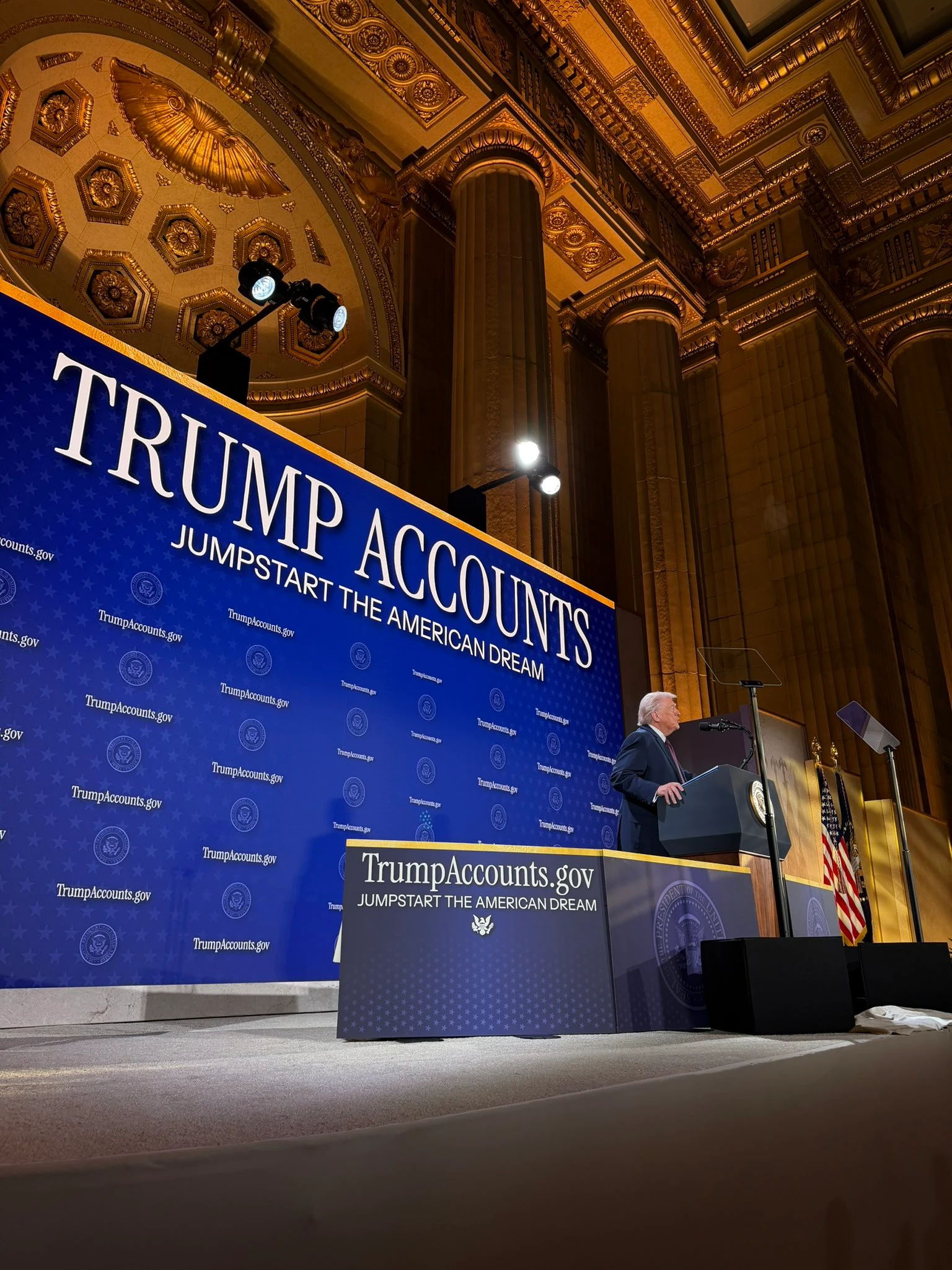
The White House said eligible children born after Dec. 31, 2024 and before Jan. 1, 2029 can receive the initial federal deposit. IRS instructions say Form 4547 is used to elect the $1,000 Treasury pilot contribution, with online elections expected to begin in the middle of 2026. For families with cash to spare, the accounts offer a new tax-advantaged savings channel; for families without it, the gap between a one-time deposit and sustained participation will decide how much wealth the program actually builds.
Sources
- [1]news.google.com
- [2]irs.gov
- [3]congress.gov
- [4]whitehouse.gov
- [5]brookings.edu
- [6]urban.org