US News
Trump Administration Dismisses National Science Board Members
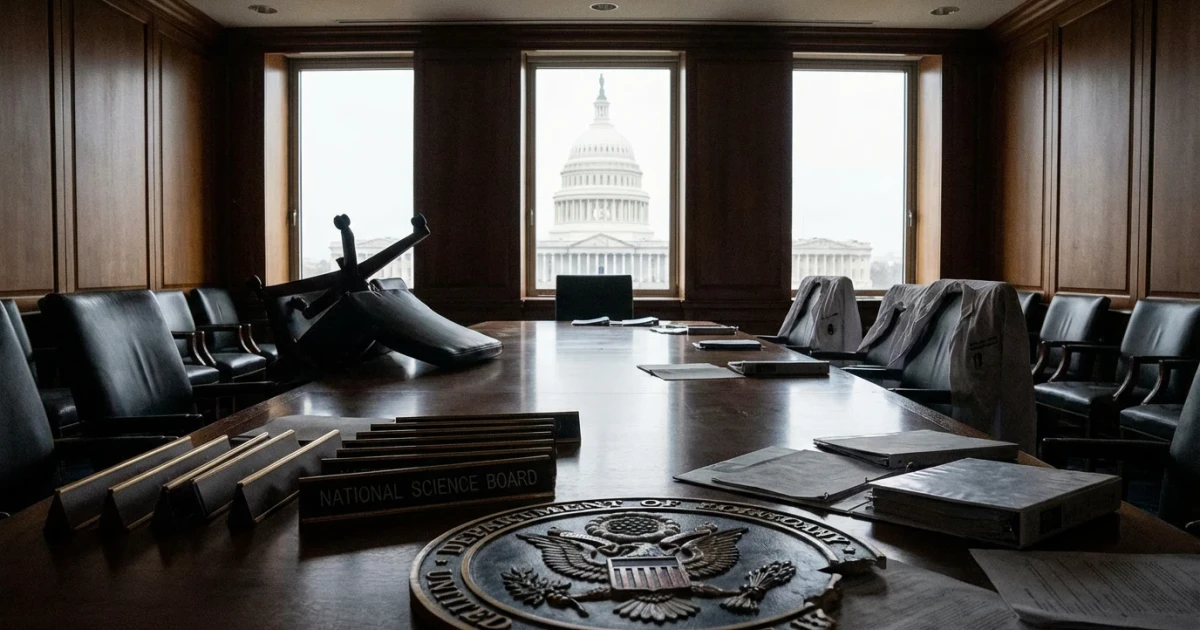
WASHINGTON, D.C. — The Trump administration has removed every member of the National Science Board (NSB), according to reporting from Reuters and The New York Times. The NSB, a 24-member panel, plays a critical role in guiding the direction and funding of U.S. science and engineering research as mandated by the National Science Foundation Act of 1950.
What Is the National Science Board?
Established by Congress in 1950, the NSB oversees the National Science Foundation (NSF)—one of the largest sources of federal funding for basic research in the United States. The board's statutory responsibilities include setting policies, approving major new programs and awards, and providing strategic guidance for national science priorities. The NSB also releases influential reports and statistical analyses, such as those found in the NSB publications and reports archive and the National Center for Science and Engineering Statistics.
Details of the Dismissal
Reuters first reported that the Trump administration abruptly fired all sitting members of the NSB. The New York Times confirmed that the board members, many of whom are appointed for six-year terms, were dismissed in a single action. Historically, NSB appointments have spanned multiple administrations, with staggered terms designed to ensure continuity and shield the board from politicization.
- The NSB is composed of 24 members, plus the NSF director, representing academia, industry, and science policy.
- Members are selected for their distinguished service in science, engineering, and education.
- The board oversees approximately $8.8 billion in annual NSF funding for research and education.
Reactions and Implications
The mass firing is considered highly unusual. While previous administrations have occasionally replaced individual board members, the wholesale removal of all members is unprecedented in the NSB's history. The New York Times and Reuters both highlight the board's role in providing independent, expert advice to the federal government on science policy. The dismissals have raised concerns among the U.S. scientific community about the continuity of research funding and the potential for increased political influence on scientific priorities.
Analysts note that the NSB's oversight is fundamental to maintaining the integrity of U.S. scientific research and education. The Government Accountability Office (GAO) has previously underscored the importance of NSB governance in ensuring robust oversight and accountability for federal science investment. The board's removal could disrupt ongoing projects, delay major funding decisions, and erode confidence in the independence of U.S. science policy.
What Comes Next?
At the time of reporting, the Trump administration had not announced replacements or outlined a new process for appointing board members. Experts highlighted by The New York Times and Reuters warn that prolonged vacancies could hinder the NSF's ability to approve grants and launch new research initiatives. The situation is being closely monitored by lawmakers and research institutions, who are seeking clarity on the administration's plans for reconstituting the board and maintaining the NSB's traditional role as a nonpartisan steward of science policy.
For readers seeking further details, the Congressional Research Service background report provides a comprehensive overview of federal science and technology policy, including the NSB’s statutory responsibilities and historical context.
Conclusion
The Trump administration’s decision to dismiss all National Science Board members marks a pivotal moment for the governance of U.S. science funding. As the scientific community awaits new appointments, questions remain about the future direction of the NSF and the implications for American research leadership. The outcome of this unprecedented action will likely shape the trajectory of federal science policy for years to come.