US News
Trump administration proposes steep fee hike for U.S. citizenship applications
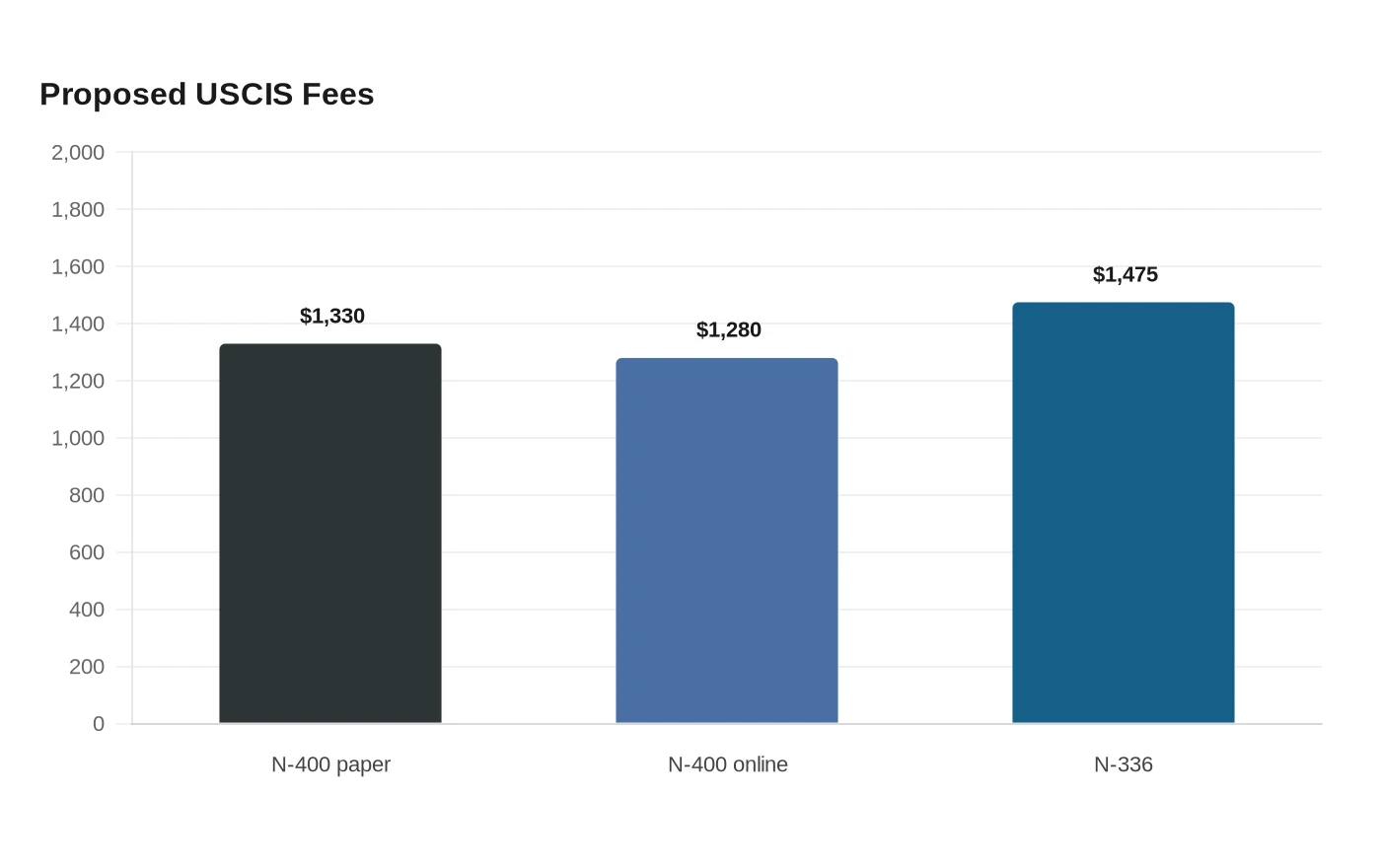
The cost of becoming a U.S. citizen could rise sharply for legal permanent residents already facing a slow, document-heavy process. The Department of Homeland Security proposed raising the paper filing fee for Form N-400, the naturalization application, from $760 to $1,330, a $570 increase, or 75%, while also lifting the online filing fee from $710 to $1,280.
The proposal would also raise the fee for Form N-336, used to request a hearing after a denied naturalization application, from $830 to $1,475. At the same time, DHS would end the reduced-fee option for Form N-400 and eliminate fee waivers for both forms, though current and former armed forces service members would remain exempt. The notice was published in the Federal Register on June 23, 2026, and opens a 62-day comment period that runs through August 24, 2026.
DHS says the current charges do not fully cover the cost of deciding naturalization cases, including screening and vetting checks that U.S. Citizenship and Immigration Services says it keeps enhancing. USCIS is funded largely by fees rather than tax dollars, and the agency said applicants generally must already be lawful permanent residents, then complete biometrics, an interview, a civics test, and a full background investigation before becoming citizens.
The increase would land hardest on lower-income applicants. USCIS currently allows reduced N-400 fees for applicants with household incomes between 150% and 400% of the federal poverty guidelines, and those income guidelines were updated effective Jan. 13, 2026. Removing both the reduced-fee pathway and fee waivers would make the process more expensive for workers, parents, and families trying to move from permanent residency to citizenship.
Immigration lawyer Rosanna Berardi said the proposal fits the Trump administration’s broader message of making legal immigration “harder, more expensive, and less accessible,” warning that higher fees paired with new vetting layers amount to “building walls inside” the system. Her warning captures what is at stake for applicants who have already cleared the legal threshold to live permanently in the United States, only to face a higher price to fully join the electorate and civic life.
The impact could reach well beyond a few states. USCIS naturalization statistics show that of all people naturalized in fiscal year 2024, 70% lived in 10 states, including California among the top states, underscoring how widely the proposed fee hike could be felt across the country.
Sources
- [1]abcnews.com
- [2]federalregister.gov
- [3]uscis.gov
- [4]cbsnews.com
- [5]time.com