World
Trump Calls Supreme Court Ruling on Taxes 'Unfortunate'
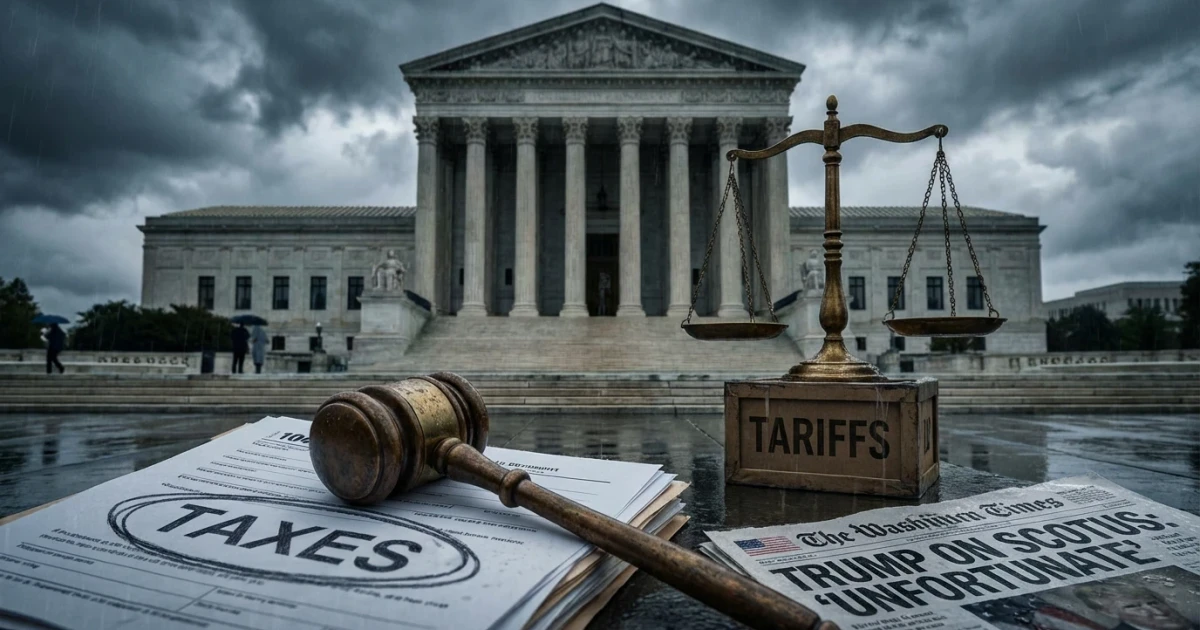
Former President Donald Trump has sharply criticized a recent decision by the U.S. Supreme Court, calling the ruling on income taxes "unfortunate," and suggesting that tariffs could serve as a replacement for income taxes. The comments, reported by The Economic Times, highlight ongoing debates over federal taxation and the role of tariffs in U.S. economic policy.
Background on the Supreme Court Ruling
While details of the specific Supreme Court decision were not disclosed in the initial report, the ruling has clearly reignited discussion about the structure of the U.S. tax system. The Supreme Court has historically played a key role in shaping how income taxes are assessed and collected, and its recent decision appears to have significant implications for federal tax policy.
Income taxes make up the largest portion of federal government tax receipts, contributing hundreds of billions of dollars annually to fund government operations. According to the Congressional Budget Office, income tax revenue is critical for meeting federal spending obligations and managing the national debt.
Trump's Critique and Tariff Proposal
Reacting to the Supreme Court's decision, Trump described the ruling as "unfortunate" and suggested a shift in federal tax strategy. He reportedly stated, "Tariffs will replace income taxes," signaling support for a system where taxes on imports could serve as a primary source of government revenue.
Tariffs, which are taxes imposed on imported goods, have been used throughout U.S. history as a tool for raising revenue and protecting domestic industries. For much of the 19th century, tariffs were a major source of federal income before the introduction of the federal income tax. As explained by the Tax Policy Center, tariffs can impact consumer prices, trade relations, and economic growth.
Potential Impact of Tariffs as Tax Policy
Replacing income taxes with tariffs would represent a significant shift in U.S. fiscal policy. Currently, U.S. imports of goods and services total more than $3 trillion annually, according to Federal Reserve Economic Data. Tariffs on such a large import base could raise substantial revenue, but economists have long debated the trade-offs involved.
- Tariffs may lead to higher consumer prices for imported goods.
- Key trading partners could retaliate, affecting U.S. exports.
- Tariff revenue can be volatile, depending on trade volumes and rates.
- Historical data shows that the U.S. has run persistent trade deficits, which could affect the consistency of tariff-based revenues.
Political and Legal Reactions
Trump's comments highlight the political divide over tax policy and the role of the judiciary. Supporters of tariffs argue that such measures can protect American jobs and industries, while critics warn of negative consequences for consumers and international trade relationships.
The Supreme Court's role in interpreting tax law remains central to the ongoing debate. While Trump's suggestion to replace income taxes with tariffs is not new, it is controversial and would require major legislative changes as well as potential constitutional considerations.
Looking Ahead
As the U.S. continues to debate the balance between tariffs and income taxes, the Supreme Court's rulings will remain a focal point for policymakers and the public. The discussion underscores broader questions about how to fund government priorities while maintaining economic growth and fairness in the tax system.
For readers interested in the mechanics of tariffs and their place in U.S. tax policy, the Tax Policy Center's explainer offers valuable context. Detailed data on U.S. imports and federal tax receipts can be found at the Federal Reserve and FRED websites, while the U.S. Census Bureau provides historical context for trade and tariffs.