US News
Trump Cancels Peace Envoys’ Trip Amid Iran Talks Shift
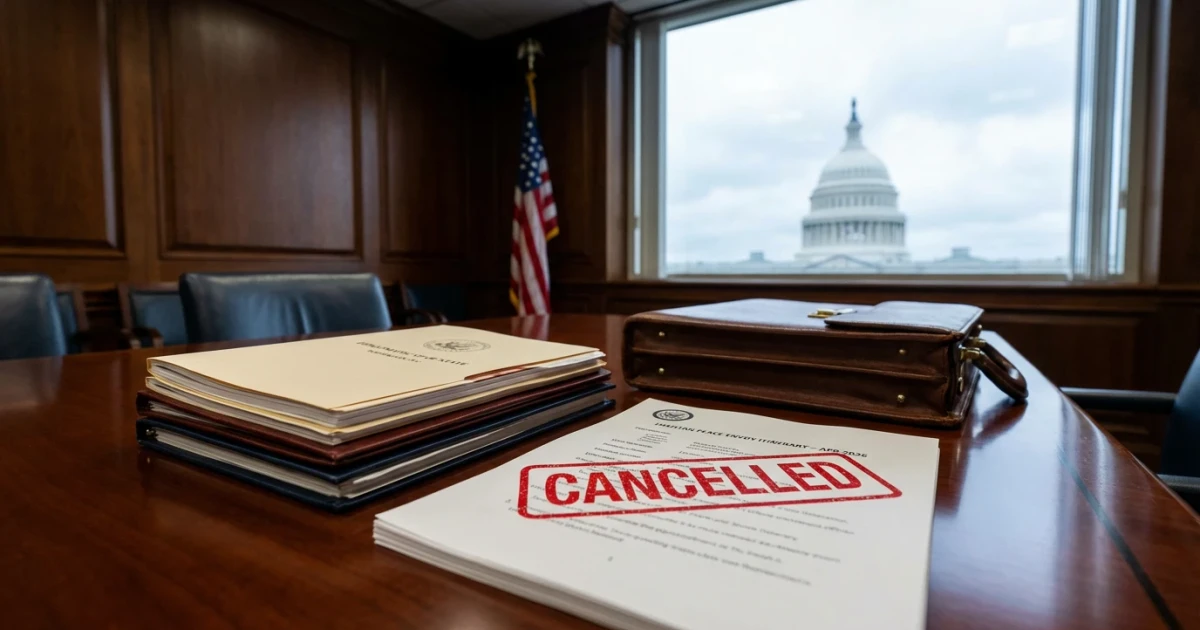
President Donald Trump has abruptly canceled a planned trip by US envoys to Pakistan for peace negotiations, following the unexpected departure of Iran’s top diplomat from Islamabad. The decision adds a new layer of uncertainty to the already complex efforts aimed at resolving tensions related to the ongoing Iran conflict.
Envoy Mission Halted as Iran’s Diplomat Departs
The New York Times reported that Trump called off the travel plans of his peace delegation, including Steven Witkoff and Jared Kushner, shortly after Abbas Araghchi, Iran’s envoy, left Pakistan. The mission was originally intended to facilitate dialogue among regional actors and reduce the risk of further escalation. The sudden withdrawal of Iran’s representative raised questions about the prospects for multilateral talks in the immediate future.
Background: Diplomatic Efforts and Recent Tensions
The cancellation comes at a sensitive moment, as the United States has been seeking to broker peace discussions involving Iran, Pakistan, and other stakeholders. According to the Council on Foreign Relations’ backgrounder on US-Iran relations, both nations have a history of fraught diplomacy marked by intermittent negotiations and recurring breakdowns. Pakistan, sharing borders with both Iran and Afghanistan, has frequently played a mediating role in regional security matters.
Recent developments in the region have heightened the urgency for dialogue. According to the US Department of State’s Country Reports on Terrorism, cross-border incidents and the activities of non-state actors have complicated negotiation efforts, making coordinated diplomatic engagement even more critical.
Implications for Regional Peace Talks
- The US delegation, led by Witkoff and Kushner, was expected to engage Pakistan’s leadership in direct talks focused on de-escalation and potential confidence-building measures between Iran and its neighbors.
- Iran’s envoy, Araghchi, had been in Pakistan for preliminary discussions but left unexpectedly, which analysts see as a sign of new obstacles or shifting priorities within Iran’s diplomatic strategy.
- The New York Times notes that the White House’s decision to recall its envoys is widely interpreted as a response to Iran’s diplomatic moves, rather than a standalone policy shift.
Analysis: What Comes Next?
With the US delegation’s trip canceled, the momentum for immediate peace negotiations appears to have stalled. Regional analysts suggest that both Iran and the United States may reassess their strategies in light of these developments. The continued volatility underscores the challenges of achieving lasting diplomatic breakthroughs in the region.
For readers seeking more context, official records of UN Security Council sanctions on Iran and public opinion data from the Pew Research Center provide deeper insight into the regional environment and the international community’s stance on Iran and Pakistan.
While the path to peace remains uncertain, the shifting diplomatic landscape will be closely watched by regional stakeholders and the global community alike. Observers emphasize the importance of sustained engagement—both public and behind-the-scenes—in preventing further escalation and opening new avenues for talks in the future.