Politics
Trump claims China tried to obtain American voter data
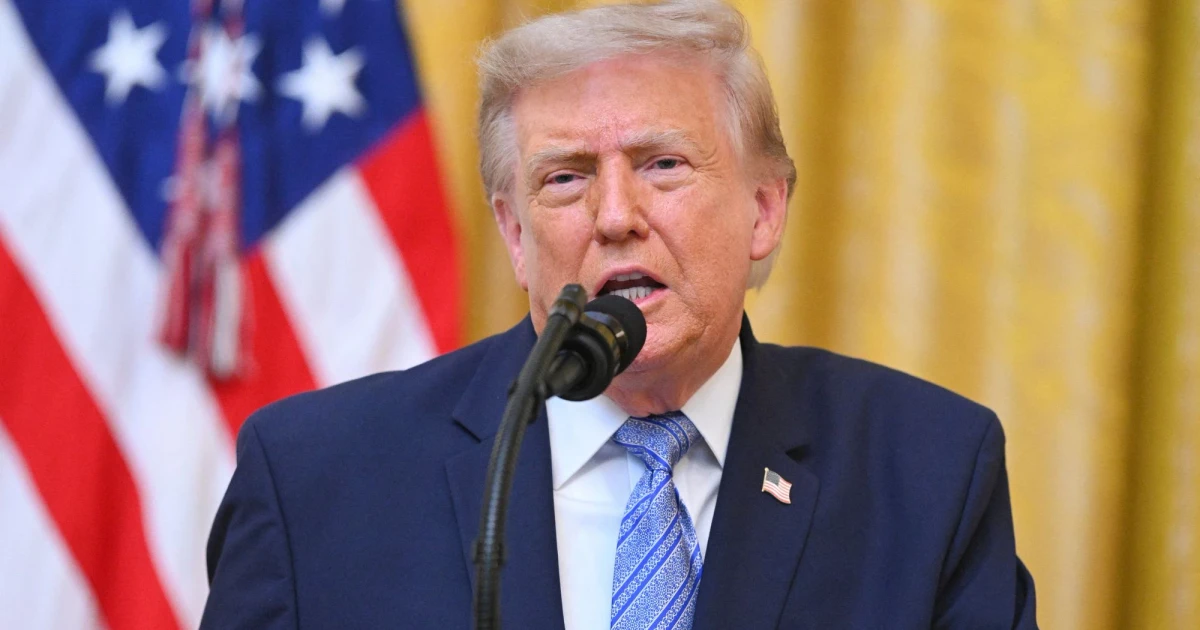
Donald Trump said in a July 16 address that he was releasing newly declassified material and claimed China stole voter files starting in the 2020 election. The central test is narrower than the allegation suggests: obtaining American voter data would not, by itself, let anyone alter vote totals, and the intelligence record separates those two risks.
A declassified Intelligence Community Assessment on foreign threats to the 2020 U.S. federal elections was prepared by the National Intelligence Council under the auspices of the National Intelligence Officer for Cyber. It was drafted by the National Intelligence Council, the Central Intelligence Agency, the Department of Homeland Security, the Federal Bureau of Investigation, the Bureau of Intelligence and Research and the National Security Agency, and coordinated with the CIA, DHS, FBI, INR, Treasury and NSA. That structure matters because it shows the claim was tested across the intelligence community, not left to one agency or one analyst.
The assessment and related intelligence findings did not show China or any other foreign actor compromising election infrastructure. That distinction is the point of national-security significance: voter records can be used for targeting, profiling or influence campaigns, but election infrastructure is what would have to be breached to change ballots, tabulation or certification. The evidence in the released material does not bridge that gap.
The Brennan Center for Justice has drawn the same line, saying foreign influence and foreign interference in elections are distinct problems that require distinct solutions. In practical terms, that means a claim about stolen voter files belongs in the realm of information operations unless it is tied to a demonstrable compromise of voting systems or counting systems.
The dispute sits against a long-running backdrop of 2020 election claims. A Senate Committee on Homeland Security and Governmental Affairs hearing in Washington, D.C., titled Examining Irregularities in the 2020 Election, took place on Dec. 16, 2020, underscoring how the post-election fight has continued to shape Republican messaging and intelligence scrutiny more than five years later.
Sources
- [1]nytimes.com
- [2]dni.gov
- [3]wsj.com
- [4]brennancenter.org
- [5]govinfo.gov
- [6]forbes.com