US News
Trump Delays Signing of AI Executive Order
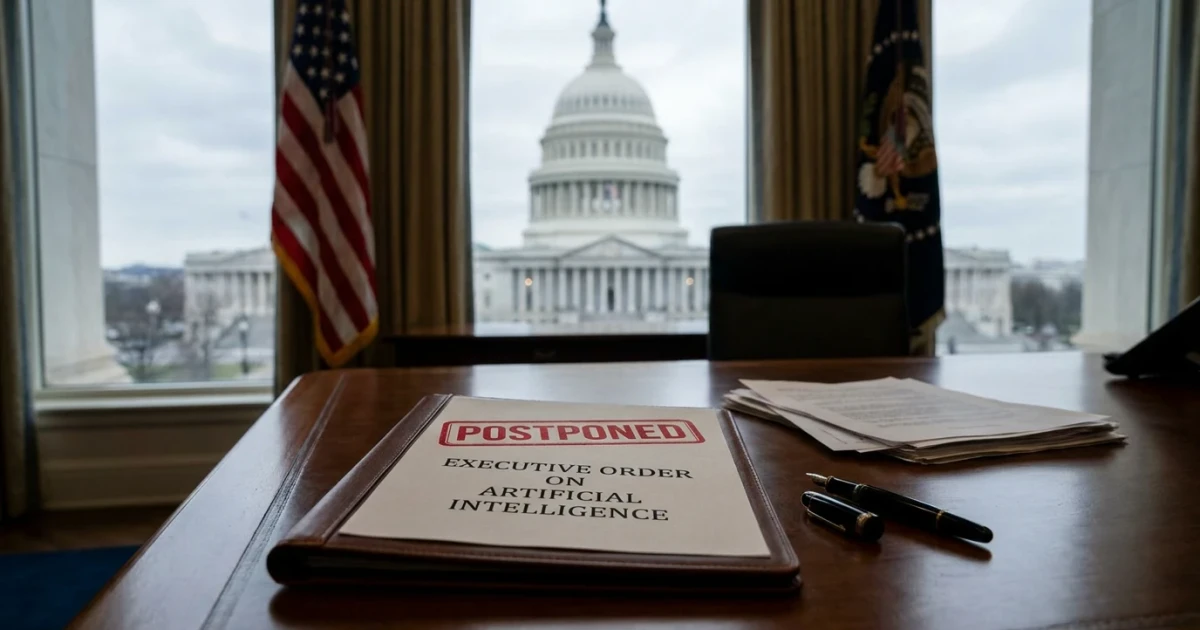
Donald Trump has postponed the signing of an anticipated executive order on artificial intelligence, a move that has drawn significant attention from both technology leaders and policy analysts. The delay, first reported by Axios and echoed by CNBC, highlights ongoing debate within Trump’s inner circle over key provisions of the order, particularly those related to international competition and national security.
Order Pulled Amid Last-Minute Concerns
The executive order, which was set to outline the Trump team’s approach to regulating and fostering artificial intelligence development in the United States, was unexpectedly pulled from the signing agenda. Axios reported that Trump himself decided to postpone, citing aspects of the order he did not fully support. CNBC noted Trump's direct explanation: he "didn't like certain aspects" of the draft, leading to the abrupt delay.
China Policy and Security Issues at Center of Debate
According to multiple reports, one of the main sticking points was language related to China. Trump’s team reportedly debated how aggressively to frame AI policy in the context of competition with China. Several advisors pushed for stricter measures to limit Chinese access to U.S. AI technologies, reflecting broader national security concerns and ongoing tensions between the two countries. Others within the Trump camp advocated for a more measured approach, wary of potential blowback or complications for U.S. tech firms operating internationally. This internal disagreement appears to have been a decisive factor in the postponement.
Comparison to Existing AI Policy Frameworks
The now-delayed order was expected to follow in the footsteps of existing federal efforts to regulate AI. The Biden administration had previously issued a comprehensive executive order on the safe development and use of AI, setting guidelines on data privacy, risk management, and safety testing. Analysts believe the Trump draft would have taken a more confrontational stance toward China, but the full details of the proposed order have not been disclosed.
Meanwhile, legislative activity on AI continues in Congress, with bills like the Artificial Intelligence Research, Innovation, and Accountability Act of 2023 aiming to establish new standards for transparency and oversight in AI systems. The ongoing debate over executive and legislative approaches underscores the complexity of AI governance in the U.S.
What Happens Next?
It remains unclear when — or if — Trump’s AI executive order will be finalized and signed. The postponement leaves the tech industry and regulators in a holding pattern, awaiting further guidance on federal AI policy. As the U.S. faces increasing pressure to balance innovation with ethical and security considerations, the Trump team’s next steps will be closely watched.
- The AI policy landscape remains fragmented, with overlapping initiatives from the White House, Congress, and federal agencies.
- U.S. companies continue to navigate evolving AI risk management frameworks as they develop and deploy new technologies.
- Geopolitical competition, especially with China, is likely to remain a persistent theme in future policy debates.
For now, the delay reflects the challenge of crafting AI policy that addresses national security, economic, and ethical priorities — and the reality that consensus is not easily achieved, even at the highest levels of government.