Sports
Trump Moves to Safeguard Army-Navy Game Broadcast
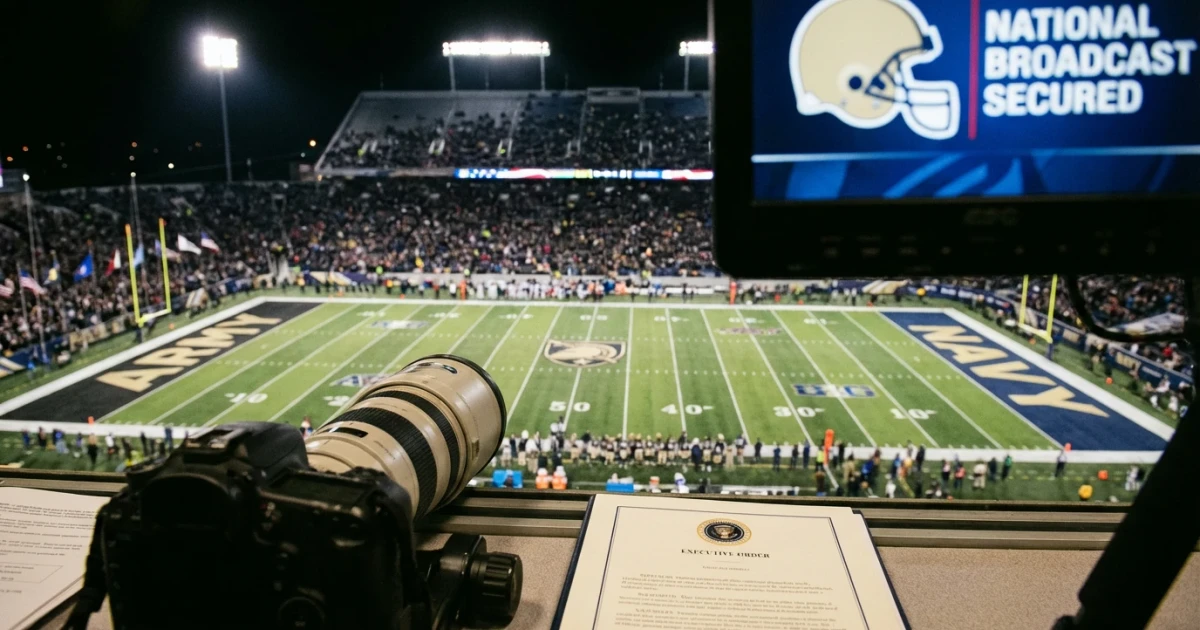
President Donald Trump has signed an executive order instructing television networks to “protect” the annual Army-Navy football game broadcast, underscoring the historic rivalry’s status as a national tradition and raising new questions about government authority over sports programming.
Executive Order Aims to Preserve Accessibility
The Washington Post reported that Trump’s directive calls on TV networks to maintain broad access to the Army-Navy football game, one of college football’s most storied matchups. The order comes amid ongoing shifts in sports broadcasting rights and the growing prevalence of streaming services, which have sometimes moved high-profile events behind paywalls or into less accessible formats for viewers.
The Army-Navy game, played since 1890, is recognized as a unique showcase for the nation’s service academies and military traditions. The contest draws millions of viewers each year and is considered a symbol of American sportsmanship and patriotism. Official statistics compiled by the Department of Defense highlight the game’s enduring popularity, with audiences regularly exceeding seven million viewers and the matchup frequently ranking among the most-watched regular season college football games in the United States.
Broadcast Rights and Regulatory Landscape
Trump’s executive order comes at a time when TV networks and sports leagues face complex negotiations over broadcast and streaming rights. Data from Statista shows that live sports remain a major driver of television viewership, but the migration of events to cable or digital platforms has reduced the reach of some broadcasts.
The Federal Communications Commission (FCC) oversees broadcast spectrum and regulates certain aspects of televised events, but direct presidential intervention in programming decisions is uncommon. According to a Congressional Research Service analysis, the president’s authority over broadcast content is limited by longstanding statutes and court rulings, making the practical impact of such orders a subject for legal interpretation and debate among media experts.
National Tradition and Recent Trends
The Army-Navy matchup stands apart from most college football games due to its rich history and ceremonial significance. As detailed in NCAA records, the game has been played more than 120 times, with each academy alternating as host and the event often attended by sitting presidents. The annual contest typically airs on major broadcast networks, ensuring wide accessibility for military families and the general public alike.
- The Army-Navy game is one of the oldest rivalries in sports, dating to 1890
- Attendance regularly exceeds 70,000 fans, with millions more watching on TV
- The event is a centerpiece of U.S. service academy traditions and military pageantry
Recent years have seen increased competition for broadcast slots as networks juggle multiple sports and entertainment properties. Industry analysts have pointed out that keeping marquee games like Army-Navy on widely available television is vital for maintaining their cultural relevance.
Looking Ahead
While Trump’s executive order signals an effort to keep the Army-Navy game accessible to the broadest possible audience, the long-term implications for sports broadcasting remain uncertain. The measure could spur further debate about the role of public policy in media rights and the balance between private contracts and national traditions.
The Army-Navy game’s legacy as a unifying event is unlikely to diminish, but how it is delivered to audiences may continue to evolve, shaped by both technological trends and public expectations for access to America’s most cherished sporting traditions.