US News
Trump Orders U.S. Navy to Blockade Strait of Hormuz
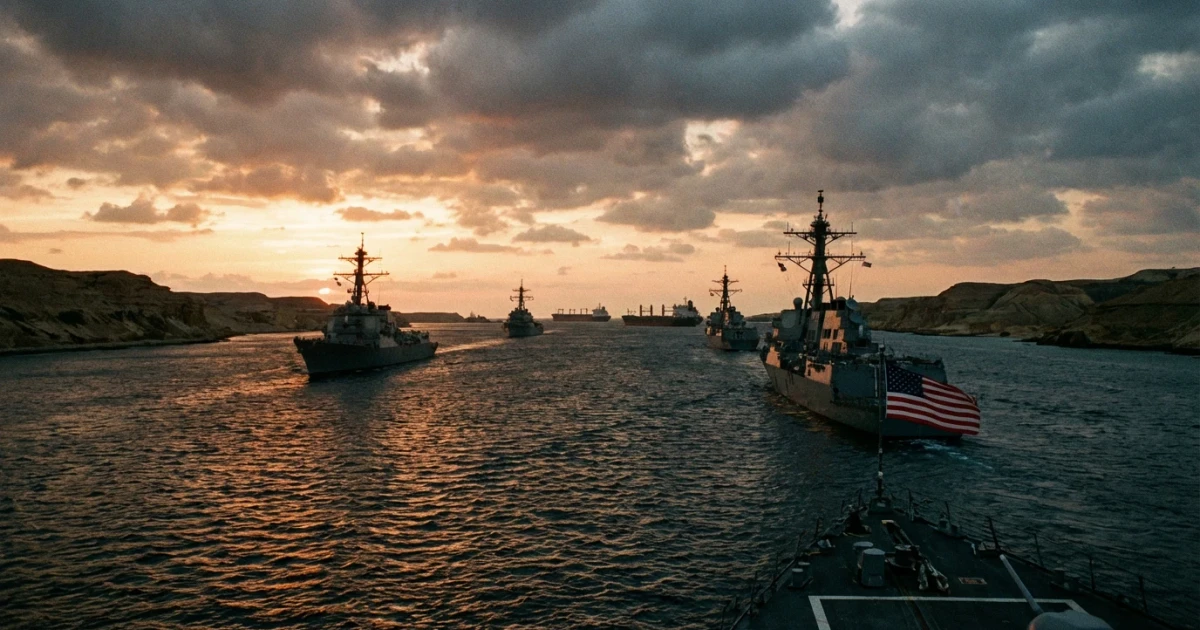
President Donald Trump has announced that the United States will establish a naval blockade of the Strait of Hormuz, a critical maritime chokepoint, and intercept vessels that have paid tolls to Iran. The directive, confirmed by both CBS News and U.S. News & World Report, marks a significant escalation in the ongoing standoff over control of vital shipping lanes in the Persian Gulf.
Blockade Ordered Amid Rising Tensions
According to CBS News, President Trump stated that the U.S. Navy will interdict any ships passing through the Strait of Hormuz that have paid transit fees to Iran. This move comes as Iran itself has reportedly been restricting access to the strait, a narrow passage through which approximately 20% of the world's oil supply is shipped daily. The dual blockades significantly heighten the risk to global maritime transport and energy markets.
U.S. News & World Report reinforced the gravity of the situation, confirming that the President has given explicit orders to the U.S. Navy to enforce the blockade and ensure that no vessel making payments to Iran passes unchallenged. The administration's stance reflects growing frustration with Iran's actions in the region and aims to undermine Tehran's ability to collect revenue from foreign shipping.
Strategic Importance of the Strait
The Strait of Hormuz is recognized as one of the world's most critical energy corridors. According to the U.S. Energy Information Administration, the narrow waterway sees the passage of more than 21 million barrels of crude oil and petroleum products daily, representing a fifth of global consumption. Disruption in this region can have immediate repercussions on global oil prices and supply chains.
Data from UNCTADstat show that the strait is also pivotal for liquefied natural gas (LNG) shipments and other commercial goods. Any impediment to the free flow of shipping through the strait could have cascading effects on worldwide import and export volumes, impacting economies far beyond the Middle East.
Background on Iranian Tolls and U.S. Policy
Iran has long asserted its right to levy tolls on ships passing through its territorial waters in the Strait of Hormuz, a practice challenged by the United States and other nations under international maritime law. The U.S. maintains that the strait is an international waterway, and the collection of tolls by Iran is viewed as a violation of the right to free passage.
The current U.S. blockade directive adds a new layer to existing sanctions and enforcement actions against Iran. While previous measures focused on restricting Iran's oil exports through economic penalties, the blockade represents a direct military intervention intended to disrupt the flow of funds to Tehran.
Global and Legal Implications
- The Strait of Hormuz handles over 21 million barrels of oil daily, making it the world's most important oil transit chokepoint.
- According to UNCTADstat, over 30% of global seaborne crude oil passes through the strait each year.
- The OECD notes that disruptions have historically caused sharp spikes in energy prices and insurance rates for commercial shipping.
International reaction to the U.S. blockade remains mixed. Some allies have expressed concern over the potential for military confrontation, while others support efforts to uphold freedom of navigation. Legal experts, as reported by Lawfare, point out that the blockade raises complex issues under the United Nations Convention on the Law of the Sea (UNCLOS) and other treaties, especially given Iran's own restrictions in the area.
Outlook and Analysis
The dual blockades by the U.S. and Iran in the Strait of Hormuz represent a substantial escalation in regional tensions, with far-reaching implications for global energy security and maritime law. Market analysts warn of possible disruptions to oil and gas supplies, price volatility, and the potential for direct naval confrontations.
As the situation develops, the international community will be watching closely to see how shipping companies, oil markets, and foreign governments respond to the heightened risks in one of the world's most vital maritime corridors.