Business
Trump Pressures Powell to Resign Amid Threats of Removal
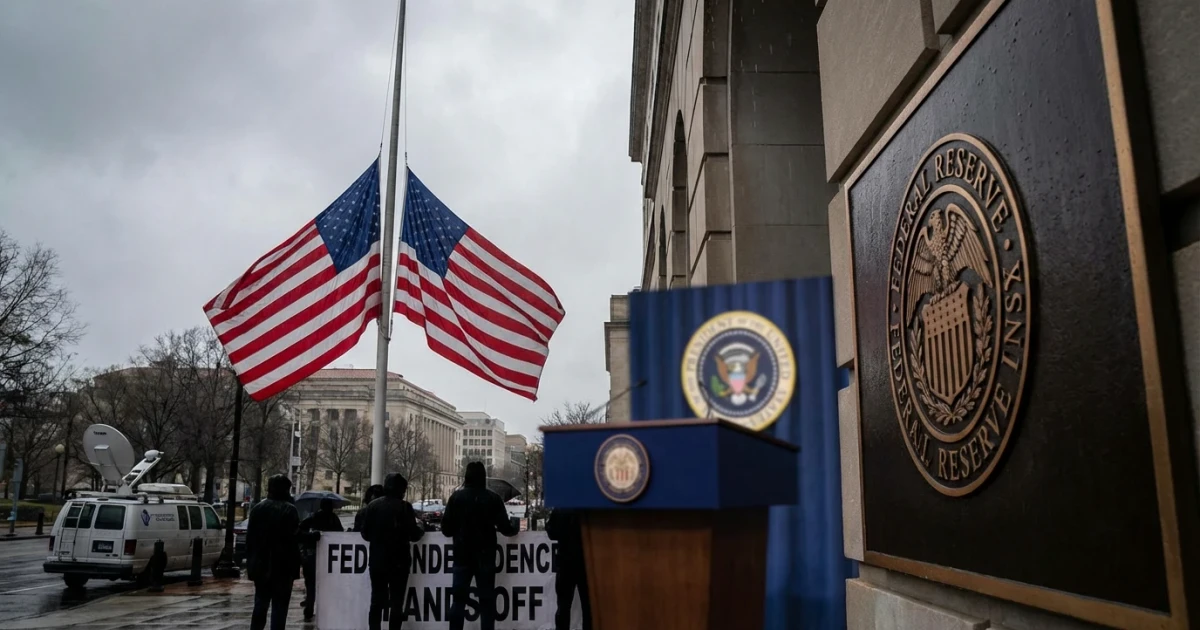
Former President Donald Trump has issued a stark ultimatum to Federal Reserve Chair Jerome Powell, threatening to fire him next month if he does not voluntarily step down. The warning, reported by The New York Times, has spurred a wave of discussion around the legal boundaries of presidential power, the independence of the Federal Reserve, and the potential impact on U.S. monetary policy.
Trump's Threat and Its Context
According to The New York Times, Trump publicly stated his intention to dismiss Powell should the Fed chief refuse to resign. This marks a dramatic escalation in tensions between the former president and the head of the U.S. central bank, with Trump signaling a willingness to challenge decades of precedent regarding the Federal Reserve’s autonomy. CNN also reported Trump’s threat, underscoring the seriousness of the standoff.
- Trump said he would fire Powell next month if he remains in his role, according to both The New York Times and CNN.
- The unprecedented move would test the boundaries set by the Federal Reserve Act, which governs the appointment and removal of the Fed chair.
Legal Authority and Historical Precedent
The legal authority of a president to remove the Federal Reserve Chair is a complex issue. The Brookings Institution explains that while the President appoints the Fed Chair, the law does not explicitly grant the power of removal except for cause. The Federal Reserve Act provides for a four-year term for the chair and seven years for board members, but removal is only mentioned in the context of cause for board members—not the chair specifically.
As detailed by the Congressional Research Service, no president has ever successfully removed a sitting Fed chair, and such a move could prompt legal challenges and roil financial markets. The independence of the Fed is widely regarded as a cornerstone of stable monetary policy, insulated from short-term political pressures.
Implications for the Federal Reserve and Markets
Jerome Powell, who began his current term as chair in 2018 and is set to serve until 2026, has overseen a period of significant economic turbulence, including the COVID-19 pandemic and subsequent efforts to manage inflation. His leadership and decisions on interest rates are documented in the official FOMC meeting records.
- The Federal Reserve’s independence is seen as crucial for maintaining credibility with investors and keeping inflation expectations anchored.
- Any attempt to remove Powell could undermine confidence in the central bank’s ability to operate free from political interference.
- Market participants closely watch the Federal Funds Rate and other policy signals for indications of Fed direction.
Reactions and Next Steps
While direct quotes from Trump or Powell have not been published in the initial reports, the story has already triggered debate in financial and policy circles about the balance of power between the executive branch and the central bank. Observers note that any attempt by Trump to remove Powell could result in a protracted legal battle, with uncertain consequences for the Fed’s future operations and the broader economy.
For those interested in the full scope of Powell’s record and biography, the Federal Reserve Board provides a comprehensive overview, while the ongoing developments can be tracked through official Fed press releases and policy statements.
Conclusion
The confrontation between Trump and Powell represents a significant test of the Federal Reserve’s independence and the constitutional limits of presidential authority. As the situation evolves, market participants, policymakers, and legal experts alike will be watching closely to see whether this threat becomes a reality—and what it could mean for the future of U.S. economic governance.