Business
Trump Reiterates Push to End Social Security Taxes for Seniors
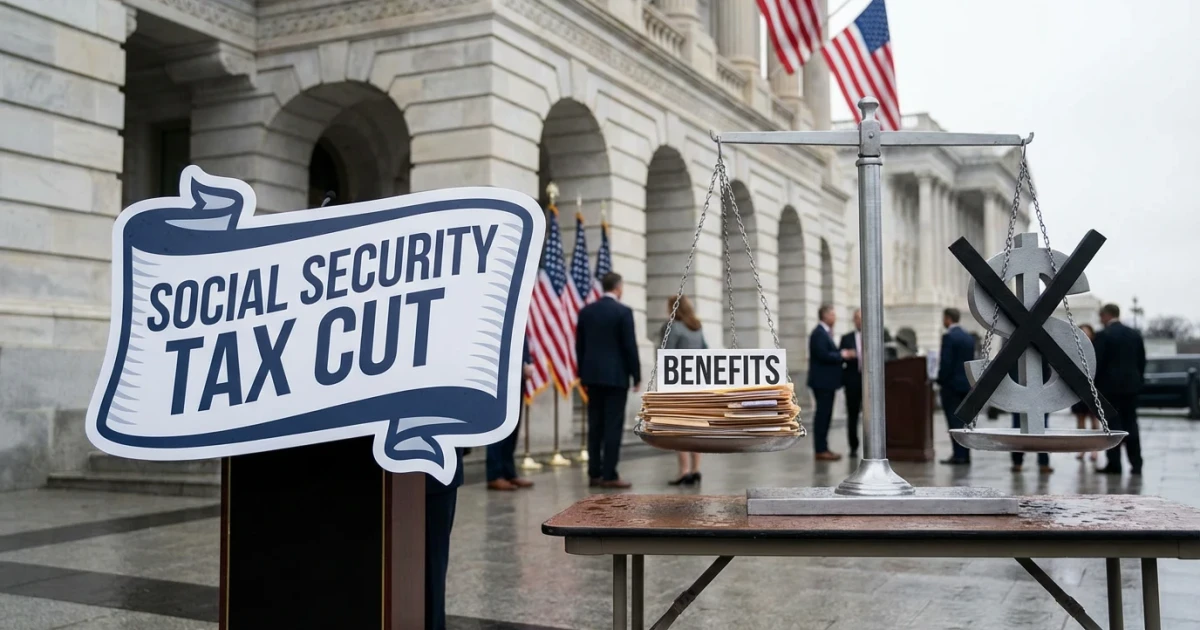
President Donald Trump has renewed his call for eliminating federal taxes on Social Security benefits for American seniors, a pledge that could reshape retirement finances for millions if enacted. The announcement, highlighted in a recent Yahoo Finance report, has sparked renewed debate over the future of Social Security, tax policy, and fiscal responsibility in Washington.
Current Landscape: How Social Security Is Taxed
Currently, Social Security benefits are partially taxable for many retirees depending on their total income. According to the Social Security Administration, individuals with a combined income above $25,000, or married couples above $32,000, may pay taxes on up to 85% of their benefits. These income thresholds have not been adjusted for decades, meaning more retirees are subject to benefit taxation each year.
- In 2023, more than half of Social Security recipients were estimated to pay some federal tax on their benefits, according to the Center on Budget and Policy Priorities.
- The IRS provides detailed guidance for seniors on how their Social Security income may be taxed, including examples and worksheets in Publication 554.
This tax revenue is used in part to help fund Social Security and Medicare programs. However, the growing share of recipients affected has made the issue increasingly prominent in political debates.
Trump’s Renewed Pledge and Its Implications
During a recent campaign event, Trump reiterated his support for a policy of "no tax" on Social Security benefits for seniors, echoing proposals he previously floated while in office. Yahoo Finance notes that the proposal would mean retirees could receive their full Social Security payments, regardless of other income, without facing federal tax liability on those benefits.
Supporters of the idea argue that Social Security is a benefit funded by payroll taxes paid throughout a worker’s career, and taxing it amounts to double taxation. Critics, however, caution that eliminating these taxes would reduce federal revenue and potentially threaten the long-term solvency of Social Security and related programs.
Legislative Efforts and Policy Background
Efforts to end federal taxation of Social Security benefits have surfaced in Congress in recent years. For example, the Senior Citizens Tax Elimination Act has been introduced multiple times, aiming to repeal the federal tax on benefits. While these bills have gathered some bipartisan support, none have advanced to become law.
As explained by the Tax Policy Center, the taxation of benefits was first introduced in 1984 and expanded in 1993 as a means to bolster the Social Security Trust Fund. The revenue impact of repeal would be significant: the Center on Budget and Policy Priorities estimates that federal taxes on Social Security generate approximately $50 billion a year.
What It Means for Seniors and Their Money
For retirees, the elimination of Social Security taxes could mean higher after-tax income, particularly for middle- and upper-income seniors who are most likely to be affected by current tax rules. However, it would not affect the lowest-income seniors, whose benefits are already untaxed.
Advocates for repeal say the change would help seniors cope with rising living costs, especially in healthcare and housing. Detractors warn that lost tax revenue could accelerate funding challenges for Social Security, which already faces long-term solvency concerns as noted in recent SSA annual reports.
- More than 67 million Americans currently receive Social Security benefits, with the majority being retirees.
- Total benefits paid to seniors topped $1.2 trillion in 2023, according to Federal Reserve Economic Data.
What’s Next?
Whether Trump’s renewed push leads to legislative action remains to be seen. The issue will likely remain a topic of debate in the 2026 elections as lawmakers weigh the trade-offs between boosting seniors’ incomes and maintaining the fiscal health of Social Security.
For now, seniors and those nearing retirement should stay informed about both current tax rules and proposed changes. Resources like the IRS Tax Guide for Seniors and the CBPP’s policy analysis are valuable for understanding how Social Security income is currently taxed and what reforms could mean for household budgets.