Politics
Trump Signs Bill to End Government Shutdown, Sparks Urgent ICE Debate
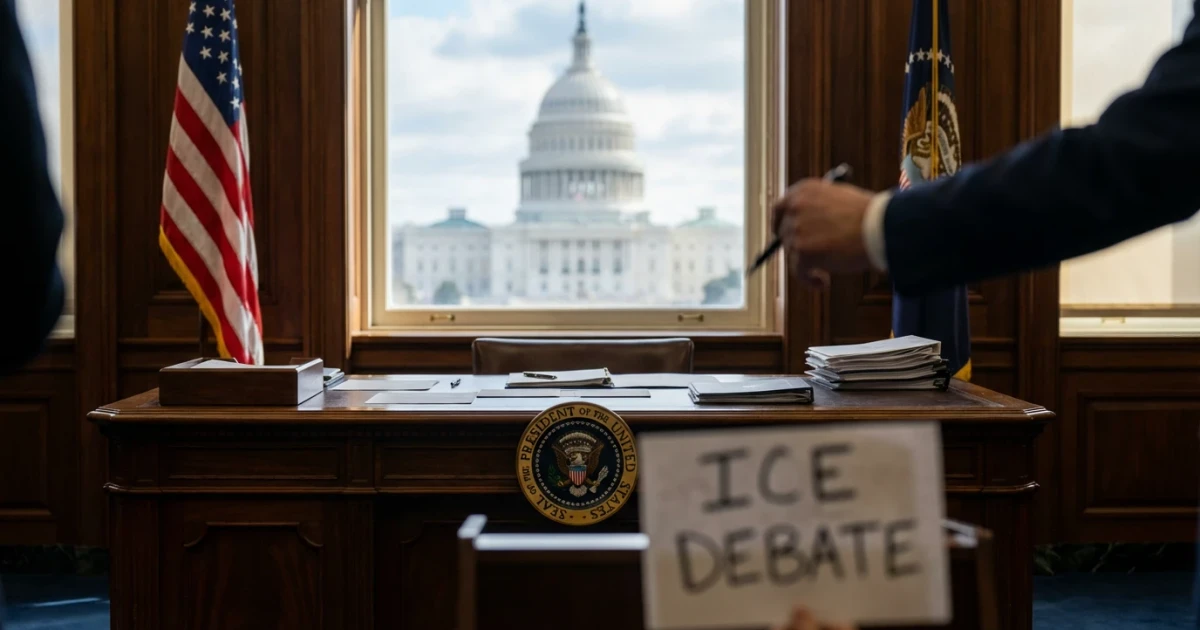
President Donald Trump has signed a bipartisan bill to end the latest government shutdown, temporarily restoring funding to the Department of Homeland Security (DHS) for two weeks. The decision, announced on February 3, 2026, brings an immediate reprieve for federal workers and agencies, while setting the stage for high-stakes negotiations over U.S. immigration enforcement in the coming days.
Shutdown Ends—But Only Temporarily
The measure, passed by Congress and signed into law by Trump, reopens the government after a partial shutdown that affected several federal agencies. According to reports, the bill specifically provides funding to the Department of Homeland Security through a short-term extension, ensuring operations continue without interruption for the next two weeks.
- The shutdown, which lasted several days, disrupted pay for thousands of federal workers and delayed key agency functions.
- The two-week funding window is designed to give lawmakers additional time to negotiate a longer-term solution, particularly around contentious immigration issues.
Focus Shifts to Immigration and ICE
With the government now reopened, attention turns to the ongoing debate over the future of Immigration and Customs Enforcement (ICE). According to CNN, this short-term funding deal "starts the clock" on negotiations between the White House and Congress regarding ICE's operations and funding.
- ICE, a division of DHS, has been at the center of heated discussions in recent years, with some lawmakers pushing for reforms or even significant restructuring.
- The new two-week deadline adds urgency to these talks, with both sides aiming to reach an agreement before the funding lapses again.
Implications for Federal Workers and Agencies
The immediate effect of the bill is felt by federal employees who faced furloughs or delayed paychecks during the shutdown. With DHS and associated agencies back in operation, critical services like transportation security, border protection, and immigration processing return to normal—at least temporarily.
However, the short duration of the bill means uncertainty persists, as another shutdown could occur if a longer-term agreement is not reached within the next two weeks.
Political Stakes and Next Steps
The passage of this stopgap measure follows intense negotiations on Capitol Hill, reflecting deep divisions within Congress over immigration policy and border security. While the immediate crisis has been averted, lawmakers now face a tight timeline to resolve disputes over ICE funding and broader immigration reform.
- If no agreement is reached by the end of the two-week period, another government shutdown remains a possibility.
- Bipartisan efforts are underway to craft a compromise, but both the White House and congressional leaders have signaled that significant hurdles remain.
Conclusion: Uncertainty Remains
While the signing of the bill brings temporary relief to federal workers and the public, the underlying policy disagreements that triggered the shutdown remain unresolved. The next two weeks will be critical as the administration and Congress attempt to find common ground on the future of ICE and immigration enforcement. The situation continues to evolve, with the possibility of renewed government funding battles looming if a consensus is not reached before the new deadline.