Politics
Trump signs Iran deal as G7 leaders weigh nuclear tensions
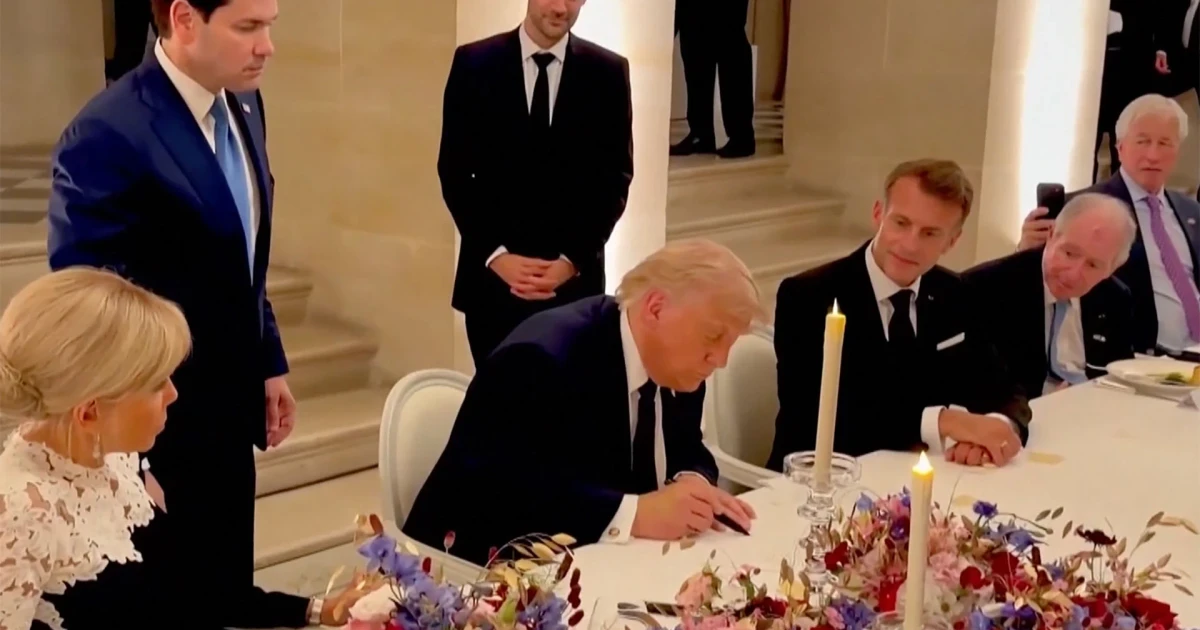
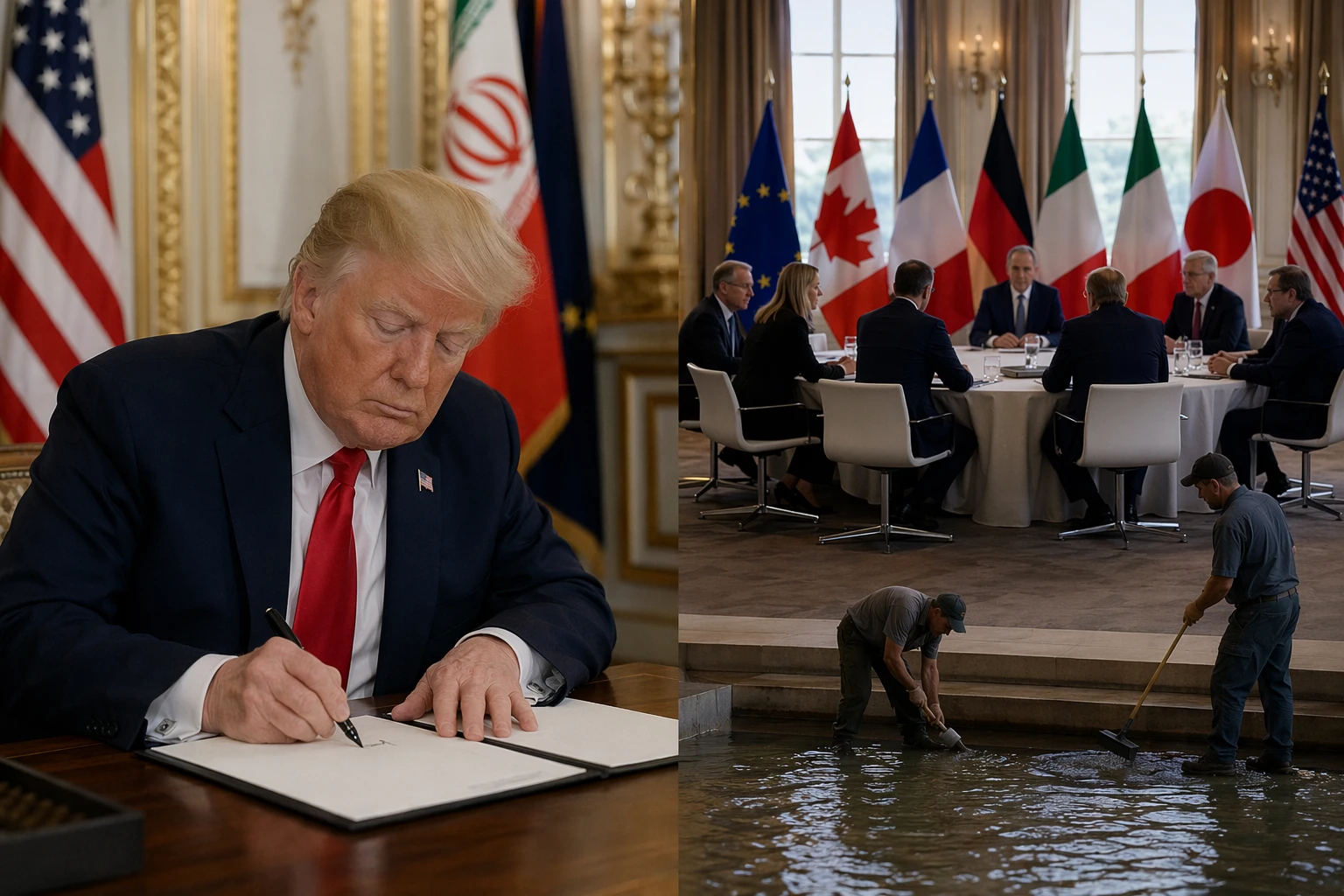
Donald Trump’s Iran diplomacy moved from the Palace of Versailles to the G7 tables in Evian-les-Bains, where the administration presented a memorandum with Tehran as a barrier to nuclear escalation even as Trump kept a military threat in reserve. The same week exposed a familiar governing pattern: bold improvisation abroad, friction with allies, and a relentless effort to control the message at home.
Trump signed a Memorandum of Understanding between the Islamic Republic of Iran and the United States at Versailles on June 17, 2026, while the White House said the agreement was discussed in depth with G7 leaders in France. The summit began June 15 in the spa town of Evian-les-Bains and quickly became a central venue for Iran policy, with U.S. officials treating the talks as a major item on the agenda. But Trump also sharpened the uncertainty himself, warning at the G7 that the United States could return to bombing Iran if he did not like the deal.
That dual track, diplomacy paired with a threat of renewed force, has become the defining feature of the administration’s approach. The White House has described the agreement as a step toward preventing Iran from obtaining a nuclear weapon, yet congressional and public scrutiny remains active. A White House statement of administration policy opposed a resolution aimed at removing U.S. forces from hostilities involving Iran, signaling that the administration still wants maximum room to maneuver while keeping legal and political pressure in check.
The diplomacy did not stop with the summit. On June 21, Vice President JD Vance took part in a quadrilateral meeting with Pakistan, Qatar and Iran, underscoring that the channel remained open even as the larger politics stayed unsettled. Emmanuel Macron and Brigitte Macron hosted leaders in France, but the meeting also highlighted how quickly the Iran file can pull together partners that are otherwise skeptical of Trump’s style and strategy.
At home, the same instinct for control showed up in Washington, D.C., where the Lincoln Memorial Reflecting Pool became another symbol of immediate presidential response. The National Park Service said the pool was undergoing temporary closures for cleaning, joint repair and the installation of lining material. The pool, completed in 1924, sits on the National Mall, which National Mall and Memorial Parks says draws millions of visitors each year and functions as “America’s Front Yard.” Local coverage said Trump ordered repairs to begin immediately after peeling paint and vandalism allegations prompted arrests. The Washington Monument nearby is also on a 2026 maintenance schedule, including a June 2 closure, a reminder that even the capital’s most visible symbols now sit inside a broader politics of disruption, upkeep and image management.
Sources
- [1]npr.org
- [2]whitehouse.gov
- [3]cnbc.com
- [4]nps.gov
- [5]nytimes.com