Politics
Trump urges Republicans to add Iran to Russia sanctions bill
Donald Trump said Republicans should add Iran to a sanctions bill centered on Russia, widening a package that had already moved through negotiations with senators and was meant to stay focused on Moscow. The push immediately tied two U.S. foreign-policy flashpoints together, with Hezbollah also in the mix after Trump said earlier that Iran and the group would be added.
The move has clear political upside for Republicans who want to project toughness on both Russia and Iran. It speaks to national-security voters and hawkish conservatives who want one message for adversaries that are already seen in Washington as linked through military cooperation, drone support and sanctions evasion. By pairing the two countries, Trump also gives Republicans a cleaner rhetorical line: punish hostile powers in one bill rather than force separate fights over each.
But bundling the targets could also make passage harder. A sanctions measure aimed at Russia was already the product of delicate talks, and adding Iran risks reopening the deal, creating new procedural hurdles and giving lawmakers more chances to break ranks. Congress has used this strategy before. In 2017, lawmakers and the Trump administration reached agreement on a sanctions law that hit Russia, Iran and North Korea together, showing that broad packages can pass, but only after political compromise.

The Iran debate has not been isolated from other Republican priorities. House Republicans have also pushed ahead on a Trump funding plan tied to Iran war concerns and election overhaul, a sign that Iran-related policy is moving through several legislative channels at once. That overlap can help GOP leaders show momentum on national-security issues, but it also blurs what each bill is supposed to do and makes it harder to keep one sanctions measure tightly targeted.
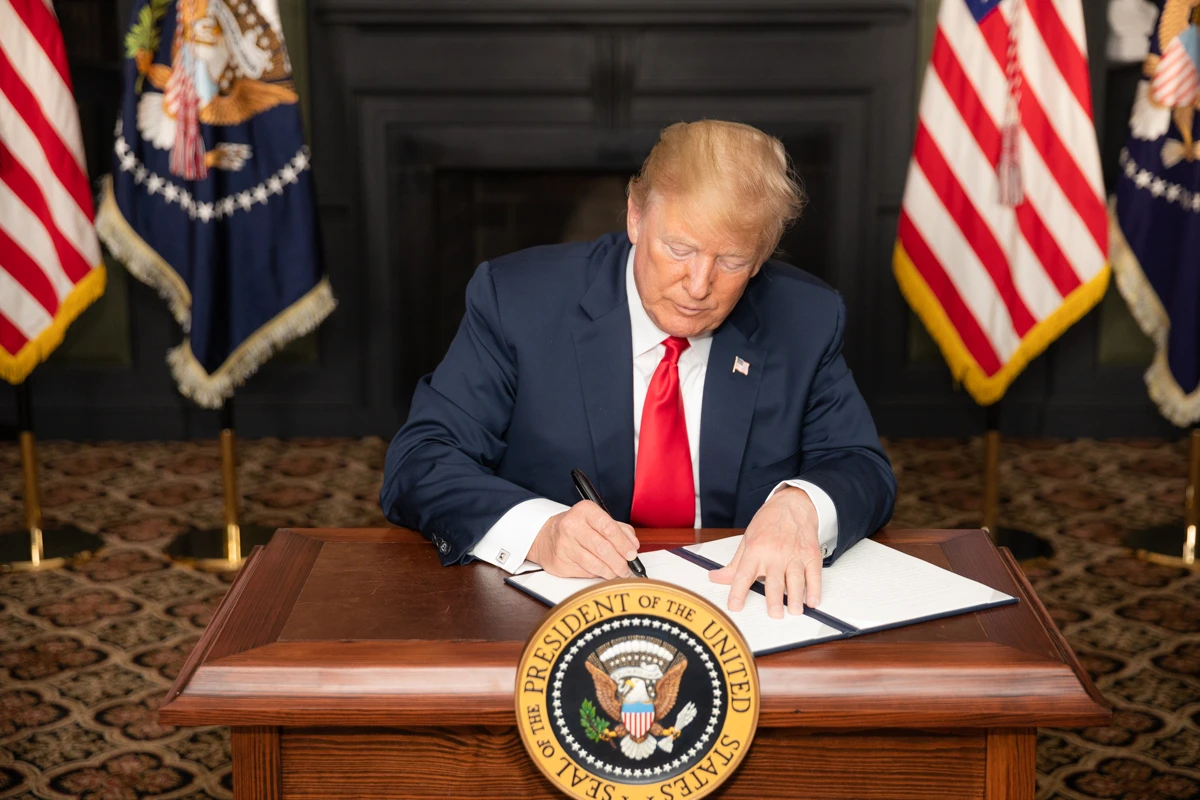
Trump’s comments also fit a broader foreign-policy message inside the Republican Party: Russia and Iran are increasingly treated as connected threats rather than separate files. That framing may help Republicans argue that sanctions are part of a single strategy to pressure hostile governments from Eastern Europe to the Middle East. It also raises the stakes for Congress, where lawmakers must decide whether a wider bill strengthens leverage or simply loads more politics onto a package that was already difficult to settle.
Sources
- [1]reuters.com