World
Trump’s Iran deal exit was driven by personal politics, notes suggest
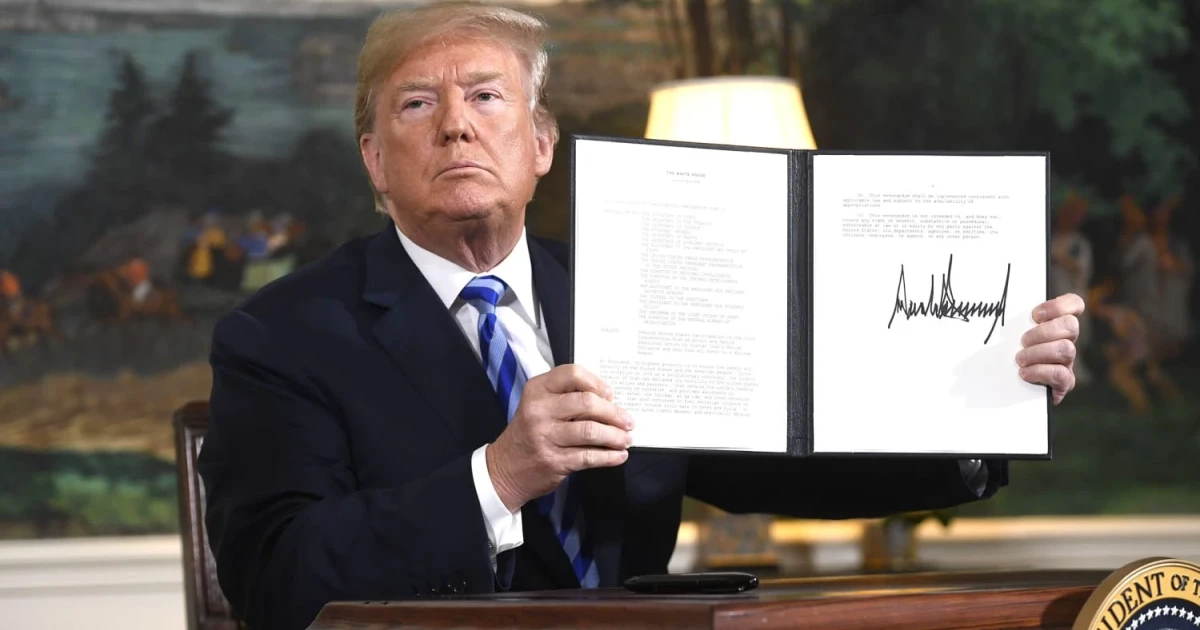
Trump’s withdrawal from the Iran nuclear deal looked less like a carefully reasoned doctrine than a political act that fit his long-running hostility to the agreement. The 2015 Joint Comprehensive Plan of Action, signed by Iran, the United States, the United Kingdom, France, Russia, China, Germany, and the European Union, was still being described in early 2018 as a functioning verification system. Yet the White House chose to leave anyway, promising a tougher future arrangement while quickly moving to restore sanctions.
The deal Trump inherited
The JCPOA was designed around a simple bargain: limits on Iran’s nuclear program in exchange for sanctions relief and intrusive monitoring. That structure mattered because the agreement was not a vague promise of goodwill, but a verification-heavy framework meant to reduce the risk of nuclear breakout through inspection and reporting. On March 5, 2018, IAEA Director General Yukiya Amano said Iran was implementing its nuclear-related commitments, and the agency said inspectors had access to the sites and locations they needed to visit.
That mattered politically because it undercut any claim that the deal had already failed on its own terms. The IAEA board report described its work as focused on Iran’s implementation of nuclear-related commitments under the JCPOA, which meant the central monitoring apparatus was still active when Washington decided to abandon the accord. In practical terms, the administration was not exiting because the verification system had collapsed; it was exiting while that system was still being presented as effective.
Trump’s public case for leaving
On May 8, 2018, Trump announced that the United States would withdraw from the JCPOA. The State Department said that as the United States exited the deal, it would work with allies to find a “real, comprehensive, and lasting solution” to the Iranian threat. That language framed withdrawal not as an end point, but as a reset that would supposedly produce a stronger outcome later.
The administration also set out 90-day and 180-day wind-down periods for business activities in or involving Iran. By August 6, 2018, the United States had begun reimposing nuclear-related sanctions. The sequence was important: the United States left first, then relied on staged economic punishment to force a different result. Pompeo later argued in May 2018 and again in October 2018 that the JCPOA failed to address Iran’s ballistic missile program and regional activities, making the administration’s case broader than nuclear terms alone.
Why the politics argument fits the record
The strongest argument for the political reading is that Trump’s opposition to the JCPOA predated the withdrawal and was public, repeated, and central to his brand. The notes frame the deal exit as answering Trump’s personal needs, and the sequence of events gives that claim weight. He did not approach the agreement as a settlement to refine; he treated it as a signature Obama-era achievement to reject.

That does not mean the administration lacked any strategic language. It did have one, centered on economic pressure and the idea that sanctions could extract a better deal. But strategy and politics are not the same thing. In this case, the public message was about a “real, comprehensive, and lasting solution,” while the immediate actions were the dismantling of an existing agreement and the reimposition of sanctions before any alternative deal existed.
Pressure campaign, not replacement doctrine
The administration’s broader posture after withdrawal shows how little of the original agreement was replaced by a coherent new framework. Pompeo’s arguments about missiles and regional behavior expanded the critique of Iran well beyond the nuclear file, but they did not produce a negotiated substitute at the moment of exit. Instead, the United States turned to economic coercion as the main instrument, assuming pressure would eventually force Tehran back to the table.
That approach reveals the underlying tension in the decision. If the goal had been a stable strategic doctrine, the administration would have needed a clear, workable successor to the JCPOA before tearing the old one up. Instead, it moved from a monitored agreement that the IAEA still said Iran was implementing to a sanctions-heavy contest of will. The shift satisfied Trump’s political instincts and his long-standing opposition to the deal, even as it left the United States relying on leverage rather than an actual replacement agreement.
What the record suggests
The facts point to a decision shaped by personal politics first and strategic coherence second. The JCPOA was still functioning as a verification mechanism in March 2018, Trump withdrew in May, and sanctions returned by August. Between those dates, the administration offered sweeping language about a lasting solution, but the concrete policy was pressure, punishment, and a promise that a better deal might eventually emerge.
That is why the exit reads less like a disciplined foreign policy doctrine than a presidential choice that matched Trump’s immediate political needs. The administration destroyed an existing framework that inspectors said was working, then substituted a harder line that was rhetorically forceful but strategically unfinished.