Business
Trump’s Proposal to Buy Spirit Airlines Sparks GOP Debate
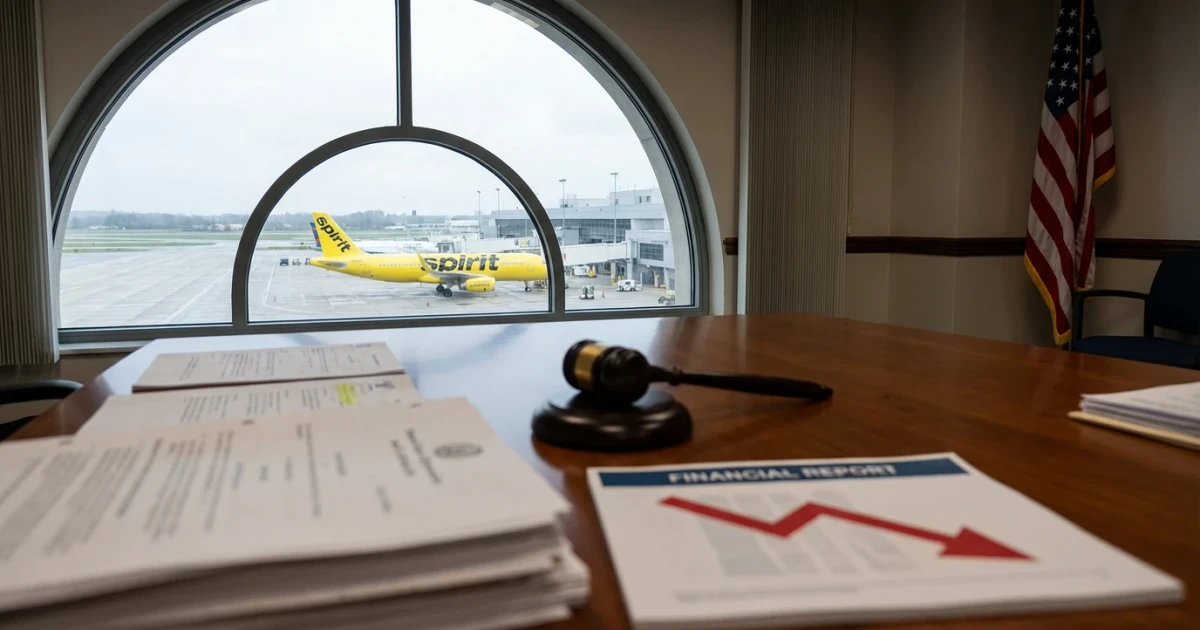
Donald Trump’s recent suggestion that the U.S. government should "just buy" bankrupt Spirit Airlines has triggered a wave of criticism among Republican lawmakers, highlighting deep divisions within the party on federal intervention in the airline industry. As Spirit Airlines faces mounting financial troubles, the White House is reportedly considering several avenues to stabilize the carrier, including potential use of the Defense Production Act for a bailout.
Bankruptcy Puts Spirit Airlines in the Spotlight
Spirit Airlines’ bankruptcy filing has raised alarms across the aviation sector, given the carrier’s role as one of the largest low-cost airlines in the U.S. The airline has struggled with rising costs, competitive pressures, and weakened travel demand—factors that have left it vulnerable to financial distress. According to the Bureau of Transportation Statistics, U.S. airlines have faced fluctuating operating margins in recent years, with smaller carriers like Spirit being particularly exposed to market shocks.
Trump’s Proposal and GOP Response
At a recent event, former President Donald Trump floated the idea that the federal government should purchase Spirit Airlines outright to keep it afloat. While Trump’s comments were intended to spur creative thinking on airline bailouts, many Republican lawmakers quickly voiced their opposition, arguing that government acquisition of a commercial airline would set a problematic precedent.
- Several GOP senators argued that federal ownership of Spirit Airlines would distort competition and invite further government involvement in the private sector.
- Some Republican representatives expressed concern that such a move would undermine free-market principles and send the wrong signal to other struggling companies.
- Few GOP voices supported exploring alternatives, such as structured financial aid or loan guarantees, rather than direct ownership.
The Washington Post reported that the backlash underscores an ongoing debate within the Republican Party over the extent of government intervention in critical industries, especially following the large-scale airline bailouts of the COVID-19 pandemic, documented in the CARES Act records.
White House Considers Defense Production Act for Bailout
As the debate continues, the White House is reportedly considering whether to invoke the Defense Production Act of 1950 to facilitate a Spirit Airlines bailout. The Act grants the executive branch broad authority to prioritize contracts and allocate resources for national defense, but it has also been applied in the past for economic emergencies, such as during the pandemic for ventilator and vaccine production.
Using the Defense Production Act for an airline bailout would be highly unusual, and the move is already sparking debate over its appropriateness for a commercial airline in financial distress. As Fortune noted, the administration is weighing the legal and political risks, including potential backlash from both sides of the aisle.
Industry Implications and Historical Context
According to the International Civil Aviation Organization, U.S. airline bankruptcies have historically resulted in consolidation, restructuring, or, in rare cases, liquidation. In most instances, the federal government has opted for indirect support—such as loans or grants—rather than outright ownership. The last major wave of airline support came during the COVID-19 pandemic, when airlines received billions in federal aid to prevent mass layoffs and maintain essential air service.
- Spirit Airlines’ bankruptcy follows a broader trend of financial volatility in the airline sector, with several carriers filing for bankruptcy protection in the past two decades.
- Industry experts warn that government acquisition could set a precedent for future interventions, potentially encouraging other struggling airlines to seek similar treatment.
What Happens Next?
The fate of Spirit Airlines remains uncertain as policymakers debate the best course of action. Some analysts believe a traditional restructuring or merger is the most likely outcome, while others caution that prolonged uncertainty could threaten jobs and services, especially in underserved markets where Spirit is a major player.
As the White House reviews its options, the outcome of this debate could have lasting implications for the U.S. airline industry and the relationship between government and private enterprise. The coming weeks are likely to bring further developments as officials, lawmakers, and industry stakeholders weigh the risks and rewards of intervention versus market-driven solutions.