Politics
Trump’s third red scare echoes McCarthyism, but is likely to fail

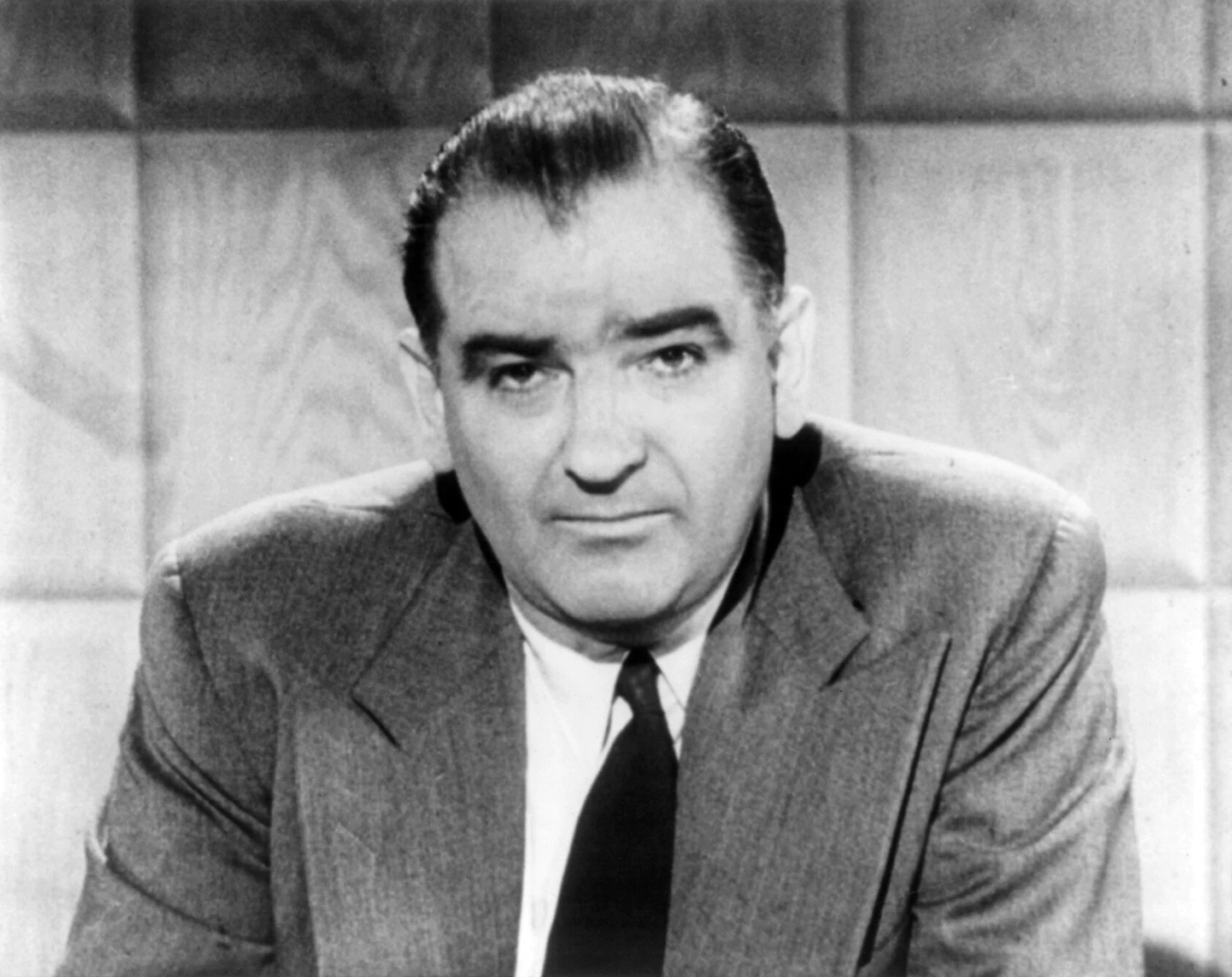
Trump’s newest anti-left rhetoric is trying to do what Joseph R. McCarthy once did: turn political conflict into a national panic. The historical analogy matters because McCarthy’s rise shows how fear politics works, and why it eventually breaks. He was a little-known junior senator from Wisconsin until February 1950, when he claimed to have a list of 205 card-carrying Communists in the U.S. Department of State, a charge that helped define the Second Red Scare and gave the country a lasting shorthand for blacklist politics and civil-liberties abuse.
McCarthy’s formula had reach, but also a hard ceiling
McCarthyism was never just a personal style, it was a political machine built on suspicion, congressional theater and institutional intimidation. The label stuck because McCarthy’s accusations were public, repeated and tied to a broader climate in which anti-communism could be used to purge opponents from jobs, hearings and public life. Yet the machine had limits: in December 1954, the U.S. Senate censured McCarthy by a vote of 67 to 22, and his public power collapsed.
That ending matters for the present debate. It shows that even at the height of the Red Scare, when anti-communist fear had official traction, the system could still push back when one figure overreached. The Senate vote was not a footnote. It was the institutional signal that McCarthy had crossed from influence into liability, and that fear alone was not enough to sustain durable power.
Why Trump’s rhetoric is being called a third red scare
Commentators are now framing Trump’s anti-communist and anti-left rhetoric as a possible third red scare or new red scare. The comparison has sharpened because Trump has repeatedly used that language against political opponents, not as a narrow foreign-policy frame but as a domestic weapon. Recent commentary also ties the issue to free speech and the First Amendment, which shifts the question from partisan insult to the boundaries of state power.
Clay Risen’s Red Scare: Blacklists, McCarthyism, and the Making of Modern America has become a central reference point in that discussion. His book places McCarthyism inside a larger story of blacklists and political fear, and recent coverage has used it to draw a line from the 1950s to Trump-era politics. Princeton University Press has also noted that public interest in McCarthyism surged after Donald Trump’s election, a sign that the old panic has returned as a political vocabulary for a new one.
The Trump comparison is not only rhetorical. The White House convened right-wing influencers for a livestreamed discussion of antifa and the danger they say it poses, which shows how much the current politics of suspicion runs through creators, platforms and niche audiences rather than through a single national broadcast system. In the McCarthy era, one senator and a few peak institutions could dominate the conversation. Today, the message is distributed through a far more fragmented media environment.
What has changed since the 1950s
The original Red Scare operated in a different media and legal world. McCarthy could become a national figure because attention was less splintered, the broadcast ecosystem was narrower and political elites moved within a smaller set of gatekeepers. Trump faces a public sphere in which outrage spreads faster, but no single channel controls it. That makes fear politics louder, yet also less stable, because the same fragmentation that amplifies the message also dilutes its discipline.
Legal protections are stronger, too. Recent commentary on the Trump administration has centered the First Amendment, and that is a crucial difference from the 1950s. The current fight is not just about whether one politician can stigmatize an opponent, but whether the government can convert suspicion into policy against speech, association or dissent. The Immigration and Nationality Act of 1952 keeps surfacing in this discussion because it sits inside the Cold War legal order that helped normalize anti-communist enforcement in the first place.
Public trust is another structural difference. Pew Research Center’s 2025 measure found that just 17 percent of Americans say they trust the government in Washington to do what is right just about always or most of the time. That is one of the lowest readings in nearly seven decades. Low trust can make fear politics easier to launch, because suspicion already runs deep, but it also makes it harder for any single campaign of panic to command broad legitimacy for long.
Why the strategy is more symbolic than durable
Trump’s anti-communist language can still serve an electoral purpose. It marks opponents as dangerous rather than merely wrong, and that is a classic mobilization tactic. But the mechanics that made McCarthy powerful have changed: media fragmentation prevents one narrative from monopolizing attention, the First Amendment gives critics stronger tools, and party incentives are now tied to a hyperpolarized electorate that rewards noise but punishes overreach when it becomes a governing problem.
That is why the McCarthy analogy cuts both ways. The historical record shows how easily fear can be packaged into politics, but it also shows how quickly an institution can reject the package when it becomes too blatant. McCarthy ended in censure, not triumph. Trump’s third red scare may generate attention, but the conditions that once let anti-communist panic dominate Washington no longer exist in the same form, and that makes it far more likely to function as symbolic nostalgia than as a lasting governing strategy.