Health
Tubulin may steer Alzheimer’s and Parkinson’s proteins away from harm
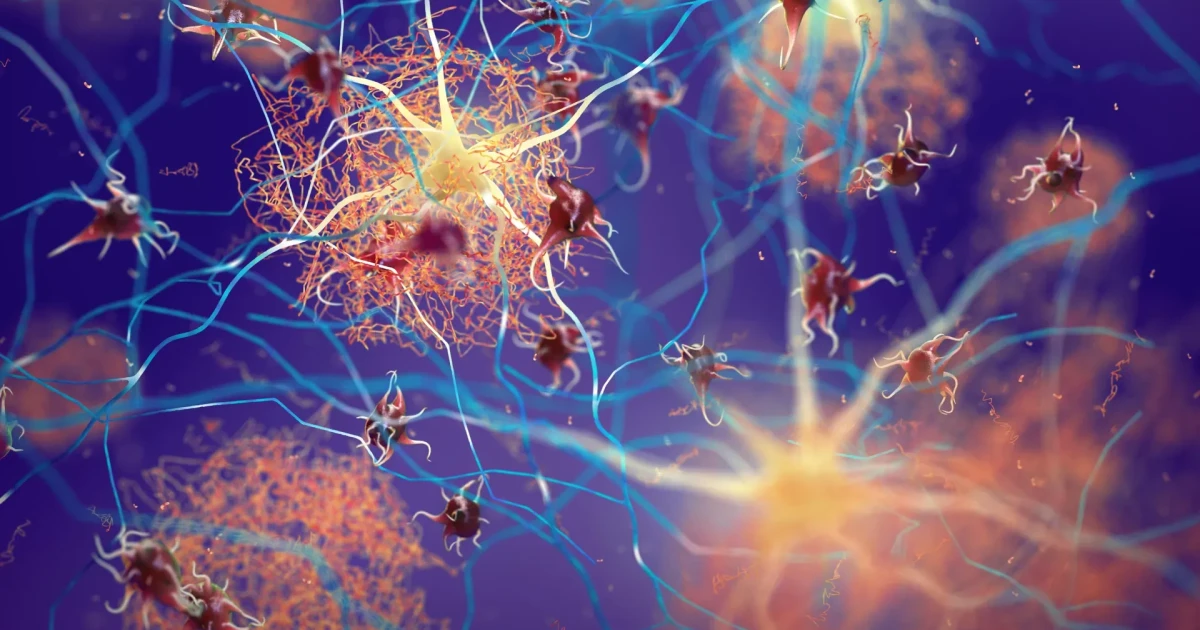
A Baylor College of Medicine study points to a softer way of confronting Alzheimer’s and Parkinson’s disease: instead of trying to shut down protein droplets after they form, tubulin may help steer those proteins toward a safer state. The finding does not offer a treatment yet, but it reframes a familiar villain in brain disease as part of the protective machinery.
A shift from blocking to steering
The proteins at the center of this work, Tau and alpha-synuclein, are known for their role in neurodegeneration when they misfold and aggregate. They can gather inside tiny droplets called condensates within brain cells, and those condensates are not automatically harmful. In healthy neurons, both proteins still help with cell structure and communication, which is why the new work matters beyond a single pathway or a single disease label.
The Baylor team is pointing to a different strategy for disease control. Rather than treating every protein interaction as something to eliminate, the study suggests that changing what happens inside these condensates may be the safer move. That distinction matters because a blunt attempt to erase protein droplets could also erase normal neuronal function, especially in cells already under stress.
Why tubulin changes the picture
Tubulin, the building block of microtubules, sits at the center of the new model. Microtubules are the cell’s internal transport rails, and the Baylor findings suggest tubulin is not just structural background material. When tubulin is present, Tau and alpha-synuclein shift away from harmful aggregates and instead promote the assembly of healthy microtubules.
That matters because Baylor says tubulin levels are low in Alzheimer’s disease. Lower tubulin means microtubules are less abundant, and that shortage may leave Tau and alpha-synuclein more likely to form toxic aggregates. In other words, the disease context may help create the very conditions that let these proteins move from normal work to harmful buildup.

The Nature Communications paper takes that idea further, showing that tubulin modulates Tau and alpha-synuclein condensates by promoting microtubule interactions and inhibiting both homotypic and heterotypic pathological oligomers. For drug development, that is a meaningful shift in logic. The goal is not simply to suppress protein behavior, but to guide it toward a state that supports cell health rather than undermines it.
What the Baylor team actually tested
The study was led by first author Lathan Lucas and co-corresponding author Allan Chris M. Ferreon, working within a Baylor program focused on intrinsically disordered proteins implicated in neurodegenerative disease. The team used biochemical and biophysical techniques, high-resolution microscopy, and neuronal-based assays to examine how tubulin affected Tau and alpha-synuclein condensates.
That combination of methods matters because it lets the researchers look at the proteins from several angles at once, from molecular behavior to cellular consequences. It also strengthens the case that the effect is not just a test-tube curiosity. The work suggests that tubulin can influence whether these proteins slide into toxic clustering or remain tied to their normal roles in microtubule biology.
The paper, titled “Tubulin transforms Tau and alpha-synuclein condensates from pathological to physiological,” was received on November 1, 2025, and accepted on February 2, 2026. Those dates show the project moved through peer review before reaching publication, a useful reminder that the idea is not a loose hypothesis but a mechanistic claim tested with multiple layers of evidence.
What it could mean, and what it does not mean yet
For patients and families, the appeal of this work is obvious. Alzheimer’s and Parkinson’s disease do not just affect neurons; they reshape daily life, caregiving, memory, movement, independence, and long-term planning. A therapy built on this kind of biology could, in theory, do more than slow damage. It could preserve the normal work of neurons while reducing the toxic buildup that drives decline in older adults.

But the line between laboratory insight and treatment is still wide. This study does not mean tubulin can be turned into a drug tomorrow, and it does not mean these condensates should be destroyed outright. The more careful reading is that disease may be less about total protein shutdown and more about restoring balance inside the cell.
That distinction is especially important for health policy and equity. Neurodegenerative disease already places a heavy burden on families, paid caregivers, and public health systems, and the costs are felt most sharply when people lose function before supports are in place. A strategy that preserves neuronal activity while limiting toxic aggregation could eventually reduce that burden, but only if the science advances into therapies that are safe, scalable, and accessible.
Baylor’s broader message is that proteins often labeled as purely “bad” in neurodegeneration may have normal, even protective, roles depending on cellular context. Tubulin’s new role in this story is not that of a passive scaffold, but of a possible protector that helps keep Tau and alpha-synuclein on the side of health. If future work confirms that direction, the field may move closer to treatments that steer disease biology instead of simply trying to block it.
Sources
- [1]sciencedaily.com
- [2]bcm.edu
- [3]blogs.bcm.edu
- [4]nature.com