Business
UAE Withdraws from OPEC Amid Strait of Hormuz Crisis
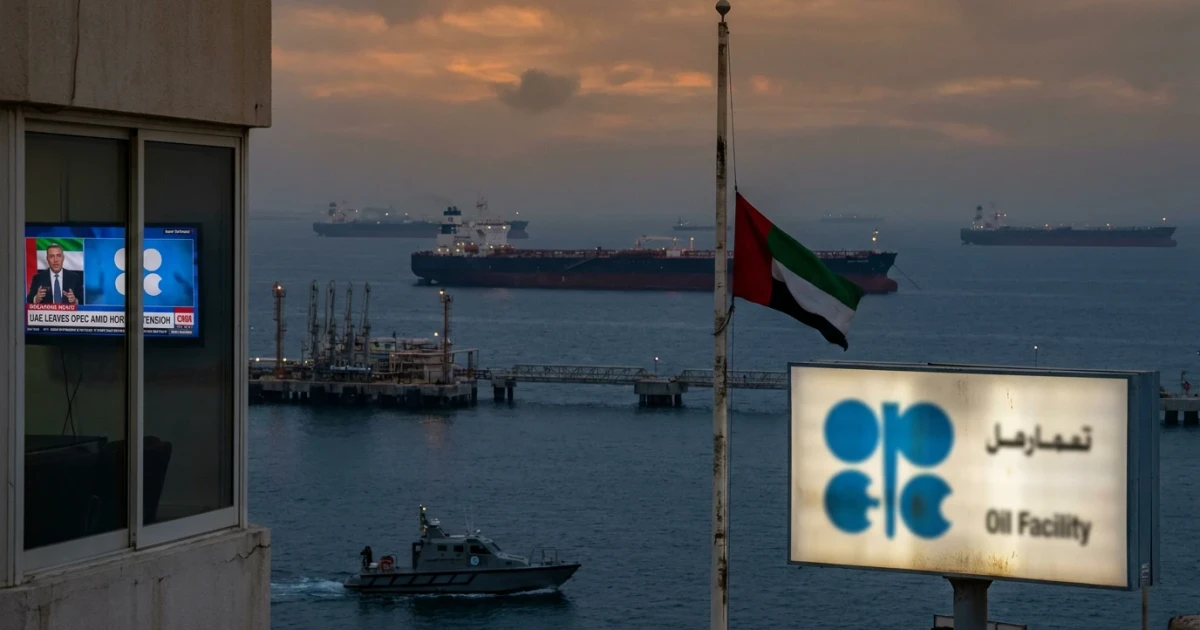
The United Arab Emirates (UAE) has announced its decision to leave the Organization of the Petroleum Exporting Countries (OPEC), a move that coincides with escalating tensions in the Strait of Hormuz and delivers a blow to the influential oil producers’ group led by Saudi Arabia. The announcement, reported by The Washington Post and Reuters, comes at a moment of heightened uncertainty for global energy markets and underscores shifting regional dynamics in the Middle East.
Strategic Departure Amid Chokepoint Tensions
The UAE’s exit from OPEC arrives as the Strait of Hormuz—the world’s most vital oil transit chokepoint—faces a security crisis impacting oil flows. According to the U.S. Energy Information Administration (EIA), about 21% of global petroleum liquids consumption passes through this narrow waterway, which borders the UAE and Iran. Disruptions in the strait have historically caused price spikes and supply instability, amplifying the repercussions of the UAE’s OPEC decision.
Impact on OPEC and Saudi Arabia
As one of OPEC’s leading oil producers, the UAE’s departure is seen as a setback for Saudi Arabia, the de facto leader of the group. OPEC, for decades, has coordinated output policies among members to influence global oil prices and maintain market stability. Losing the UAE—whose output was over 3.7 million barrels per day in recent years—weakens OPEC’s collective bargaining power and could further fragment the organization’s unity.
- The UAE was OPEC’s third-largest producer after Saudi Arabia and Iraq.
- Its oil exports have been a mainstay of the country’s economy, contributing significant government revenue.
- OPEC’s remaining members may now face greater difficulty in enforcing production targets and stabilizing prices.
Motivations for UAE’s Exit
While official statements from UAE leaders were not immediately available, analysts point to growing differences between Abu Dhabi and Riyadh over production quotas and national energy strategies. The UAE has invested heavily in boosting its oil output capacity and has sometimes clashed with OPEC’s attempts to restrict production. According to the EIA’s UAE country analysis, the nation has sought greater flexibility to pursue its export goals and diversify its energy partnerships.
The ongoing crisis in the Strait of Hormuz may have accelerated the UAE’s decision, as concerns over supply security and shipping risks mount. The country’s control of key export terminals outside the strait gives it unique leverage and options compared to some OPEC peers.
Global Oil Market Implications
The UAE’s withdrawal from OPEC could have a range of effects on global oil markets:
- It may undermine OPEC’s ability to coordinate supply cuts, leading to more unpredictable price movements.
- Traders and importers will closely watch UAE’s independent production policies for clues on future supply trends.
- Rival producers—including the United States and Russia—could see new opportunities to expand their market share.
Data from the UNCTADstat database shows that the UAE exports significant volumes of crude to Asia, Europe, and the Americas, making its policy choices critical to global buyers.
Regional and Geopolitical Repercussions
Beyond OPEC, the UAE’s move signals shifting alliances and increased competition within the Gulf region. Its departure could strain ties with Saudi Arabia and reshape the balance of power among oil-rich nations. The UAE’s maritime zones law underscores its strategic position adjacent to the Strait of Hormuz, and its ability to maintain stable exports even during regional crises could strengthen its hand in future energy diplomacy.
Looking Ahead
Although the full consequences of the UAE’s OPEC exit will unfold in the coming months, the move highlights growing tensions within global energy governance and the challenges facing traditional alliances. Market watchers will monitor how OPEC adapts to this loss, and how the UAE leverages its independence to navigate the uncertain landscape of Middle East oil politics and global supply chains.