World
Uganda sisters seek better end-of-life care for aging nuns
The Little Sisters of St. Francis have spent generations teaching, staffing clinics and filling social-service gaps across Uganda. Now, in the motherhouse at Nkokonjeru in Central Uganda, the hardest question is who will care for the women who built that safety net when they are no longer able to care for themselves.
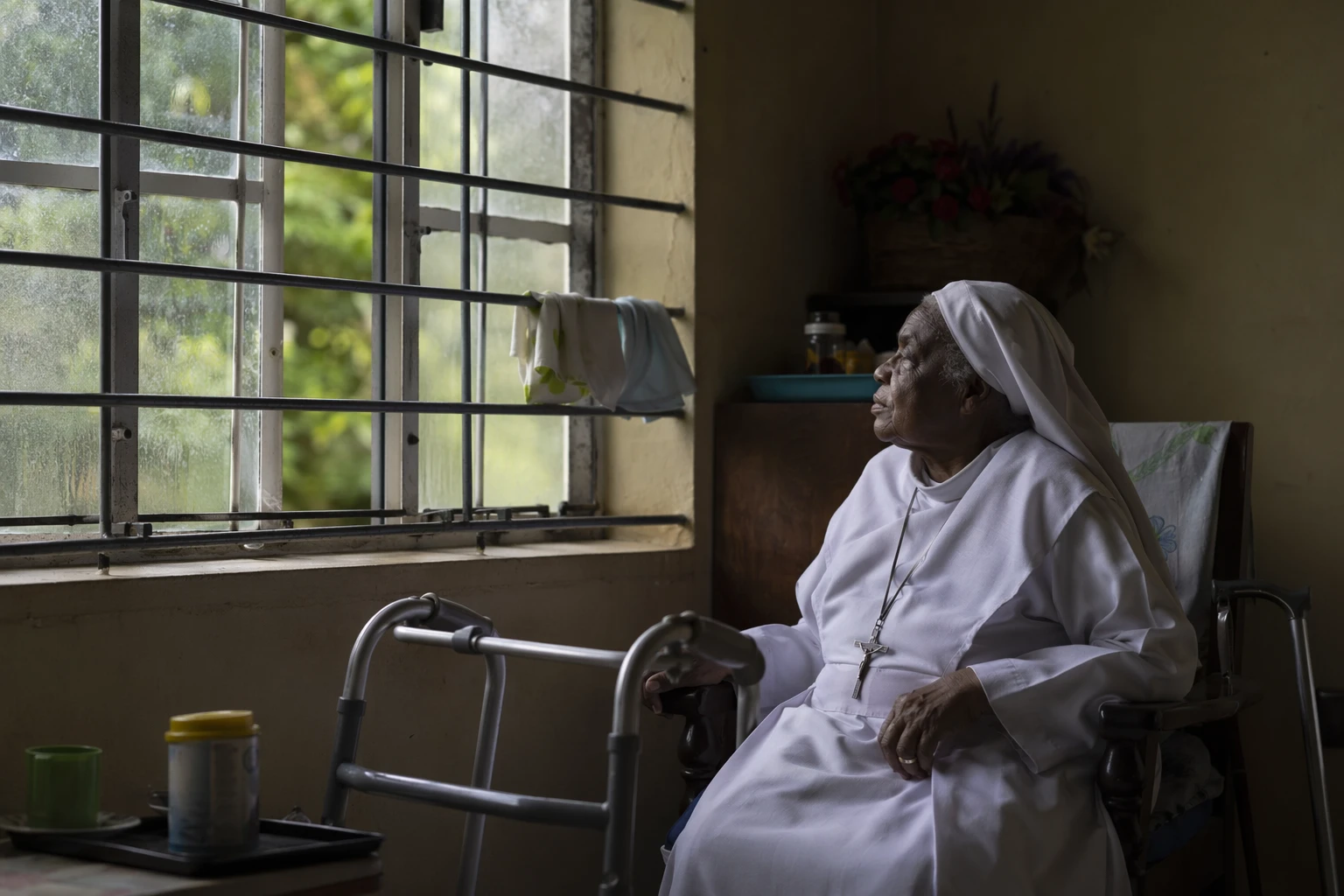
At the convent where the order begins and ends, novices are trained, vows are taken and retired sisters are also meant to be supported. Sister Jane Francis Nakafeero, the superior general, says that ideal is under strain because many older sisters lack basic end-of-life items such as adult diapers, wheelchairs, hearing aids and even warm blankets. The problem is not only material; it exposes how little formal planning exists for aging religious women in a country that has long depended on them for daily care.
A caregiving system built on service, not retirement
Uganda’s Catholic sisters have long been trusted because they live alongside the communities they serve and often go where others will not. A 2019 University of Southern California case study described sisters working in refugee camps, providing trauma counseling for victims of the Lord’s Resistance Army and reaching out to HIV-positive young women in Kampala. That record helps explain why their work is so deeply woven into public life, from education and health care to social services.
The same broad reach now creates a new obligation. Women who spent decades propping up schools, clinics and protection programs are aging within institutions that were built to serve others first. In practical terms, that means the question is no longer whether sisters will keep showing up for communities. It is whether the church, families and the state can marshal enough capacity to support them when they need daily, sustained care.
Why palliative care is becoming an urgent church issue
Nakafeero raised the issue at an African Palliative Care Association meeting in 2023, bringing the needs of the Nkokonjeru motherhouse into a wider conversation about end-of-life care. Jean Callahan, former chair of the Irish Hospice Foundation and an advisory board member of the association, later helped advocate for a partnership between the Little Sisters of St. Francis and APCA to improve that care.
That partnership matters because palliative care is still relatively new in the broader health landscape, emerging in the 1960s, and it remains underfunded and poorly understood in many church settings. For aging sisters, that gap shows up in everyday deprivation, from mobility support to dignity items that allow a frail person to live and die with less pain and more comfort. The issue is not simply medical. It is institutional, financial and cultural.
The wider scale of the need
This is not only a problem for one convent. A 2022 study spanning Ghana, Kenya, Malawi, Uganda and Zambia found elder care in women’s religious congregations to be a growing need across the region. That broader finding underscores what Nkokonjeru makes visible: congregations that have spent decades absorbing social burdens are now approaching a stage where they require specialized support themselves.
The Conrad N. Hilton Foundation has been part of that response since launching its Catholic Sisters Initiative in 2013. The initiative helped support research and strategy development for sisters in Uganda, reflecting an increasingly practical recognition that the health of religious women is tied to the health of the services they deliver. When sisters age without adequate support, schools, clinics and community programs lose not just volunteers, but institutional memory and trusted leadership.
A congregation with deep roots and a far reach

The Little Sisters of St. Francis were founded in 1923 by Mother Mary Kevin Kearney, and their footprint has since stretched well beyond Uganda. By early 2025, reporting on the congregation noted its presence in Kenya, Tanzania, the United States and Germany, a reminder that what happens in Nkokonjeru resonates across an international religious network.
The motherhouse’s own milestones show both vitality and aging at once. By January 2025, the Nkokonjeru congregation marked 48 jubilees at the Mother House, including five golden jubilees, 11 silver jubilees and 10 perpetual vows among the sisters celebrated. Those numbers speak to a community with depth, continuity and a long institutional timeline, but they also signal the reality that many members are now entering the stage of life where care needs become immediate and non-negotiable.
Uganda’s sisters still carry a large public burden
Across Uganda, Catholic sisters continue to run health and protection programs for vulnerable communities, including child-safety work, orphan-support efforts and specialized treatment camps. That broad social role is precisely why the elder-care problem cannot be dismissed as a private issue inside convent walls. It is a public-policy question about who absorbs the costs when the people who sustained informal welfare systems begin to age.
Uganda already has palliative-care infrastructure to build on. The Palliative Care Association of Uganda was established in 1999 and registered as an NGO in 2003, and it now says it has more than 2,000 individual members and 37 member organizations. Even so, the gap at Nkokonjeru shows that capacity on paper does not guarantee access in practice. The next test for the church and its partners is whether those networks can be translated into dependable care for the women who spent their lives caring for everyone else.