Technology
UK data centres’ AI boom fuels water and power concerns
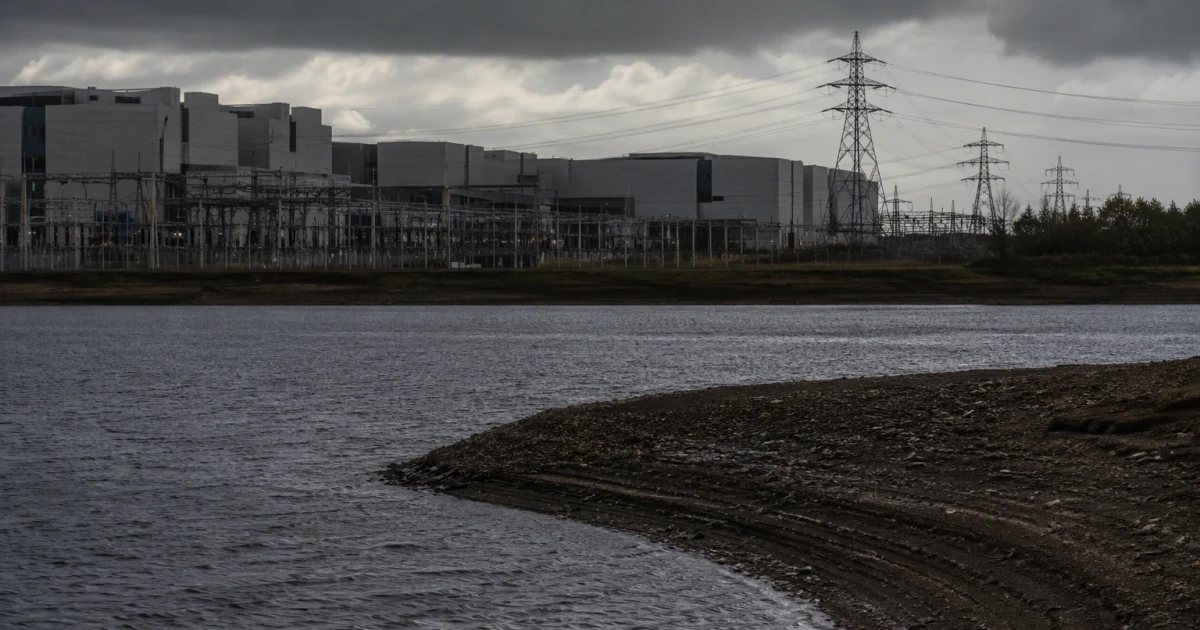
Data centres already consume around 1.5% of global electricity, the International Energy Agency estimates. These buildings house the servers, storage and networking behind cloud services, banking, streaming and AI tools. Because that demand is geographically concentrated, each new campus lands on a real grid, a real water system and a real community budget.
What data centres are really asking the grid to carry
Data centres now raise policy questions about energy consumption, water consumption, planning policy and cyber resilience at the same time. The UK government describes them as infrastructure that underpins almost all economic activity, which is why the current buildout is being treated as more than a commercial race. In practice, the question is not whether Britain wants more compute, but which parts of the country will absorb the load when the servers switch on.
They draw from whatever electricity is available locally, whether that is a cleaner grid with more renewables or a system still leaning heavily on fossil fuels, and they usually back that up with on-site diesel generators for resilience. Data centres typically operate local energy systems, or microgrids, and commonly use diesel backup generators, which makes the sector’s footprint an electricity story and an air-quality story at the same time.
Water is now part of the power equation
The UK debate has moved beyond megawatts into reservoirs and cooling systems. Scottish data centres powering AI were already using enough water to fill 27 million bottles a year. Concerns were growing that the UK’s AI ambitions could lead to water shortages, and that Sir Keir Starmer’s plan to make the UK a “world leader” in artificial intelligence could put already stressed water resources under further pressure.
The number of UK data centres was set to increase by almost a fifth, which means more sites competing for the same water mains, power connections and planning approvals. In Scotland, the issue has already become local and political, with rural communities asked to weigh jobs and investment against noise, land use, cooling demand and the strain on scarce supplies.
The Borders fight shows how quickly opposition hardens
A proposed £2bn rural data centre in the Borders has already become a flashpoint. Campaigners opposing it described the project as a “monster” that would drain “the life and beauty from the landscape.”

Near data centres in Georgia, one resident said, “I can’t drink the water.” Even when the geography is different, communities close to campuses often get the noise, the traffic, the substations and the cooling demand before they see any promised economic upside.
Regulators are starting to price in the strain
Ofgem has proposed measures that could require data centre developers to pay hundreds of millions of pounds up front for power demands. That proposal reflects a basic tension in the UK’s power system: the grid cannot treat speculative demand as free capacity, and other users end up carrying the cost if developers can reserve connections without paying for the upgrades they trigger.
In June 2026, the UK Parliament’s Environmental Audit Committee held hearings on how more data centres could affect the UK’s climate and nature goals. Witnesses included Christina Christopoulou of Amazon Web Services and Steen Stewart of the Crown Hosting Framework.
Efficiency gains have not erased the scale problem
In 2016, DeepMind cut Google data centres’ energy consumption by 15% using a machine-learning algorithm. More recently, operators have been pushing advanced cooling methods because chips run hot around the clock, and Equinix’s toolkit includes air, liquid and geothermal cooling, along with heat reuse.
By 2027, the AI industry could use as much energy as the Netherlands, which is the clearest shorthand for the problem now facing Britain’s planners and regulators. The technology may be digital, but the bill arrives in steel, concrete, transformers, water pipes and diesel tanks, and the communities hosting the next wave of data centres are being asked to absorb all four.
Sources
- [1]nytimes.com
- [2]bbc.com
- [3]commonslibrary.parliament.uk
- [4]iea.org
- [5]spice-spotlight.scot
- [6]youtube.com
- [7]eqix.it
- [8]pulitzercenter.org