Business
UK economy shrinks in April as Iran war dents businesses

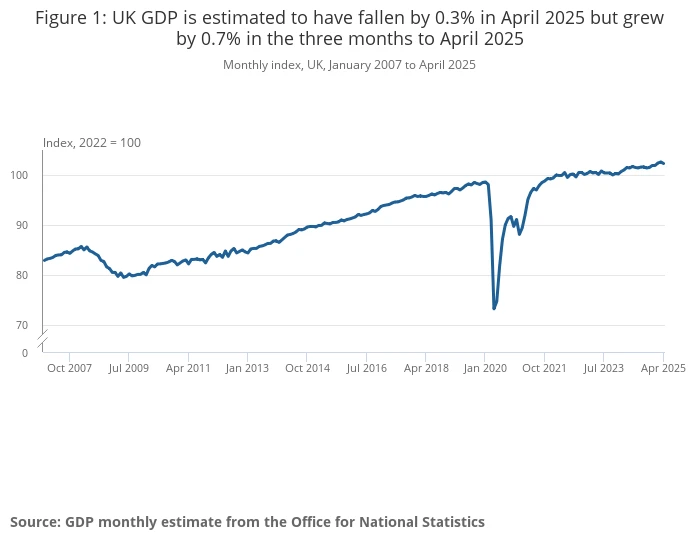
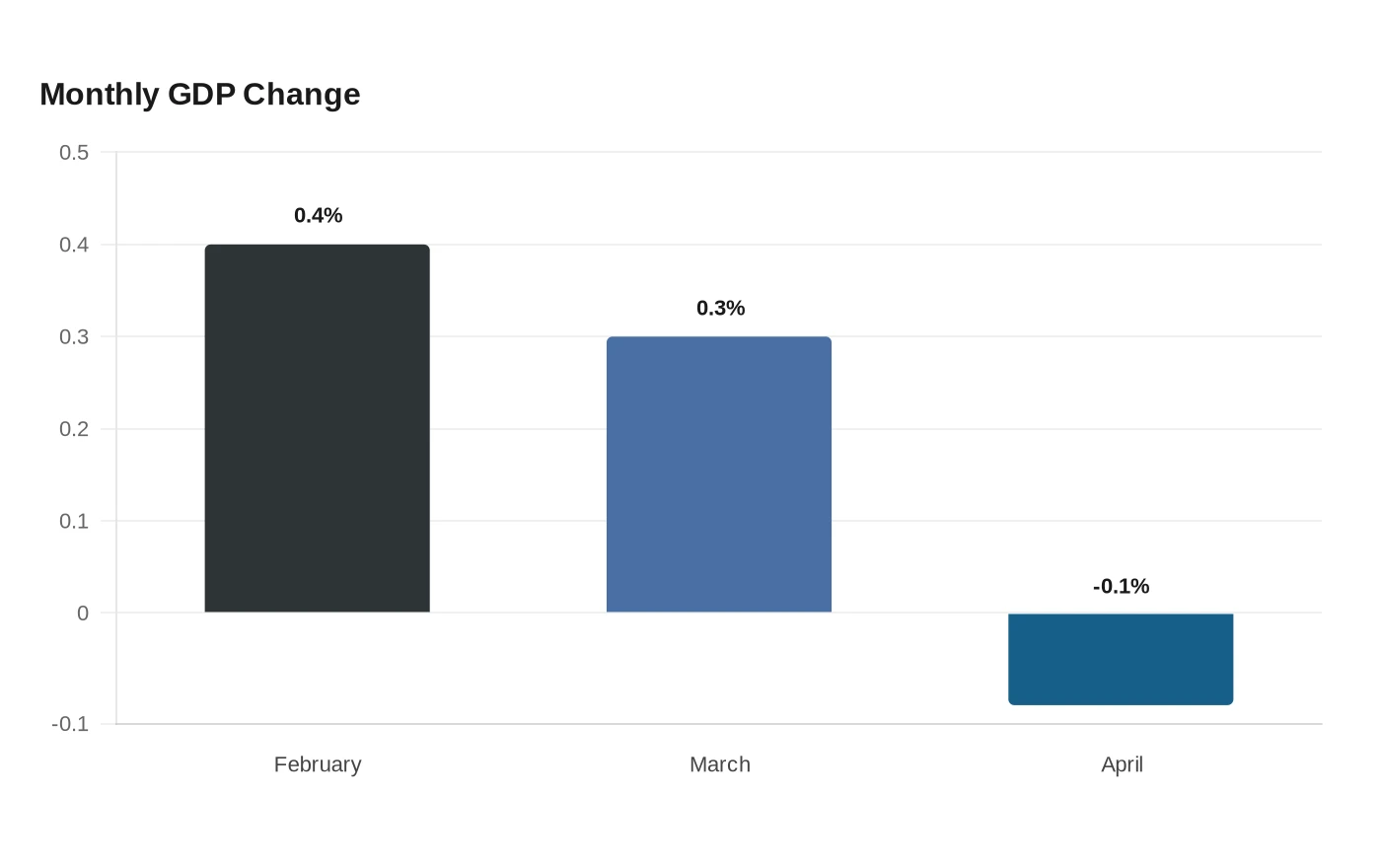
The UK economy edged backward in April as the Iran war began to seep through energy bills, shipping lines, travel demand and boardroom confidence. Monthly GDP fell 0.1%, reversing gains of 0.3% in March and 0.4% in February, and giving an early reading on how fast geopolitical shock can reach the real economy.
The Office for National Statistics said the monthly drop was driven by a 0.2% fall in services output. Construction rose 0.1%, but production was flat, leaving the economy slightly weaker than in March. More revealing than the headline number was the list of sectors reporting pressure from the Middle East conflict: manufacturing, wholesale, warehousing, support activities for transportation, accommodation and travel agencies all said the disruption was affecting April data.
That matters because those sectors sit close to the transmission belt from war to household budgets. Oil and gas disruption in the Middle East tends to feed into higher energy costs, which can filter through freight rates, business prices and eventually consumer spending. The House of Commons Library has said the conflict may raise UK inflation and lower GDP growth, while also making Bank of England rate cuts less likely than previously expected.
The April wobble came against a broader backdrop that is still positive, but fragile. GDP rose 0.7% in the three months to April, the fifth straight three-month increase. Services output over that period was up 0.8%, construction rose 1.6% and production fell 0.1%. Even so, the monthly dip suggests the shock from the war is already moving through activity data, not just market expectations.
Forecasts are now adjusting to that slower path. The International Monetary Fund said in April that the UK would take the biggest growth hit among rich economies from the war, cutting its 2026 forecast to 0.8% from 1.3%. The Confederation of British Industry has since trimmed its 2026 GDP forecast to 1.1% and its 2027 forecast to 0.9%, citing higher energy prices, supply-chain disruption and weaker confidence. The British Chambers of Commerce also expects growth to stay subdued in 2026 and 2027.
Business sentiment has weakened alongside demand. UK Finance said business and consumer demand had wobbled since the conflict began, with the S&P Global PMI sliding back into contractionary territory in May. Suren Thiru of ICAEW said confidence had fallen sharply, with sales, inflation and energy costs all weighing on firms.
The government has said it is responding to the economic effects of the war in Iran and supporting families and businesses. The next GDP update is due on 16 July, and it will offer another test of whether April was a one-month shock or the start of a broader slowdown.
Sources
- [1]bbc.com
- [2]ons.gov.uk
- [3]commonslibrary.parliament.uk
- [4]imf.org
- [5]cbi.org.uk
- [6]gov.uk
- [7]icaew.com
- [8]britishchambers.org.uk
- [9]worldbank.org
- [10]untourism.int