Health
UK heat emergency intensifies as temperatures forecast to hit 38C

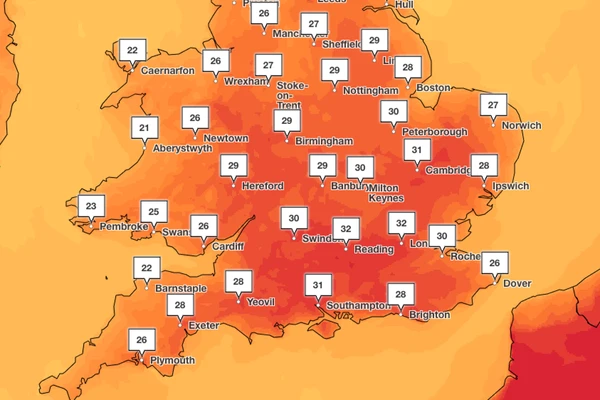
There is no blanket right to keep children out of school or walk away from work just because the air has turned dangerous. That is the practical line families and workers are facing as the Met Office escalated its heat alerts, with a red Extreme Heat Warning in force for Wednesday 24 June and Thursday 25 June and temperatures forecast to widely exceed 35C, with peaks of up to 38C in parts of England.
The warning marks a rare early-summer heat emergency, with amber alerts running from Monday 22 June through Thursday 25 June and June’s all-time daily temperature record now at risk. The warning area was expanded across northern England, including Sheffield, where the Met Office warning page showed the city inside the affected zone. For households trying to decide what can legally be refused, the answer is narrower than the public-health advice: extreme heat triggers duties to manage risk, but it does not create a general right to stay home from school or refuse attendance.

In schools and early years settings, the Department for Education says schools do not normally close in hot weather because attendance remains the best way for pupils to learn and reach their potential. Guidance for England tells leaders to use Heat-Health Alerts from the UK Health Security Agency and Met Office data when deciding what action to take, and it flags children with complex health needs or clinical advice as cases that must be built into local planning. That leaves parents with limited leverage unless a child’s individual needs require a specific adjustment.
The strongest legal protections sit at work. The Health and Safety Executive says employers have legal duties to protect workers from extreme heat, and workers should raise concerns if the temperature is uncomfortable. Its guidance points to practical controls such as moving work to cooler times of day, giving more frequent rest breaks, supplying cool drinking water and providing shade for outdoor staff. The Workplace, Health, Safety and Welfare Regulations require employers to provide a reasonable indoor temperature, while outdoor sites must provide protection from adverse weather.
That distinction matters because the gap between official advice and enforceable rights is where most disputes arise. Heat is treated as a health hazard, not just unpleasant weather, and the government’s guidance makes clear that children, older people and workers face the greatest risk. On 19 June 2026, the HSE said it was reviewing its guidance and associated code of practice to reflect a modern workplace, a sign that pressure on employers is rising even as the temperatures climb.
Sources
- [1]bbc.com
- [2]metoffice.gov.uk
- [3]weather.metoffice.gov.uk
- [4]educationhub.blog.gov.uk
- [5]gov.uk
- [6]press.hse.gov.uk
- [7]hse.gov.uk