World
UK heat warning extends to Thursday as temperatures near 38C

Health and care services across England and Wales are bracing for a four-day heat episode that could push temperatures to 38C in places, with the Met Office warning that conditions will be widely above 35C from Monday through Thursday. The amber alert, the second-highest level, signals a spell of extreme heat that is expected to be widespread, humid and, later in the week, capable of triggering thunderstorms.
The warning matters most for older people, people with existing health conditions and anyone who relies on regular care or support. UKHSA says amber heat-health alerts can bring increased use of health care services by vulnerable people and may require a coordinated response from health, social care and other public services. The alert system is aimed at health and social care professionals, the responder community, the voluntary and community sector and government departments, all of which may face extra pressure as temperatures climb.

The latest national forecast places amber weather warnings in force for Monday 22 June, Tuesday 23 June, Wednesday 24 June and Thursday 25 June, with extremely hot and humid conditions expected across southern and central parts of England and Wales. UKHSA’s current England heat-health alerts run until 8pm on Tuesday 23 June in the latest published notice, showing that the warning window can vary by region even as the broader hot spell continues. In Yorkshire and the Humber, the Met Office has highlighted temperatures above normal, though its Sheffield warnings page currently says there are no warnings in force for the city.
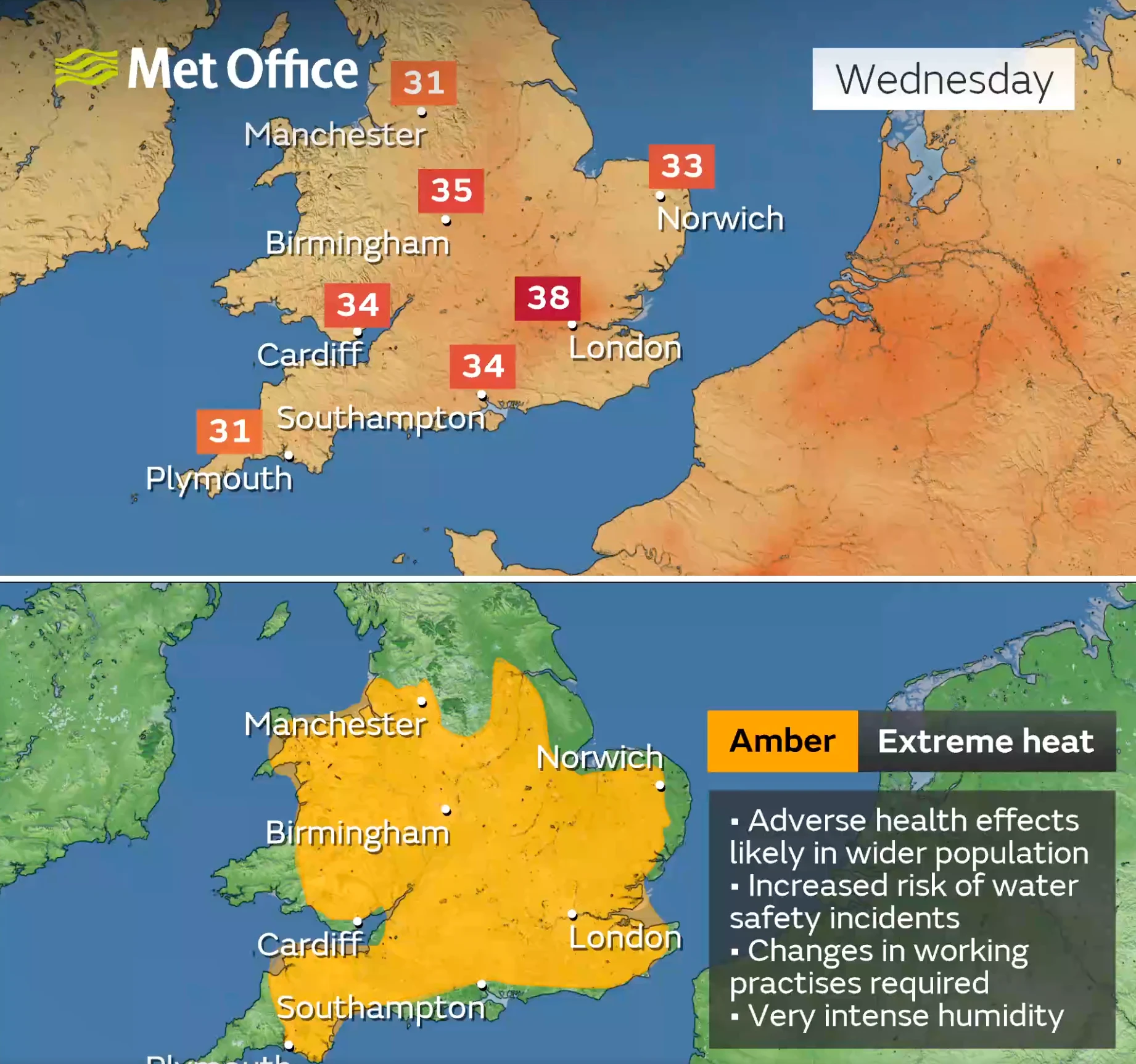
The heat-health system, run jointly by UKHSA and the Met Office, has operated since 2004 and is part of the wider Adverse Weather and Health Plan. The Met Office says it is designed to warn services before dangerous weather arrives so action can be taken early, rather than after hospitals, care homes and community teams are already under strain. That is especially important during prolonged hot spells, when repeated alerts can test staffing, transport, energy supply and the resilience of local services.

For much of the country, this is no longer a single hot afternoon but a sustained public-health event. With temperatures likely to exceed 35C widely and peaks near 38C, officials are treating the coming days as a test of how well the UK can protect people most at risk while keeping essential services running under extreme heat.