World
UK plans AI face scans to estimate asylum seekers’ age

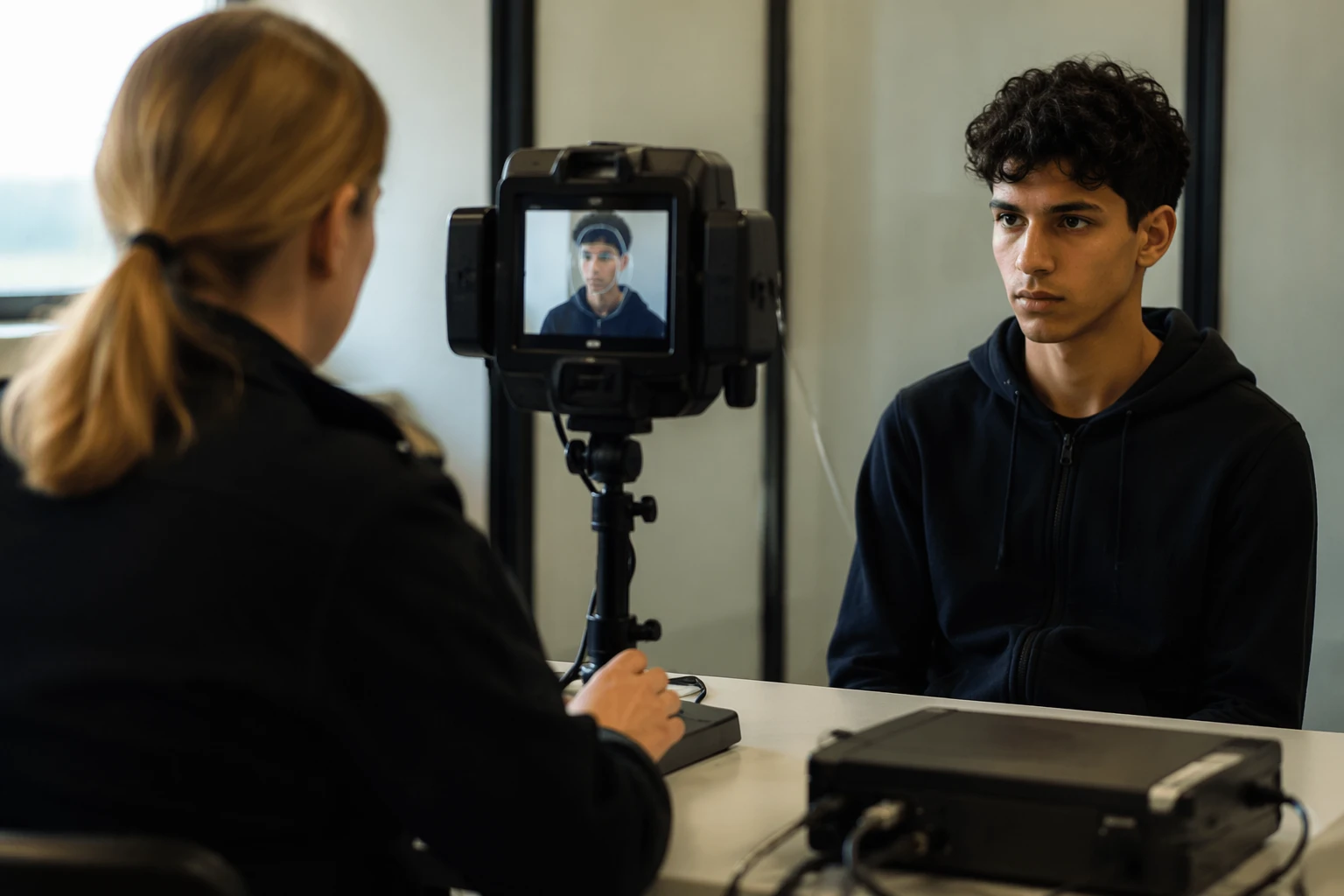
A facial-scanning tool that can decide whether a young asylum seeker is treated as a child or an adult is moving closer to use in the UK, despite government material warning that the system’s accuracy shifts by ethnicity and skin tone. That leaves one of the most consequential questions in immigration policy hanging on technology officials say will remain only a supplement, not a substitute, for human judgment.
The Home Office published guidance on facial age estimation on 29 May 2026 and said it plans to test the technology throughout 2026, with implementation from 2027. The department says immigration officers must still make an initial age decision when age is doubted, because asylum seekers often arrive without documents, and it insists the system will not replace caseworker judgment. But the government’s own material acknowledges limits, including variation by ethnicity and skin tone.
That matters because 18 is the dividing line in UK immigration law. A person assessed as a child is meant to enter safeguarding systems, while someone classed as an adult can be placed on a very different legal track, often with fewer protections and greater exposure to harm. For unaccompanied children who have fled violence, malnutrition, dehydration, sleep deprivation and long journeys, the consequences of a wrong call can be immediate and lasting.
The warning signs are not new. In July 2025, the Independent Chief Inspector of Borders and Immigration said there is no foolproof test of chronological age and that some age assessments will inevitably be wrong. The report also noted that the National Age Assessment Board has been assisting local authorities since 2023 with Merton-compliant age assessments, underscoring how difficult these judgments already are even before facial-scanning software enters the process.
The Home Office has long explored age-estimation science. The Age Estimation Science Advisory Committee, first commissioned as an interim body and formalized in October 2022, concluded in its report that ethnicity, deprivation and trauma can all affect biological appearance and complicate age assessment. That finding cuts directly against any claim that a quick scan can resolve a child-adult boundary with confidence.
Human rights groups have responded with urgency. More than 60 organizations, including Human Rights Watch, Amnesty International, Liberty, the Electronic Frontier Foundation, Foxglove and the Open Rights Group, called in June 2026 for the government to halt the plan. Campaigners said the technology is least precise around the exact 16-to-18 boundary the Home Office wants to assess, and they pointed to the department’s own figures showing an error margin of roughly 2.5 years in that range.
Human Rights Watch said the project should be scrapped, arguing that the Home Office’s tests performed worse on some groups, notably Africans. Critics say the bigger danger is not just a bad pilot but a bad precedent: once a tool like this is embedded in the asylum system, human reviewers may defer to machine output, and the burden of error will fall first on the asylum-seeker, then on the caseworker, and finally on the state that chose to proceed anyway.
Sources
- [1]arstechnica.com
- [2]gov.uk
- [3]assets.publishing.service.gov.uk
- [4]hrw.org
- [5]theregister.com