World
UK summer solstice arrives on 21 June, marking longest day of year

The longest day of the year arrives with an exact minute on the clock, not just a date on the calendar. In the UK, the 2026 summer solstice falls on Sunday 21 June at 9:24am BST, the instant the Northern Hemisphere is tilted most toward the Sun.
That timing matters because the solstice is the point at which daylight reaches its annual peak, even if it is not always the earliest sunrise or the latest sunset. In Great Britain, 21 June will bring about 17 hours and 6 minutes of daylight, while England will see about 16 hours and 54 minutes. The day will also run 9 hours and 46 minutes longer than the December solstice in Great Britain.
Astronomers define the June solstice as the moment the Sun is directly overhead the Tropic of Cancer. It is the longest day of the year in the Northern Hemisphere and the shortest day of the year in the Southern Hemisphere, a reflection of Earth’s tilted axis as the planet circles the Sun. That same tilt is what produces both solstices and equinoxes twice a year.
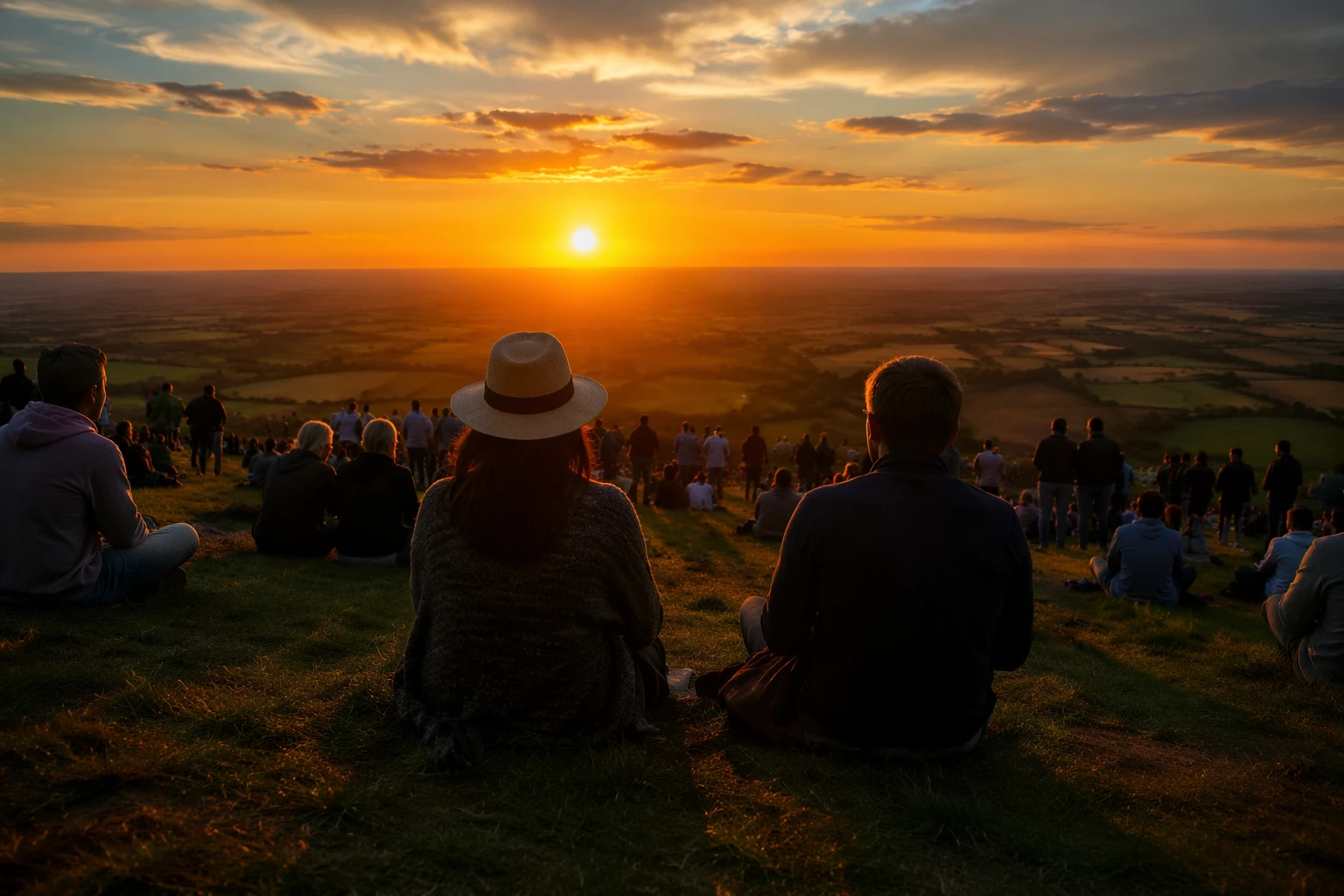
The solstice also sets the calendar apart from the weather. Meteorological summer runs from 1 June to 31 August, while astronomical summer in the UK begins around 21 June and lasts until around 22 September. The result is a seasonal split between the way forecasters mark the summer months and the way the Sun marks them.
For people across the UK, the practical effect is simple: the daylight has now peaked, and the nights will begin their slow return. Sunrise and sunset times still vary across Great Britain and England, but the total amount of daylight on 21 June is the highest of the year. That is why the solstice remains one of the clearest turning points in the national calendar, a precise astronomical event that resets the season in a single moment.
Sources
- [1]bbc.com
- [2]rmg.co.uk
- [3]weather.metoffice.gov.uk
- [4]timeanddate.com