Business
UK wage growth beats forecasts ahead of Bank of England decision
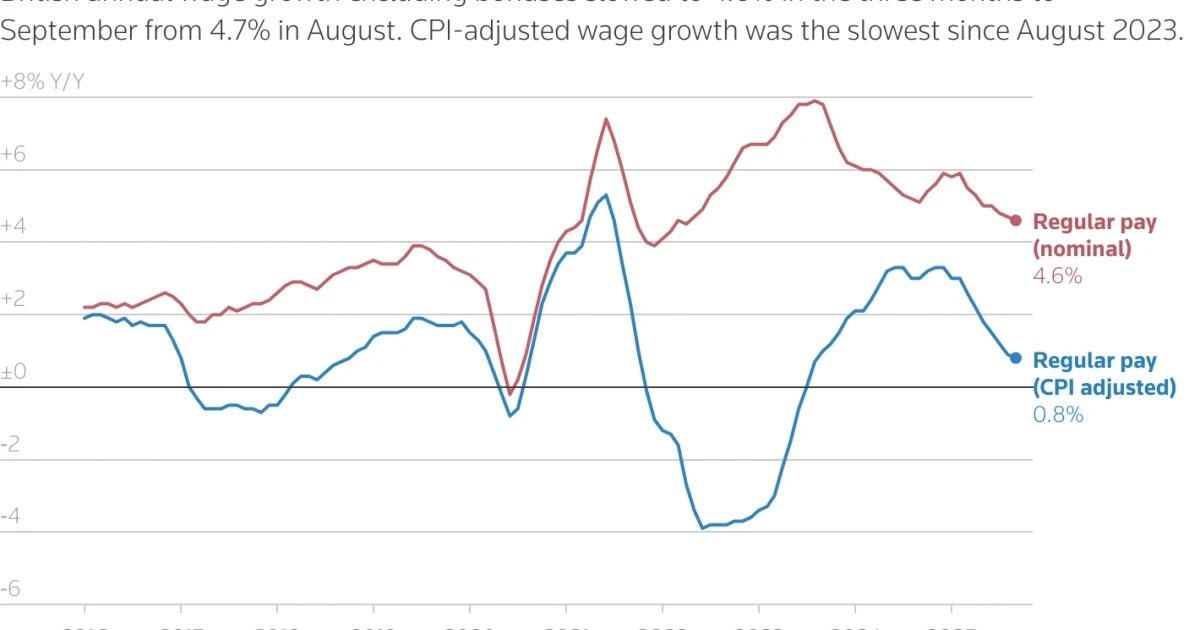
Stronger-than-expected wage growth left the Bank of England facing a familiar but awkward choice: pay gains were still firm enough to support households, but not yet soft enough to ease worries about inflation. Average weekly earnings excluding bonuses rose 3.4% in the three months to April, ahead of the 3.2% forecast, while unemployment edged down to 4.9% from 5.0% in the previous comparable period.
The timing made the figures especially sensitive. The Office for National Statistics released its June labour market bulletin on Thursday after a two-day delay caused by the Scottish bank holiday on Monday, June 15, landing the numbers just hours before the Bank of England Monetary Policy Committee was due to announce its decision at noon. Traders had already expected Bank Rate to stay at 3.75%, but the wage data made a patient stance look even more likely.
The latest release also softened the impression of a sudden hit to the jobs market. Payrolled employment increased by 2,000 in May, and April’s earlier estimate of a 100,000 drop in payrolled employees was revised to 53,000. That still points to a cooling labour market, but one that is easing more gradually than the first read suggested.
Other parts of the labour market continued to weaken. Vacancies fell to 707,000 in the three months to May, the lowest level since February to April 2021, and there were 2.5 unemployed people for every vacancy in February to April 2026. The message was mixed: hiring demand is fading, but pay is still holding up enough to complicate the inflation outlook.
That tension matters because the Bank of England has made clear that wage growth much above 3% is hard to reconcile with a durable return to its 2% inflation target, especially with weak productivity growth. The central bank kept Bank Rate at 3.75% on April 30 in an 8-1 vote, with one policymaker backing a rise to 4.0%. It is also watching whether higher oil prices tied to the Iran war feed into broader pay and price pressures.
The background remains uncomfortable for policymakers. After Russia’s full-scale invasion of Ukraine in 2022, UK inflation peaked at 11.1%, and wage growth stayed above 5% for nearly three years. Against that backdrop, Thursday’s data suggested real pay is improving, but also that borrowing costs may stay higher for longer as the Bank of England tries to finish the job on inflation.