World
Ukraine braces for another summer of power shortages and outages

Ukraine is heading into another season of strain on a power system that has been battered for more than two years. DiXi Group says shortages and consumer outages are likely even if temperatures stay moderate and solar generation holds up, because repeated Russian strikes have left the grid without enough margin to absorb new shocks.
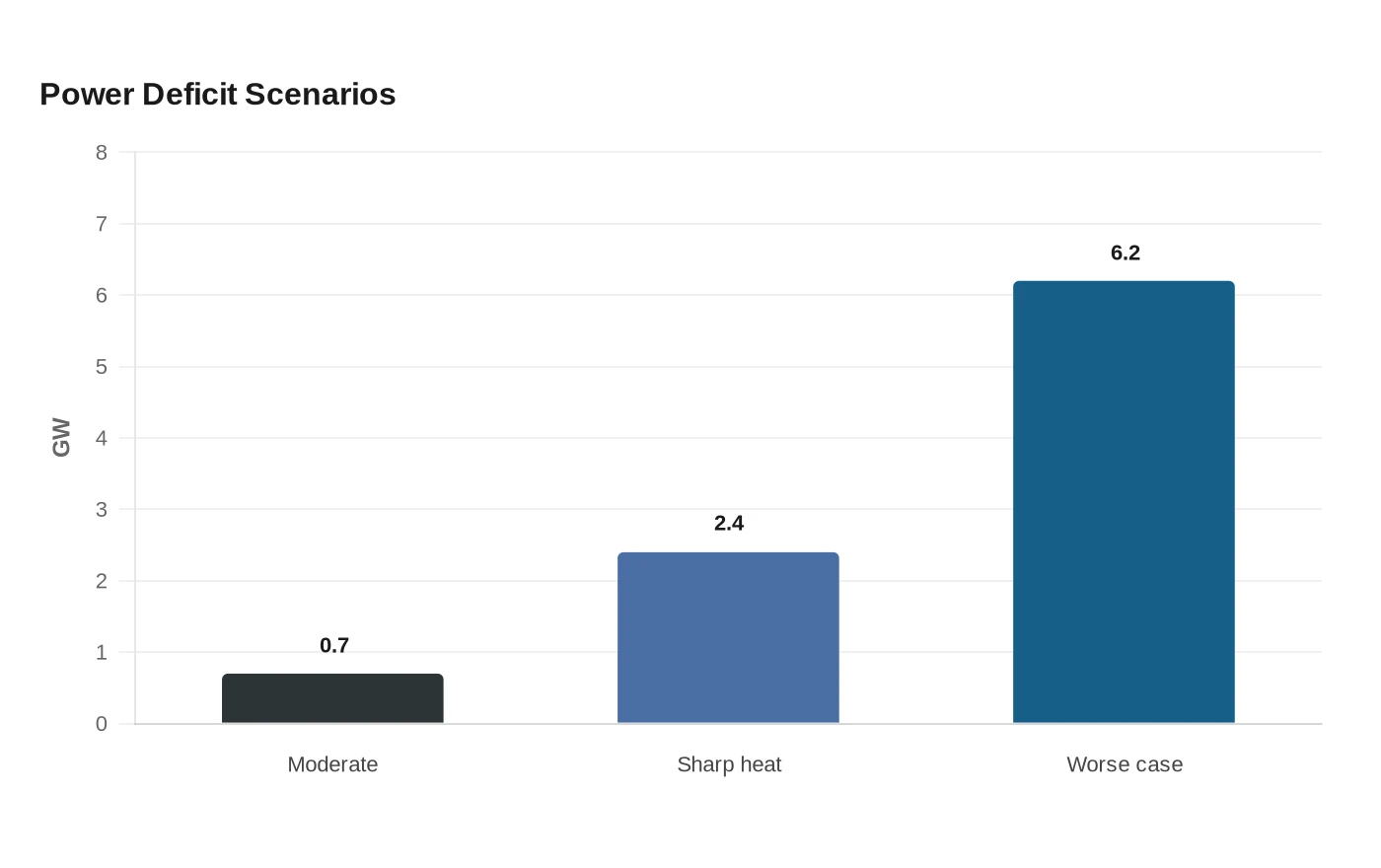
Under moderate conditions, DiXi Group sees a peak deficit of 0.7 gigawatts. If temperatures rise sharply, the gap could widen to 2.4 GW. In a worse case, if the network suffers additional damage, the shortfall could reach 6.2 GW against demand of 15.8 GW, or about 40 percent. The group also warned that hourly cuts may become unavoidable as daily temperatures rise, and that outages could hit overnight as well, when demand is normally lowest.

The warning lands against a system already weakened by years of war. The International Energy Agency has said that over 2022 and 2023 about half of Ukraine’s power generation capacity was occupied, destroyed or damaged, while roughly half of large network substations were hit by missiles and drones. The occupation of the Zaporizhzhia nuclear power plant alone cut available Ukrainian generation capacity by 6 GW. In October 2025, the agency said Ukraine still needed urgent action to secure electricity supply through 2025 and 2026.
That pressure is visible in daily life. During the winter of 2025-2026, after Russian missile strikes damaged more than half of Ukraine’s generation capacity, blackouts in Kyiv lasted as long as 14 to 16 hours. The summer outlook is less severe, but it is still being shaped by the same bottlenecks: annual maintenance at nuclear units, the need to keep importing electricity, and the challenge of repairing infrastructure while it remains under attack.
Ukraine is trying to harden its supply at the edges. The European Bank for Reconstruction and Development announced a US$45 million loan in April 2026, backed by the European Union’s Ukraine Investment Framework, to finance a 106 MW solar power plant with co-located battery storage in an energy-deficient region. Even so, imports remain volatile: DiXi Group said electricity imports fell 37 percent in the first week of June to 61.6 GWh. That leaves Ukraine exposed to the same strategic vulnerability Russia has exploited since 2022, when energy strikes became a way to pressure households, businesses and the state itself.
Sources
- [1]srnnews.com
- [2]usnews.com
- [3]iea.org
- [4]ebrd.com
- [5]dixigroup.org