World
Ukraine’s ground drones take on evacuations, trenches and combat roles
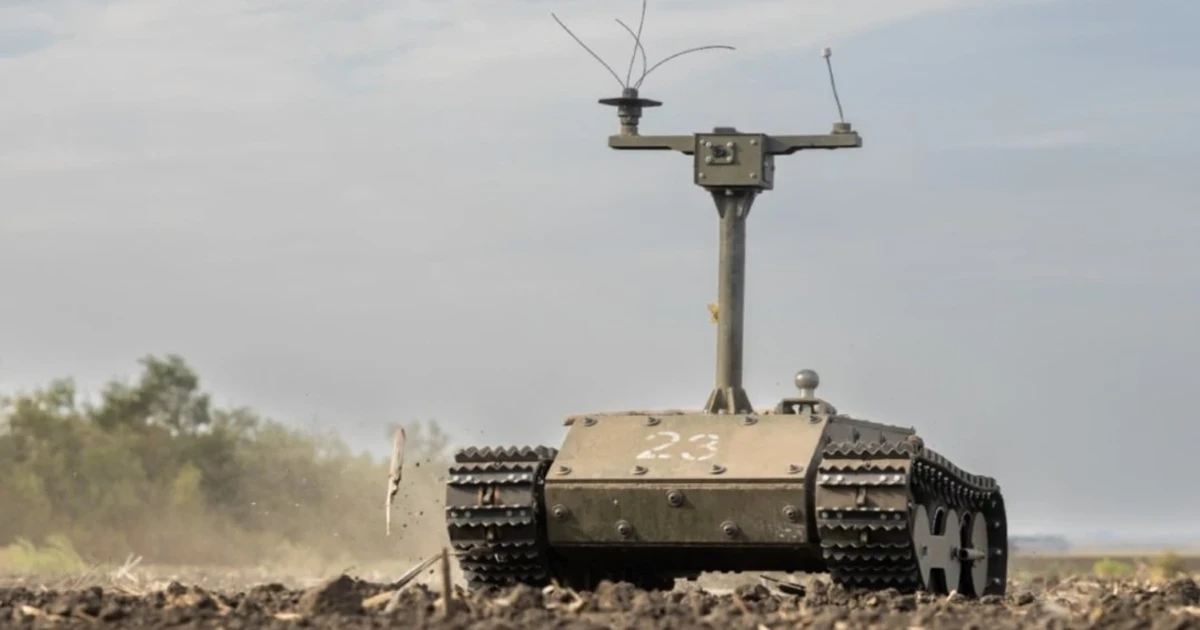
They began by hauling supplies through lethal ground. Now Ukraine’s unmanned ground vehicles are evacuating wounded soldiers, carrying weapon stations into trenches and, in some cases, helping do the killing. As the Ukraine-Russia front line has hardened into a dense kill zone of artillery, mines and attack drones, these machines are becoming a practical answer to a problem that human troops increasingly cannot survive.
From supply mule to assault platform
Ukraine’s first confirmed homegrown UGV combat mission took place in December 2024, a milestone that marked a clear break from the robot’s original role as a logistics carrier. By the first six months of 2025, the Ministry of Defence said it had approved nearly thirty new UGVs and remotely controlled weapon stations for operational use, a one-third increase from the previous year. That pace matters because it shows a battlefield technology moving from experiment to procurement category in less than a year.
The shift is not just about novelty. Ukrainian officials say ground robots are now being used for evacuation, logistics, ammunition delivery, mining, demining and fire support. In other words, they are taking on the jobs that expose soldiers to the highest-risk parts of the battlefield while also extending the reach of units that are short on manpower.
Why ground robots matter where drones fall short
Aerial drones have transformed reconnaissance and strike operations, but they cannot replace a platform that can physically move across mud, rubble, trenches and shell holes with a wounded person or a crate of ammunition on its back. Ground robots can carry heavy loads, push into areas where a human would be an easy target and remain in the fight long enough to deliver equipment, extract casualties or mount a weapon station.
That is why the battlefield role of UGVs is broader than the simple “drone” label suggests. The Ministry of Defence says its codified systems can transport ammunition and equipment, evacuate casualties and carry robotic weapon stations as well as electronic warfare, signals intelligence and electronic intelligence gear. Those functions make them useful not only in combat but in the dense support ecosystem that keeps trenches supplied and alive.
The systems entering service
Ukraine’s Defence Procurement Agency said ground robotic systems became available for ordering through DOT-Chain Defence on February 12, 2026. At that point, the marketplace offered seven ground-robotic models from six Ukrainian manufacturers, and nearly UAH 9 billion had been allocated through DOT-Chain Defence since the start of 2026. That figure shows how quickly robotic systems have moved into a formal procurement channel rather than remaining a battlefield improvisation.
The Ministry of Defence has also codified specific domestic systems. PROTECTOR, it says, can carry up to 700 kg and travel up to 400 km. It is pitched as a multipurpose logistics and support platform, able to move ammunition and equipment, evacuate casualties and carry robotic weapon stations and electronic warfare, signals intelligence and electronic intelligence payloads. DODGER, by contrast, is described as a smaller armored vehicle that can carry up to a quarter-ton payload, protect itself against bullets and shrapnel, and evacuate wounded soldiers or support mine-laying.
That mix matters because it shows the Ukrainian military is not betting on a single design. It is building a ladder of capabilities, from heavier logistics platforms to more protected casualty-evacuation and engineering vehicles.
Evacuation under fire
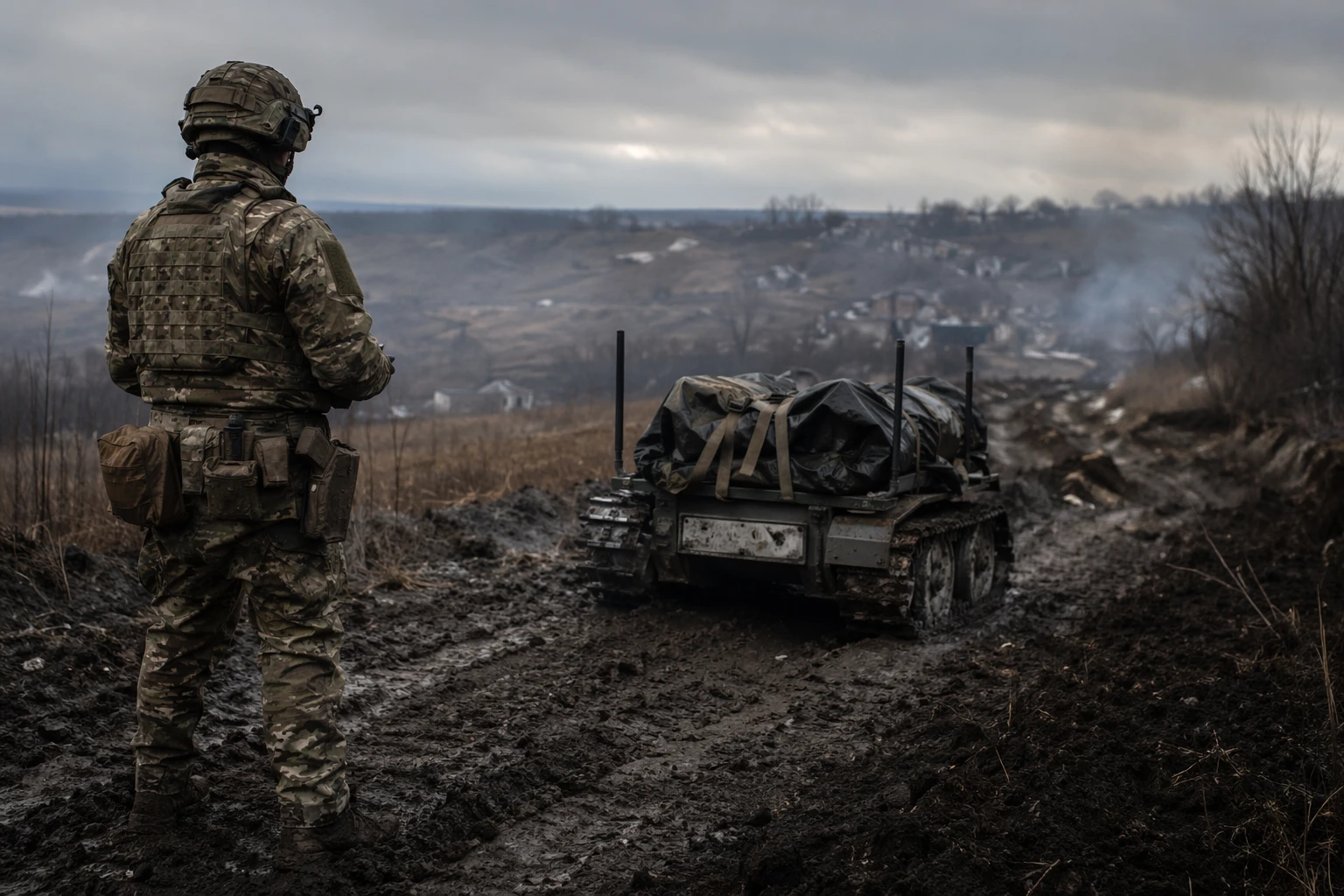
The clearest sign of what ground robots can do came in a rescue operation that would have been close to impossible for a human team to repeat safely. In November 2025, the 1st Medical Battalion of the Ukrainian Ground Forces used a ground robot to pull out a wounded soldier who had been trapped for 33 days behind Russian lines. The mission reportedly covered about 40 miles and took just under six hours, and one earlier attempt was stopped when the vehicle hit a mine.
That rescue captures the core advantage of UGVs: they can be sent where the chance of losing another soldier is too high. On a front where every movement can trigger artillery, mines or drone attack, a machine can buy time and reduce exposure in ways no infantry rescue team can. It can also work in repeat attempts, turning a near-impossible evacuation into a technical problem of distance, terrain and survivability.
Trenches, mines and the new shape of front-line fighting
Ground robots are also being pulled into the routines of trench warfare. They can bring ammunition to isolated positions, haul wounded back from the line and help lay or clear mines without putting a sapper or rifleman in the blast radius. In the Ukraine-Russia war, that is not a niche task. It is core front-line labor.
Analysts quoted by the Kyiv Independent say UGVs could eventually reduce the number of troops needed at the front and in support roles. That would not mean fewer risks overall, but it could change where human risk is concentrated. If a robot can carry the load, then a soldier does not have to. If a robot can enter a mined approach, then a medic does not have to. If a robot can hold a position with a remote weapon station, then a human may be kept farther from direct fire.
The military and ethical stakes
The harder question is what happens when the same battlefield machine can evacuate, defend and kill. Ukraine’s system is moving toward that reality quickly: the same procurement pipeline that buys evacuation platforms also approves remotely controlled weapon stations, and the same front that needs casualty extraction also needs fire support. That convergence pushes warfare toward mechanized attrition, where the separating line between support tool and combat system becomes thinner.
It also raises ethical pressure points that are difficult to ignore. A ground robot that saves a wounded soldier one day and carries a weapon station the next changes the moral geography of the battlefield. The machine’s utility is obvious, but so is the danger of normalizing a war in which the easiest way to protect troops is to replace them with robots in ever more lethal roles.
What comes next
The pace of codification, procurement and battlefield use suggests Ukraine is trying to industrialize a capability that began as improvisation. Nearly thirty new UGVs and remotely controlled weapon stations were approved in the first half of 2025, and by early 2026 the state had already opened a dedicated marketplace for ground robotic systems with multiple domestic suppliers. That combination of battlefield need, domestic production and centralized purchasing is how a wartime workaround becomes a standard military tool.
The next phase is likely to be less about whether these machines belong on the battlefield and more about how far commanders will trust them to go. In Ukraine’s war, ground robots are no longer just carrying supplies to the front. They are becoming part of the front itself.
Sources
- [1]nytimes.com
- [2]mod.gov.ua
- [3]kyivindependent.com
- [4]cbsnews.com