Technology
U.N. panel warns AI gains outpace global ability to control it

The Independent International Scientific Panel on Artificial Intelligence, a 40-member U.N. scientific panel selected from more than 2,600 candidates and co-chaired by Yoshua Bengio and Maria Ressa, will present its preliminary report at the inaugural Global Dialogue on AI Governance at the Palexpo convention centre in Geneva next week.
AI is producing major economic and medical gains, but it is also testing whether public institutions can still set boundaries on a technology scaling globally with little common oversight. AI is already helping predict the structures of more than 200 million proteins, accelerating drug discovery, vaccine development and antibiotic-resistance research, and helping doctors detect diseases such as breast cancer earlier. U.N. figures put the United States at about 75 percent of the computing power among the world’s top 500 AI supercomputers, while China holds about 15 percent, leaving the two countries with roughly 90 percent of that leading compute.
Policymakers need scientific evidence to govern AI, but the field is advancing more quickly than science can keep up, and reliable methods for controlling highly autonomous systems remain scarce. Bengio has said there is growing evidence of deceptive behavior by AI systems and that science cannot guarantee the technology will not cause catastrophic harm, whether on its own or through malicious use.

Rapid, unchecked deployment can damage mental health, be used as a destructive tool, disrupt social, economic and environmental systems, and weaken information integrity through persuasive content produced at scale. AI-generated child sexual abuse material and deepfake-enabled sexual violence are growing threats, alongside easier targeting of manipulated content that can erode trust, social cohesion and democratic deliberation.
More than a billion people now use conversational AI weekly, yet developing countries are lagging behind. Current models are trained on only a small fraction of the more than 7,000 languages spoken worldwide, a gap that can distort machine translation and, in some languages, affect health diagnoses and treatment decisions.
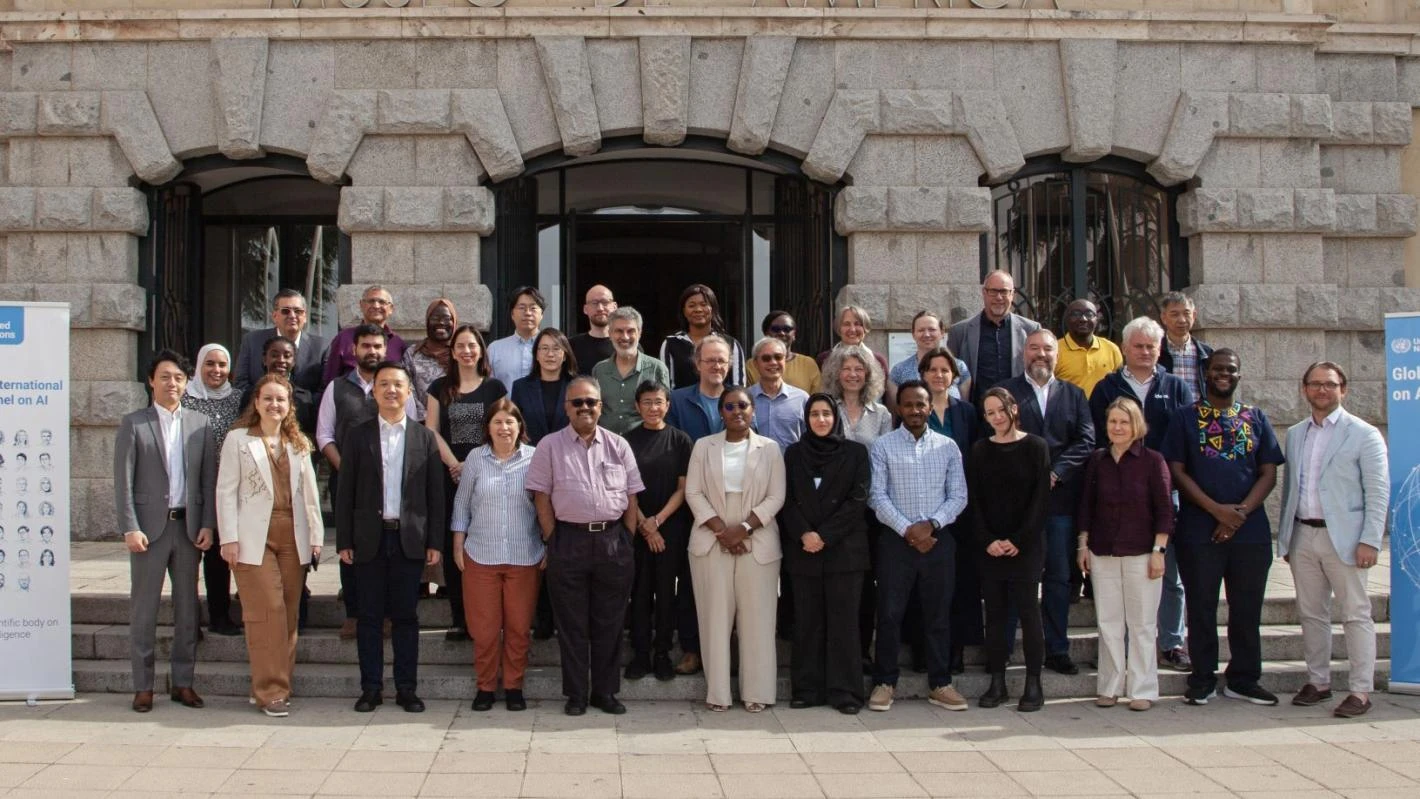
The Global Dialogue on AI Governance, created under the Global Digital Compact, brings governments, private sector, academia and civil society to the same table for the first time at the July 6-7 meeting.
Sources
- [1]usnews.com
- [2]un.org
- [3]itu.int
- [4]news.un.org
- [5]internationalaisafetyreport.org