Politics
Understanding the SAVE America Act and Its Voter ID Mandate
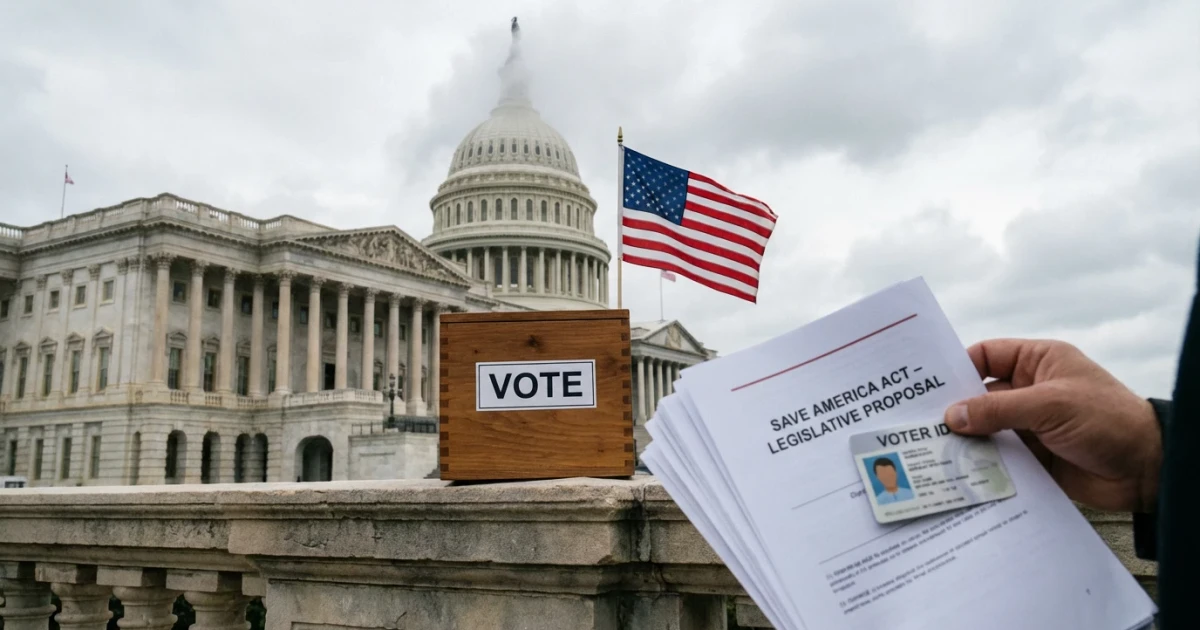
The SAVE America Act is drawing national attention as it seeks to mandate voter identification requirements across all federal elections in the United States. The bill, which has been introduced in Congress, promises to reshape the landscape of election law, raising questions about its provisions, its impact on voters, and how it compares to existing state laws.
What Is the SAVE America Act?
The SAVE America Act, officially known as H.R.6273, is a legislative proposal currently under consideration in Congress. The bill's central provision is a federal requirement that voters present a valid, government-issued photo identification in order to cast a ballot in federal elections. This would standardize voter ID requirements nationwide, superseding the current patchwork of state-level laws and regulations.
How Do Current Voter ID Laws Work?
Currently, voter ID laws are set by individual states, resulting in a wide variety of requirements. According to the National Conference of State Legislatures, as of 2026, 36 states require some form of identification to vote, but the nature of acceptable ID and the strictness of enforcement differ significantly. Some states require a photo ID, while others accept non-photo documents. A minority of states have no voter ID requirement at all.
- Strict photo ID states: Voters must present government-issued photo ID, and those without it may have to cast a provisional ballot.
- Non-strict or non-photo ID states: Alternatives like utility bills or bank statements may be accepted.
- No ID required: Some states rely on signature matching or other verification methods.
For a state-by-state overview, Ballotpedia provides detailed tables and timelines of these laws.
What Would the SAVE America Act Change?
If enacted, the SAVE America Act would:
- Require all voters in federal elections to present a government-issued photo ID.
- Set federal standards for the types of acceptable identification.
- Potentially override less stringent state rules, creating a uniform national baseline.
- Include provisions for free government-issued IDs for those who lack them, according to the bill's text.
The Department of Justice’s Voting Section would be tasked with oversight and enforcement, ensuring states comply with the new federal mandates.
Debate and Analysis: Impact on Voters
The question of how voter ID laws affect turnout and access is hotly debated. Research from the Government Accountability Office found that strict voter ID laws were associated with modest decreases in turnout, particularly among younger, minority, and low-income voters. Other studies, such as those summarized by the Brennan Center for Justice, have found mixed effects, with some evidence of reduced participation in states with new or stricter ID requirements.
- The GAO’s analysis noted turnout declines of up to 2 percentage points in states that adopted strict photo ID laws.
- Supporters argue voter ID helps prevent fraud and increases confidence in the electoral process.
- Critics contend it may disproportionately burden voters who lack easy access to qualifying identification, such as seniors, students, or those without driver’s licenses.
How Does the SAVE America Act Compare to State Laws?
The SAVE America Act would bring the U.S. closer to the strictest state-level voter ID laws by making them the national standard. Currently, only a subset of states require a government-issued photo ID as the exclusive means of identification. The bill’s provision for free IDs could mitigate some access concerns, but logistical challenges remain—especially in rural areas or for individuals without underlying identity documents.
Looking Ahead
As debate continues, the SAVE America Act exemplifies the ongoing clash between election security and access. While the bill would create uniformity in federal elections, its real-world effects will depend on implementation details, voter education, and the scope of exemptions or accommodations for those facing barriers. Lawmakers and advocates on both sides are closely watching as the bill moves through Congress, with its ultimate impact likely to shape federal elections for years to come.