Health
UnitedHealthcare, CVS Health and Humana lead Medicare Advantage denial rates
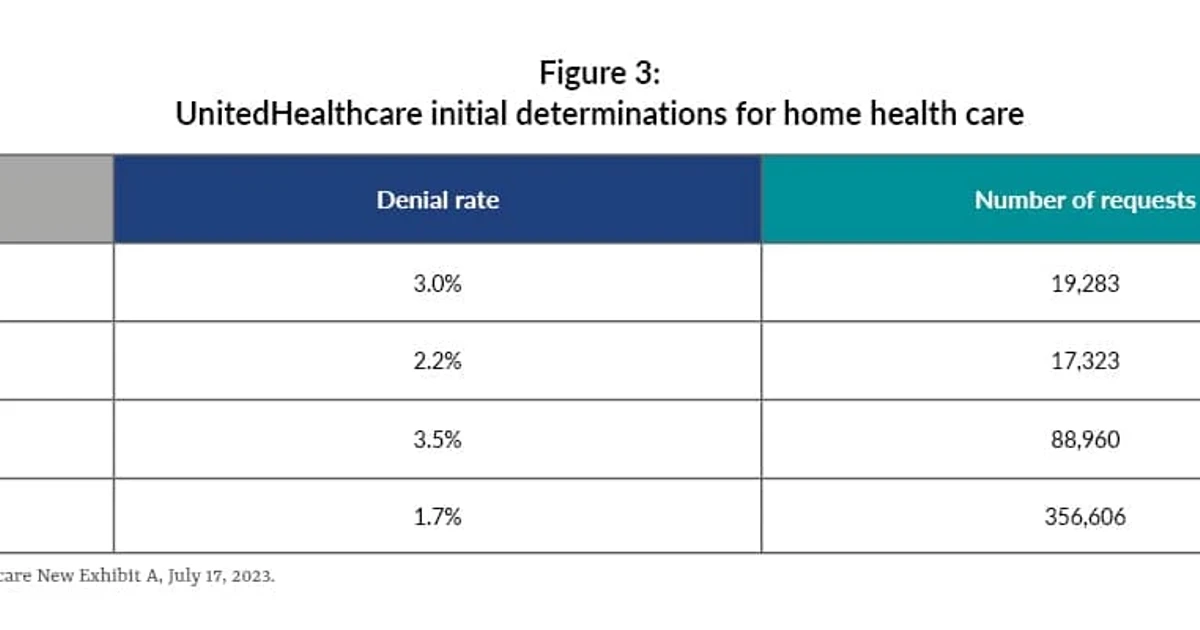
Federal scrutiny of Medicare Advantage has landed on a hard question of accountability: which insurers are blocking long-term care and post-acute treatment most often, and what happens when patients need rehab, inpatient rehabilitation, or nursing support. The names at the center of that pressure are UnitedHealthcare, CVS Health and Humana, which federal investigators say have shown the highest denial rates in the category.
The pattern has been building for years. In an April 27, 2022 report, the HHS Office of Inspector General reviewed 250 prior authorization denials and 250 payment denials from 15 of the largest Medicare Advantage organizations, using requests submitted during June 1-7, 2019. The watchdog found that Medicare Advantage plans sometimes delayed or denied access to services even when the requests met Medicare coverage rules, including advanced imaging such as MRIs and post-acute facility stays.
That earlier work helped trigger a broader political response. The inspector general said the findings drew national attention and pushed the Centers for Medicare & Medicaid Services, the industry and Congress to act. By May 17, 2023, the Senate Permanent Subcommittee on Investigations had launched its own inquiry into Medicare Advantage denials, signaling that the issue had moved well beyond a narrow billing dispute and into a sustained fight over access to care.
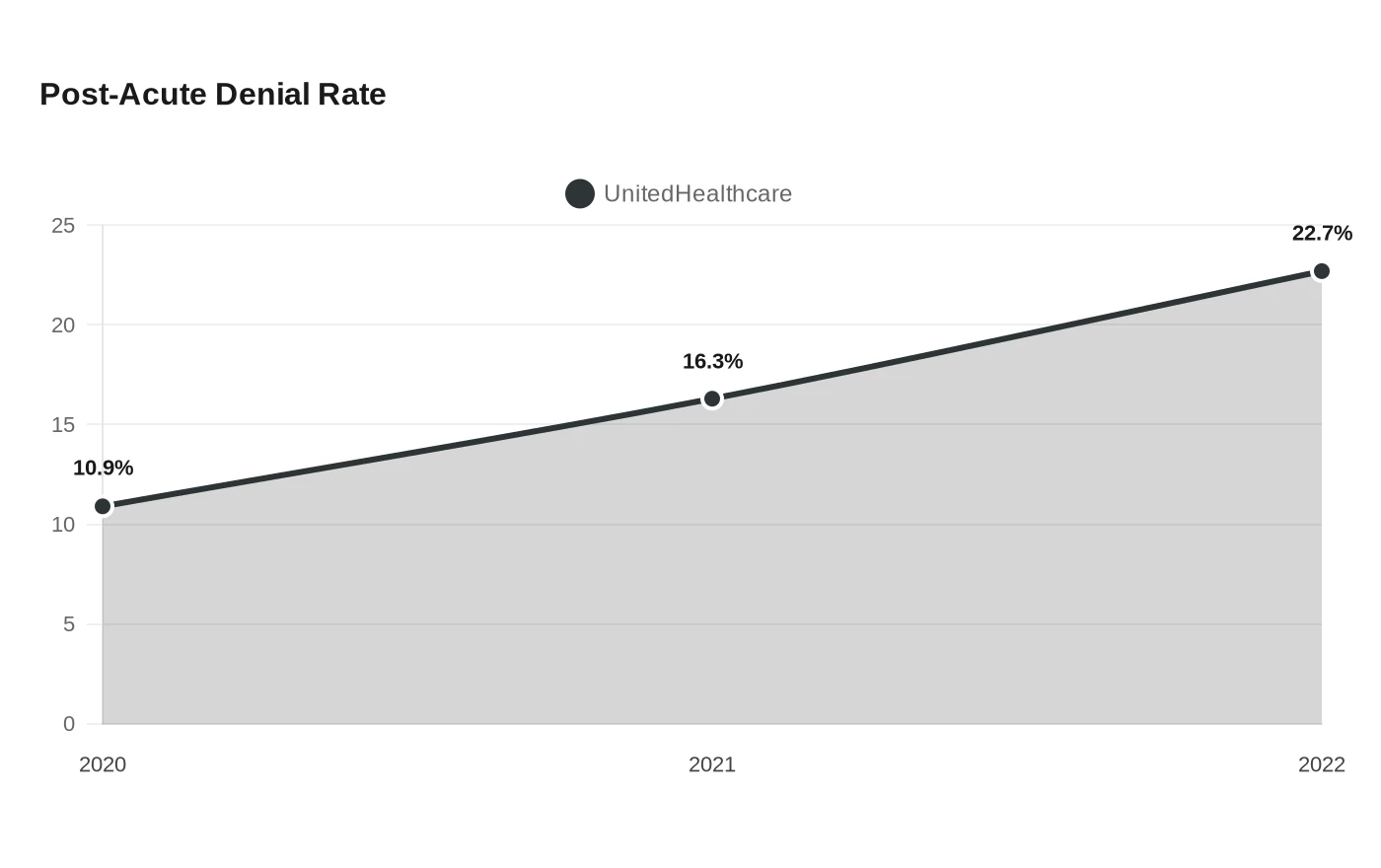
The Senate’s October 17, 2024 report sharpened the criticism. It said UnitedHealthcare, Humana and CVS, the three largest Medicare Advantage insurers, together covered nearly 60% of all Medicare Advantage enrollees and relied on more than 280,000 pages of documents. The report said the companies used prior authorization to target skilled nursing facilities, inpatient rehabilitation facilities and long-term acute care hospitals, and it found that post-acute denials were far more common than denials for other types of care. UnitedHealthcare’s post-acute denial rate rose from 10.9% in 2020 to 16.3% in 2021 and 22.7% in 2022. Humana’s 2022 post-acute denial rate was more than 16 times its overall denial rate. An American Hospital Association summary said UnitedHealthcare and CVS denied post-acute requests at about three times their overall denial rates in 2022.
The accountability gap remains that many denials can be appealed, and some do not hold up. The inspector general has said beneficiaries and providers rarely appealed denials in an earlier 2018 study, even though many overturned cases suggested real access problems. More recently, HHS said on June 23, 2025 that insurers pledged six reforms to streamline prior authorization, including fewer services subject to prior approval by January 1, 2026 and expanded real-time approvals by 2027. The pressure on Medicare Advantage plans is now coming from regulators, lawmakers and hospitals at once, with the cost of delay measured in lost rehab days, postponed nursing care and prolonged recoveries.
Sources
- [1]nbcnews.com
- [2]oig.hhs.gov
- [3]blumenthal.senate.gov
- [4]aha.org
- [5]hhs.gov
- [6]beckerspayer.com