Science
Unraveling the Mysteries of the Sahara’s Richat Structure
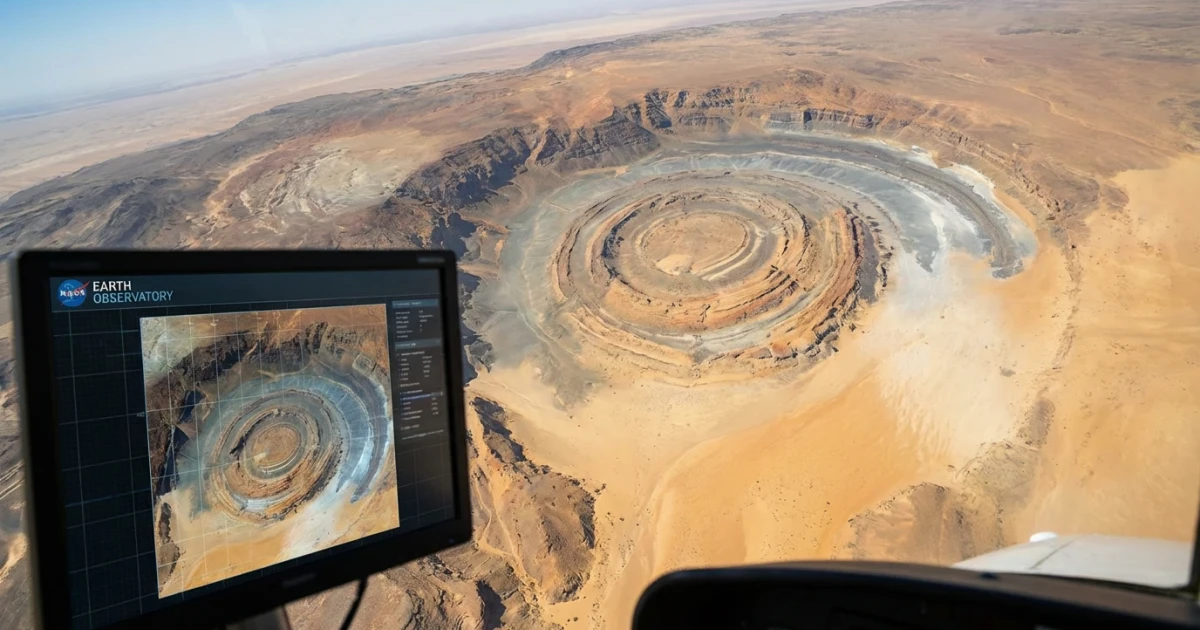
NASA’s recent focus on the Richat Structure in Mauritania’s Sahara Desert is renewing global interest in one of Earth’s most distinctive geological formations. Known colloquially as the Eye of the Sahara, the Richat Structure has intrigued scientists, astronauts, and geologists for decades due to its striking circular appearance and enigmatic origins.
What Is the Richat Structure?
The Richat Structure is a massive, elliptical geological formation spanning approximately 40 kilometers (25 miles) in diameter. Visible from space, its concentric rings of rock have made it a landmark for astronauts and a subject of ongoing scientific study. Located in the western Sahara Desert in Mauritania, the Richat Structure stands out against the otherwise flat desert landscape, earning its nickname as the 'Eye of the Sahara.'
- Diameter: Nearly 40 kilometers across
- Location: Western Mauritania, central Sahara Desert
- Appearance: Concentric circular bands, visible from space
How NASA Captured the Richat Structure
Recently, NASA’s Earth-observing satellites have provided new high-resolution images of the Richat Structure, offering scientists and the public an unparalleled view of its unique geology. The NASA Earth Observatory notes that the feature is one of the clearest natural landmarks visible from space, thanks to its size and distinct shape. These images not only highlight the formation's beauty but also support researchers analyzing its composition and history.
Theories About Its Formation
The origins of the Richat Structure have been subject to much debate in the scientific community. Early theories suggested it might be the result of a meteorite impact, given its circular shape. However, more recent studies, including peer-reviewed geochemical and geophysical research, point to a different story.
- Geologists now largely agree that the structure is a deeply eroded geologic dome.
- The concentric rings are believed to be layers of sedimentary rock exposed by erosion.
- Some research suggests the dome’s uplift may have been caused by volcanic activity, followed by erosion over millions of years.
Despite advances in understanding, some aspects remain uncertain, and the Richat Structure continues to be an active subject of geological study. For a deeper dive into the scientific debate, see the latest research analysis.
Scientific and Cultural Significance
Beyond its scientific intrigue, the Richat Structure is a valuable reference point for astronauts. Its visibility from orbit has made it a frequent target for photography and observation during space missions. In addition, the formation's unique geology makes it a natural laboratory for comparative studies, including research into terrestrial analogs for Martian hydrothermal structures.
On the ground, the feature has become a modest tourist attraction, though its remote location means few visit in person. The Richat Structure also holds cultural significance for local populations, who have incorporated its presence into regional folklore and navigation.
Ongoing Exploration and Future Research
NASA’s continued observation of the Eye of the Sahara is set to advance understanding of Earth’s geological processes. With the availability of public geophysical and geochemical datasets, researchers worldwide are investigating the formation’s history, mineralogy, and potential lessons for planetary science.
As new satellite imagery and field data accumulate, the Richat Structure remains a testament to the complexity of Earth’s surface and a reminder that some of our planet’s greatest mysteries are best appreciated from space. Ongoing research will further clarify its origins and implications for geology—and may even inform the search for similar features on other planets.