Technology
US Advances Fisheries Technology at APEC
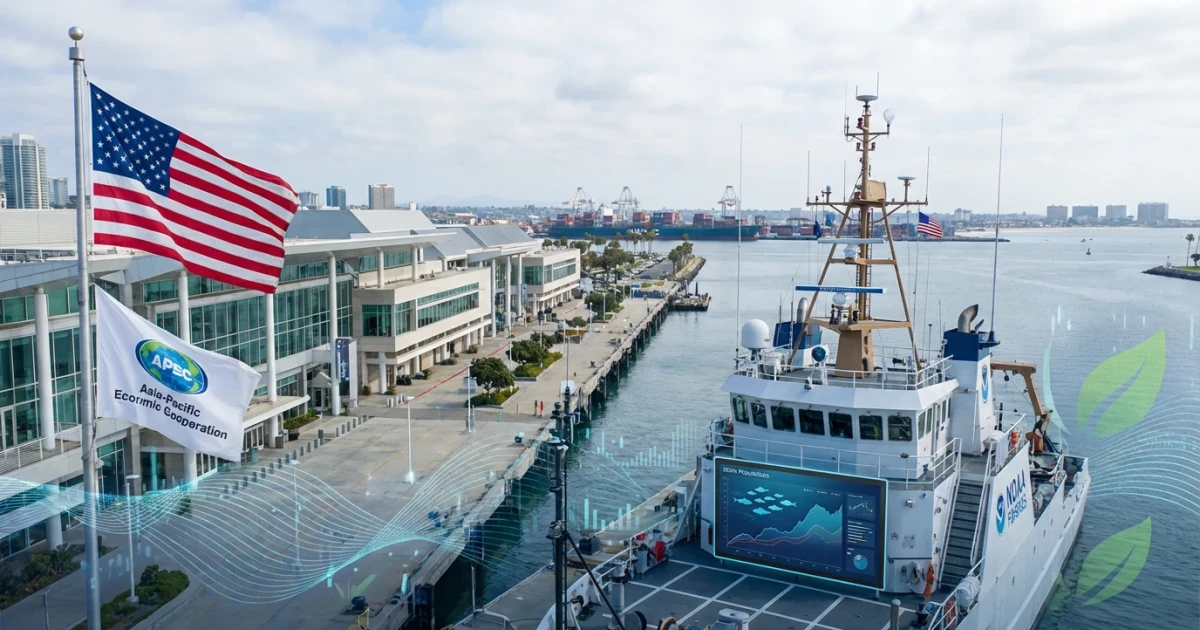
The United States is intensifying efforts to promote advanced fisheries technology within the Asia-Pacific Economic Cooperation (APEC), highlighting both sustainability goals and strategic competition with China. The move signals a blend of environmental commitment and geopolitical positioning as APEC members seek to modernize and secure their vital fisheries sectors.
Fisheries Technology Takes Center Stage
At recent APEC meetings, the US delegation emphasized the adoption of cutting-edge fisheries technologies designed to improve stock management, traceability, and monitoring. These innovations include satellite-based vessel tracking, electronic monitoring systems, and data-driven decision tools, which are seen as essential for addressing overfishing, illegal, unreported, and unregulated (IUU) fishing, and climate change impacts.
According to the APEC Fisheries and Aquaculture Working Group, these technologies are critical for improving transparency and ensuring the long-term viability of fisheries across the region. US officials have called for unified standards and greater information sharing among APEC economies to maximize the benefits of new systems and reduce the risk of technology gaps that could be exploited by IUU operators.
Strategic Competition with China
The US push for fisheries technology comes as part of a broader effort to counter China’s expanding influence in the Pacific region. China, as the world's largest seafood producer and exporter, has invested heavily in its own fisheries modernization and is a key player in APEC discussions. American officials argue that strong US leadership on sustainable technology can help set regional standards and support smaller economies seeking to resist unsustainable practices.
While both countries acknowledge the need for improved fisheries management, approaches diverge. The US stresses open data, transparent reporting, and partnerships with local communities, while China’s state-driven model often prioritizes rapid expansion and resource extraction. This rivalry is evident in APEC forums, where technology standards and the sharing of best practices have become points of negotiation.
Benefits and Challenges for APEC Members
Adopting advanced fisheries technology offers several benefits for APEC economies:
- Improved stock assessments and science-based management to prevent overfishing
- Enhanced traceability for seafood products, protecting consumer confidence and export markets
- Stronger enforcement against IUU fishing through real-time monitoring and data analytics
- Increased resilience to climate change impacts by enabling adaptive management strategies
However, many developing APEC members face obstacles such as limited infrastructure, lack of technical expertise, and funding constraints. The US has proposed technical assistance and capacity-building programs, in line with the APEC Fisheries and Aquaculture Roadmap, to help bridge these gaps.
Progress and Outlook
Recent years have seen growing adoption of digital logbooks, electronic onboard monitoring, and vessel tracking across the Pacific, according to NOAA Fisheries global fisheries data. However, the pace of technology transfer remains uneven, with some economies lagging behind.
Looking ahead, US officials say that continued leadership in fisheries technology is vital for both environmental sustainability and regional stability. As APEC economies revisit their shared commitments, the interplay between US and Chinese approaches will likely shape the future of the Asia-Pacific’s marine resources.
For more details on APEC’s initiatives and country-level progress, visit the APEC Fisheries and Aquaculture Working Group and review the APEC Fisheries and Aquaculture Roadmap.