Business
U.S. Aims to Forge Critical Minerals Alliance With Allies to Counter China’s Influence
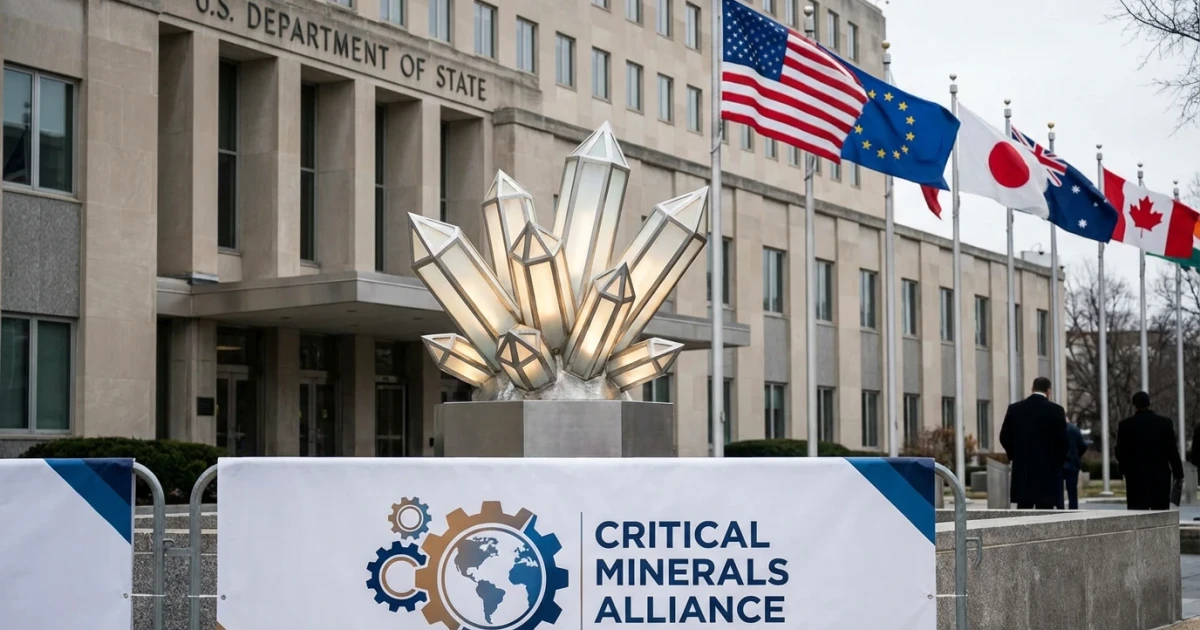
The United States is intensifying efforts to form a critical minerals trading bloc with its allies, a strategic move aimed at reducing dependency on China and bolstering global supply chain security. According to recent statements by U.S. officials, this initiative seeks to unite like-minded nations in the procurement and distribution of essential minerals used in advanced manufacturing, energy, and defense sectors.
The Need for a Critical Minerals Bloc
Critical minerals—such as lithium, cobalt, nickel, and rare earth elements—are fundamental to the production of electric vehicles, semiconductors, renewable energy systems, and a range of high-tech applications. Currently, China dominates the global supply chains for many of these minerals, controlling significant portions of mining, processing, and refining capacity worldwide.
- Lithium and cobalt are vital for electric vehicle batteries.
- Rare earth elements are crucial for electronics and military technologies.
- Nickel is a key component in stainless steel and battery manufacturing.
Recognizing the strategic vulnerability inherent in this reliance, the U.S. is spearheading efforts to coordinate with allies to diversify sources and create resilient alternatives. Officials have emphasized that any disruption in the supply of these minerals could have wide-ranging impacts on both economic and national security.
Building Partnerships With Allied Nations
The proposed critical minerals trading bloc would involve close coordination with key partners in Europe, Asia, and beyond. The goal is to establish a network of trusted suppliers and foster investment in new mining and processing projects outside of China’s sphere of influence. Such a bloc could leverage existing free trade agreements and shared standards to streamline cross-border flows of these essential resources.
Diplomatic discussions are ongoing, with the U.S. seeking to reassure allies of its commitment to shared security and economic interests. These efforts are seen as a direct response to China’s dominant position in the market and its history of leveraging critical minerals for geopolitical advantage.
Geopolitical Tensions and Policy Uncertainties
The urgency of these initiatives comes at a time of increased global competition over resource security. While the U.S. is working to solidify international cooperation, there are concerns that domestic and foreign policy maneuvers could complicate negotiations. For example, previous proposals such as potential U.S. interest in purchasing Greenland—a territory rich in untapped mineral resources—have raised questions among allies about the consistency and focus of American strategy.
Strategic Implications for the Future
Establishing a critical minerals trading bloc is regarded as an essential step for maintaining technological leadership and energy independence. By diversifying supply chains, the U.S. and its allies aim to reduce the risk of shortages, price shocks, and strategic vulnerabilities.
- Reducing reliance on a single supplier strengthens national security.
- Encouraging responsible mining and environmental standards could set a new benchmark for global supply chains.
- Cooperation on minerals could deepen broader economic and strategic alliances.
As efforts to form the bloc advance, stakeholders across government, industry, and allied nations will be watching closely. The outcome will have significant implications not only for clean energy transitions and advanced manufacturing but also for the broader balance of power in the 21st century global economy.
For further information on critical minerals and U.S. policy, visit the White House briefing on critical minerals or the U.S. Geological Survey's Critical Minerals page.
Sources
- [1]AP News